
The Weekly Summary
Time to get down to business. This week the US budget is in focus. The Senate rejected a one-month spending bill early Saturday, triggering the shutdown of many government services and setting off a partisan fight over who would bear the political consequences. The bill was blocked in a 50-49 vote, well short of the 60 votes it needed. After the vote, McConnell indicated he would take steps to set up a later vote on a 3-week spending bill, keeping the government funded through February 8th, but Senate Democrats are currently opposed to it, leaving lawmakers with no path to reopen the government. Fortunately, both chambers of Congress are expected to be in session Saturday, continuing discussions over how to resolve the underlying disputes over immigration and government funding. We are hopeful to see some progress made before the markets re-open on Monday.
No matter what is happening out there, there is always a bull market here at The Bull Market Report! This week we highlight: Celgene, Microsoft, Splunk, Square, Cloudera and VMware.
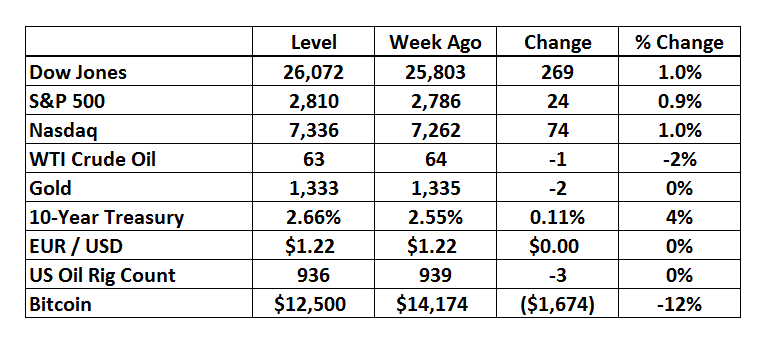
BMR Companies & Commentary
Celgene (CELG: $103, down 3%)
Celgene is on a shopping spree to fill a looming revenue hole - a sensible course of action. The trouble is, there is no guarantee their purchases will solve anything. The biotech giant is in talks to acquire Juno Therapeutics (JUNO: $68, up 41%). This comes after Celgene announced the purchase of cancer startup Impact Biomedicines earlier this month for $1.1 billion upfront, plus significant milestone payments. Celgene, which already owns about 10% of Juno, would be acquiring a new kind of cancer treatment, known as CAR-T. The price tag of an outright purchase will be high - Juno’s market value approached $8 billion when trading opened on Wednesday and Celgene shares dropped Wednesday morning, which makes sense. CAR-T technology, which modifies and deploys a patient’s own immune cells to fight cancer, is a brilliant scientific innovation with highly uncertain commercial prospects. The treatment carries a high price tag and employs a complex, labor-intensive manufacturing process. When Gilead Sciences (GILD: $81) acquired Juno’s peer Kite Pharma over the summer, they warned that the deal wouldn’t contribute to earnings for about three years. Gilead and Novartis have programs that are already on the market, while Juno still is awaiting regulatory approval.
BMR Take: Celgene needs to take risks right now as some of their other pipeline drugs have not panned out as well as expected. For example, its best-selling product, the multiple myeloma drug Revlimid, is expected to face generic competition within a couple of years. Any erosion of the Revlimid business will sting. While financially speaking, Celgene can comfortably swallow Juno, the risk is that Celgene may soon have to open its wallet again to solidify its future.
Look, we get it, there are risks everywhere. We’ve had thoughts of throwing in the towel with Celgene. But the more we think about it, the more you have to stick with Celgene. Projections call for EPS of $8.80 in 2018 and $10.35 in 2019. Much of the bad news is already in the stock, as a major sell-off having recently occurred. Celgene is an $80+ billion large cap bellwether in Healthcare. They will figure this out. And when they do, we could be staring at big upside well in excess of standard market returns.
-------------------------------------------------------------------------------
Microsoft (MSFT: $90, flat)
Should the government break up large Tech companies? Standard Oil, American Telephone and Telegraph were the technological titans of their day, commanding more than 80% of their markets.
Today’s Tech giants are just as dominant: In the US, Google drives 89% of internet search; 95% of young adults on the internet use Facebook; and Amazon accounts for 75% of electronic book sales. Those firms that aren’t monopolists are duopolies: Google and Facebook absorbed 63% of online ad spending last year; Google and Apple provide 99% of mobile phone operating systems; while Apple and Microsoft supply 95% of desktop operating systems. A growing number of critics think these Tech giants need to be broken up or regulated as Standard Oil and AT&T once were. Microsoft has long dominated desktop operating systems, but has failed to extend that dominance to internet search or to mobile operating systems. It’s possible Microsoft might have become the dominant company in search and mobile without the scrutiny a federal antitrust case brought that opened the door for Apple and Google. Throughout history, entrepreneurs have often needed the government’s help to dislodge a monopolist - and may one day need it again.
BMR Take: We recognize this is a very real risk facing Microsoft and many of our other high technology companies. However, we see no near-term developments that suggest that anything materializes in 2018. Accordingly, we see compelling value in Microsoft as EPS is expected to grow from $3.40 this year to $4.50 in 2020. Without any major disruptions like an antitrust headache, we see this stock riding much higher.
Our Target has been $92 and it hit $92.80 on Tuesday, a new all-time high. With a market cap of close to $700 billion we expect to see $800 billion in the next 12-18 months. We’re going to leave our target at $92 for the time being, but we expect to raise it to $100 shortly.
-------------------------------------------------------------------------------
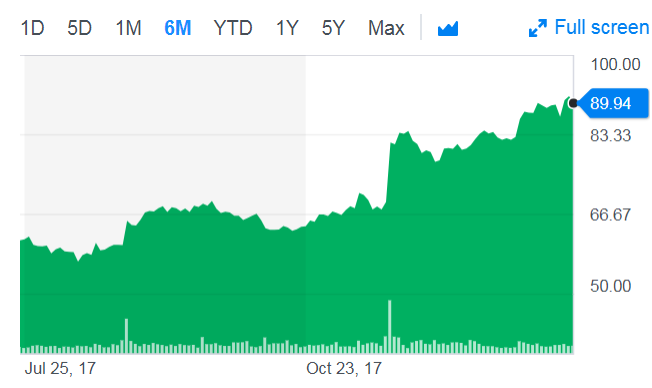
Splunk (SPLK: $90, flat)
Splunk, first in delivering “aha” moments from machine data, announced that Daimler, the German automotive group, will replace its legacy SIEM with Splunk® Enterprise and Splunk Enterprise Security (ES). The group will use Splunk ES as its nerve center for security analytics to gain security insights across the entire organization, including business critical environments such as vehicle systems and manufacturing lines. The company chose Splunk over open source alternatives as part of its strategy to buy best-of-breed solutions rather than building things in house. The automotive group will use Splunk ES to analyze multiple terabytes of data each day. The team expects to reduce security investigation times from hours to seconds, utilizing visualizations to improve analysts’ ability to explore and interrogate data as well as help spot and respond to issues more quickly to limit any potential impact to the business. By committing to a Splunk, the company is able to plan security for the future while benefiting from Splunk’s predictable pricing. The flexibility of the Splunk platform was also important; the group expects to realize future value from traditional IT use cases as well as in newly developed digital applications and services.
BMR Take: As digitization continues to transform industries and create new sources of security-relevant data, security strategies need to be built upon a strong data foundation. Splunk is very well-positioned in this megatrend happening around big data and artificial intelligence. This is a great example of how organizations are taking an analytics-driven approach and turning to Splunk software to do it. With EPS expected to grow from $0.60 this year to $1.30 in 2020 and $2.10 in 2021, there is a really big thing happening at Splunk and you definitely want to be involved.
Our Target is $95 and our Sell Price is $74. We hereby raise the Sell Price to $83. We don’t want to lose our tremendous gains in the stock, having added it at $46 a year and a half ago.
-------------------------------------------------------------------------------
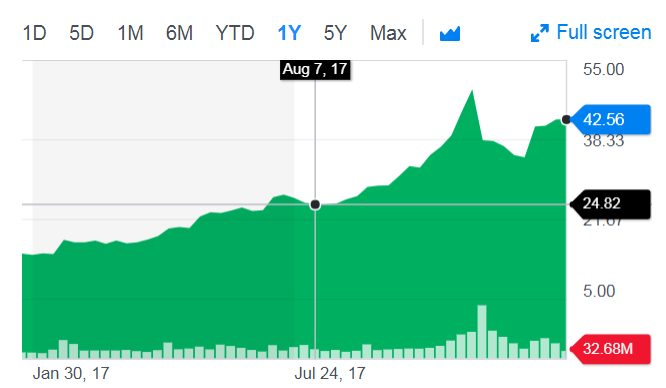
Square (SQ: $43, up 3%)
The meteoric rise in the price of bitcoin in 2017, from just under $1,000 to above $15,000 at year-end, has attracted the attention of investors around the world. Powered by the blockchain, the distributed ledger technology which verifies transactions without the need for third-party validation, the cryptocurrency made great strides during the past year in achieving acceptance by businesses willing to accept it as a means of payment. Investors are looking beyond bitcoin itself to find companies that stand to benefit from the growing usage of bitcoin for commercial transactions. Square. The has released a beta trial enabling users to buy and sell bitcoin on its cash app.
BMR Take: Bitcoin and the blockchain is a windowpane into what euphoria looks like. We haven’t seen this kind of excitement in the markets since the peak of the housing market last cycle. We’ll save a discussion of the future of bitcoin, blockchain, and cryptocurrency for another forum. All that matters is that Square has been caught up in the mix due to this beta cash app trial and investors have benefitted. While we remain optimistic that CEO Jack Dorsey can innovate and create great new products, we still don’t see any specific EPS contribution being called out from the bitcoin cash app, so just be aware. All of that might not matter too much anyway, as the company’s EPS is expected to grow from $0.25 this year to over $1.00 by 2020.
Square Price Target Raised to $64 from $48 at Nomura
This represents a 59% potential upside from current levels. A "looming positive inflection" in gross payment volume growth can help "ensure that 2018 will be yet another phenomenal year" for Square, the company said. Accelerating share gains from payment peers and "relentless disruption of services" like payroll and human resources will make Square a very different company in 10 years. They believe little of this upside is evident using conventional valuation methodologies. The analyst keeps a Buy rating on Square.
BMR Take II: We’ve been saying this all along of course and Square has been a big winner for us here at The Bull Market Report. We added the stock at $17 last year in March and it is up 150% in that short time. It is going a lot higher. Our Target is $45, but we expect to raise that soon. What Nomura said above is very interesting – they can’t value this company on “conventional valuation methodologies.” We’ve been trying to put this in words for you but Nomura has done it for us. The company is in a business that is sweeping the globe, is the clear leader, sells at a high multiple – we know, and is going higher in our opinion.
-------------------------------------------------------------------------------
Cloudera (CLDR: $18.45, up 2%)
Cloudera, the modern platform for machine learning and analytics optimized for the cloud, announced that it has been named a winner of two Internet of Things (IoT) Breakthrough Awards: the Overall Connected Car Innovation of the Year with Navistar, and Connected Car Insurance Solution of the Year with Octo Telematics. Cloudera Enterprise was recognized by this year's judging panel for empowering their customers, Navistar and Octo, to become data-driven enterprises with innovative solutions that combine data from (IoT) sensors, machine learning, and predictive analytics. The IoT Breakthrough Awards honor the world's top IoT companies, products, and people for the creativity, hard work, and success of their achievements.
BMR Take: This is a huge deal as we are sure you are well aware, of how big this mega trend of IoT, machine learnings, and predictive analytics is to the future of the market and our economy. We could rant and rave to you about our opinion of how good Cloudera is at it, but the industry itself just selected Cloudera as the best. This company will scale revenue from $350 million to nearly $600 million by 2020 and break the $1 billion milestone in the not too distant future after that.
-------------------------------------------------------------------------------
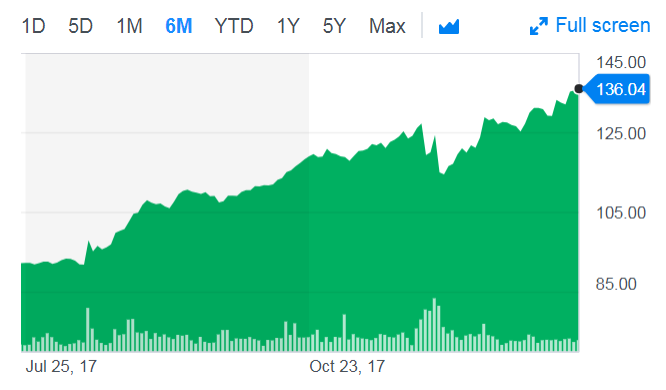
VMware (VMW: $136, up 3%)
This week at the National Retail Federation’s annual show, VMware highlighted several customers who have deployed their technology to modernize data centers, integrate public cloud solutions, empower the digital workspace and transform networking and security. The velocity of change in retail IT is making recognized brands rethink their IT strategies and consider cloud as a way to speed delivery. VMware helps create a foundation of shared technologies to serve both digital and in-store needs to create a connected retail environment. For example, one of the UK's largest furniture producers - DFS - moved to a scalable cloud-first infrastructure powered by VMWare. With this solution, the retailer said it can handle spikes in online traffic year-round with ease.
BMR Take: We continue to see so much potential for ecommerce and companies that are part of the explosive growth still occurring. VMware is expected to increase EPS from $5.15 this year to over $6.00 by 2020. The company's steady business model as an IT vender provides great visibility and a reliable source of earnings that will benefit your portfolio.
Our Price Target is $137, so we are oh so close. The Sell Price is $118, so we hereby raise it to $128 – again, so we don’t lose these great profits, having added the stock at $83, exactly a year ago. 64% is solid, don’t you think?
-------------------------------------------------------------------------------
Economic Calendar
Richmond Fed Index
Tuesday, January 23rd, 10:00 AM
Period: January
Consensus: 17.5
Prior: 20.0
Existing Home Sales
Wednesday, January 24th, 10:00 AM
Period: December
Consensus: 5,700,000
Prior: 5,810,000
GDP
Friday, January 26th, 8:30 AM
Period: Q4
Consensus: 2.5%
Prior: 2.3%
-------------------------------------------------------------------------------
-------------------------------------------------------------------------------
A Word from Gary Jefferson
Jefferson Financial Group
First Vice-President, Investments
UBS Financial Services, Inc.
UBS recently upped our estimate of S&P 500 earnings for 2017 from $131 to $133, and increased our forecast for 2018 earnings from $151 to $154 (last week Bank of America estimated 2018 earnings at $153). Also, UBS estimated earnings for 2019 would come in around $162. These are numbers which will obviously be revised as we go through the next two years, but they give at least a reasonable base line for valuing the current market based on earnings. The S&P 500 ended the year at 2674, which would mean it was trading at 20X trailing earnings and 17.3X forward earnings. Today, at 2810, it is trading at 18X forward earnings and 21X trailing earnings. As you see, the higher it goes, the higher both the trailing and forward PE's become. However, if the market trades at 20X trailing earnings at the end of 2018 as it just did last year, the S&P 500 would be at the 3080 level ($154 X 20). This is 10% higher than today, and that would make for another very good year in the market.
Apple is a one-company global economic stimulus plan. Apple plans to invest $350 billion in the U.S. economy along with paying $38 billion in repatriation tax as it brings back over $200 billion from overseas. Apple is also granting $2,500 in restricted stock units to all non-director level employees including retail employees at its stores. The tax reform bill again drives all these actions.
China reported that Q4 GDP growth increased 6.8% YoY which is slightly above the 6.7% consensus and in line with the 6.8% increase in Q3. China’s full year 2017 growth rate was 6.9% which is significantly above the government’s growth target of 6.5%. Expectations for 2018 are for another year above the 6.5% target growth rate. China’s strong GDP growth remains the world’s economic growth driver. This is good news for both the U.S. economy and the U.S. stock market.
-------------------------------------------------------------------------------
-------------------------------------------------------------------------------
Update on BlackRock
BlackRock (BX: $590, up 6%) brought in $1 billion every day of the year in 2017. (On average of course.) Now THAT is amazing. And the $6 trillion in assets is amazing too, having added $1 trillion last year. They are the largest by far. Most of this money went to its iShares division, the ETF group. as investors are flocking to these indexed investments. Profits were big last year too as the income of $2.3 billion or $14 a share, compared with $850 million the year before, or $5.10 a share. Revenue was up a solid 20%.
We added the stock at $415 in August of last year, about five months ago, and we are sure some of you groaned that it was another high-priced stock that is hard to swallow. We tried to convince you not to worry about the stock "price" and we hope we did. We can see a stock split coming this year. Wouldn’t it be nice to see this thing split 5-1 and bring the price down around $100? You bet. If we were running the show and not Larry Fink, we would do a 10-1 split! Down to $50 a share. Well, even if that doesn’t happen, we can see this stock at $700 someday.
BMR Take: Guess what? We like this company. $590 was our Target. We are raising it to $650 now, and raising the Sell Price from $470 to $550.
-------------------------------------------------------------------------------
Tesla Update
Last week we were worried that Tesla (TSLA: $350) might drop due to all of the financing needs it faces this year and next. So we raised the Sell Price to $320 to protect our gains. Well the stock rose $14 or 4% to our Target Price of $350. Now what?
Good question. We are going to raise the Target to $375 and raise our Sell Price to a tight $335 and sit back and watch. We love this company, we love Elon Musk, but his delivery problems are making us nervous. This stock is going to $500 or $200. We just don’t know which one will hit first! So be careful with this great concept company.
-------------------------------------------------------------------------------
The High Yield Corner
By Michael Foster
Vice President High Yield
Ventas (VTR: $54, down 1%) was strong last week, but still sitting with a year-to-date loss of over 9%. That is a massive loss in a very short period of time. At the same time, both the REIT sector and the market as a whole are doing much better, which makes the situation with Ventas even more worrisome.
Let’s dig a bit deeper to understand what’s going on and how to respond.
Ventas has not released any news, and nothing particularly newsworthy has happened either to Ventas or to the Healthcare REIT world. The selloff, which really began in earnest back in September, has gained significant momentum in the last couple of weeks despite no news. Sales volumes, however, have increased significantly in the last two weeks, indicating that the number of sellers who are worried about Ventas’s future have increased.
This, then, is a typical market panic.
Market panics are rarely justified, and this is unjustifiable, too. Ventas increased its dividend in December slightly, and with the recent price collapse that means the stock is yielding close to 6%. Ventas has not yielded this much since early 2016. If an investor had bought at that time, their total return from then to now would be 9.6% - but much more importantly, their income stream would have gone up.
The reason for this is that Ventas is covering its dividends by a wide margin. The company’s dividend coverage ratio at its new dividend payout is 132% - just above the 130% level that readers know we prefer for REITs. This means that the dividend is well covered by rental income and is in no danger of being cut.
Yet it’s yielding near 6%, which is the market’s way of saying that the payout is in jeopardy. The market is wrong.
If the high dividend coverage ratio wasn’t enough to prove the market is wrong, let’s consider some recent disclosures from the company. The company’s senior housing property occupancy rate increased last quarter, reaching 88.7%. While that is slightly low (90% is typically the standard REITs aim for), the fast-expanding senior housing industry has faced a lot of headwinds from intense competition and looming bankruptcies or insolvencies from tenants who are poorly managing their businesses. For Ventas to get through these problems with an 88.7% occupancy and over 130% dividend coverage is a testament to management’s acumen and savviness.
Then there’s the life science portfolio - a part of Ventas that has seen the most aggressive growth. The numbers are breathtakingly good. Total occupancy is 97.5% and has remained at that level despite the company’s expansion. 75% of rents come from investment-grade tenants, and rents in the industry continue to rise.
Medical offices, another fast-growing part of Ventas’s more diversified strategy, have also seen strong, encouraging numbers. This arm of Ventas saw 91.8% occupancy rates and 80% tenant retention rates. These are high numbers for any REIT industry, but they are very high for healthcare REITs. Obviously, Ventas is doing a lot right.
So why is it crashing? Two reasons: SNF panic and the Fed.
Let’s start with the Senior Nursing Facilities panic, since that has hit Omega Healthcare Investors (OHI: $26.50, up 1%) for a long while. Omega’s 1% rise last week for a good showing for a stock that’s been beaten up a lot in the last few months. The reason, as we’ve discussed here repeatedly, is the looming bankruptcy or rent renegotiation with one of Omega’s big tenants.
Ventas does not have these problems.
Thanks to Ventas’s higher quality tenants, the company isn’t facing major declines in its cash flow from bankrupt tenants. That’s why the stock has always had a yield near half that of Omega. But recent sell-offs are coming from investors who are scared anyway, worried that the problems with some SNF operators are coming to the rest of the REIT universe. There’s no reason to believe this is the case.
A second and arguably much bigger specter that is hitting Ventas and REITs more broadly is the concern about the Federal Reserve. Interest rates are clearly going to go up three times this year. Even more rate hikes are a possibility, unthinkable a year ago. Aggressive hikes in interest rates are bad for REITs, because they cause debt costs to go up. Since REITs effectively work by arbitraging low interest rates on long-term loans and the higher rates buildings can get from rents, the higher rates theoretically cut into REITs’ profit margins. That is, however, if rents don’t go up.
But, as we all know, rents go up all the time. And, in fact, rents tend to go up faster in better economic times, because there’s more money floating around to pay rent and more demand to rent spaces. Thus, rising interest rates, while in theory bad for REITs, are only bad if they are not met with a commensurate rise in rents.
Rents are going up in America, although admittedly they are not going up as fast for SNF facilities. So there is a risk there, but the risk was priced into both Omega and Ventas at the end of 2017. Now instead of pricing in the risks of cash flow getting cut by 5% or so, we’re seeing the market price in a risk of a 20% or 30% reduction to cash flow. The math makes no sense. It’s impossible for these REITs to see such a major disruption to their cash flow unless there’s a really horrible recession AND the Fed keeps raising rates. But the Fed doesn’t raise rates when the economy is doing poorly. So. the market is pricing in a hypothetical that is impossible. And that is when assets get oversold, underpriced, and a bargain. That is the situation with Ventas and Omega right now.
Good Investing,
Todd Shaver, Founder and CEO
The Bull Market Report
Since 1998