by Todd Shaver | Sep 12, 2016 | 7am News Flash
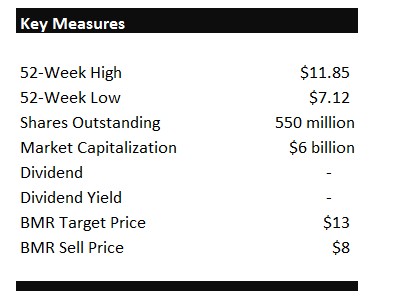
Opko health: (OPK: $9.85)
Four Wall Street analysts that specialize in Biotech say buy Opko. Two out of the four in fact say it is a double from current levels. Why all the excitement?
Opko Health is a diversified Healthcare company on the cusp of what we expect to be a healthy growth cycle, driven by several promising product launches across its pharma, biologics, and diagnostics businesses. The company is well-funded with $155 million of cash and $55 million of debt. The recent acquisition of Bio-Reference Labs, the third largest clinical laboratory in the US, will support uptake of the company’s diagnostics platform and add a valuable genetics testing franchise. Consensus calls for a gradual ramp of Opko’s near term launch opportunities, expecting the pipeline to drive significant long term growth, which results in the current valuation, offering an attractive entry point.
One of Opko’s key upcoming trials is for Rayaldee, a drug to treat kidney disease. It could be a blockbuster for the company, opening up a market of 9 million Americans. The company expects to receive approval in time for a 4Q16 launch date. The company has taken steps to prepare for ramping the product’s revenue upon approval. For example, some contract manufacturing issues were recently identified and addressed. Moreover, the company has recently made a few key leadership hires.
What is Rayaldee? Why is it successful? The drug addresses secondary hyperparathyroidism that is due to vitamin D insufficiency in patients diagnosed with stage 3 or stage 4 chronic kidney disease. When patients suffer from vitamin D insufficiency, excessive amounts of parathyroid hormone are secreted. If that hormone remains too high for too long, it can lead to calcium and phosphorous being released from bone. In addition to weakening bones, the situation can lead to the calcification of vascular tissue and renal tissue that can be life threatening. Between 40% and 60% of stage 3 and stage 4 chronic kidney disease patients are affected by this condition. In trials, patients taking Rayaldee achieved at least 30% reductions in plasma intact parathyroid hormone versus placebo, and Vitamin D insufficiency was corrected in more than 80% of the patients. By comparison, less than 7% of people who received a placebo saw their vitamin D insufficiency corrected.
Opko has put into place pre-launch marketing activities for Rayaldee, with expansion of the commercialization team underway, which includes 5 regional business managers, 10 internal reps, and 35 regional reps. Headcount for the sales force could eventually reach 70–80.
While the Street is bullish over Rayaldee’s prospects, it is important to discuss that Opko is not a one trick pony. The company has a full pipeline of other promising opportunities, including 4Kscore.
4kscore provides men with an accurate and personalized measure of their risk for prostate cancer. The 4Kscore can be used prior to biopsy, or after a negative biopsy, and can predict the likelihood of cancer spreading to other parts of the body in the next 20 years. The market’s reception to the product is well-regarded. In fact, Opko recently said that more than 5,000 physicians have prescribed 4Kscore tests and 5,300 procedures were conducted in June alone compared to 4,600 in April.
One lever of upside for 4kscore is obtaining reimbursement approval, as this would open up the purse strings for the end market to spend more. However, in order to qualify for reimbursement, 4kscore must pass tests issued by Medicare. Novitas Solutions, representing the local Medicare coverage in New Jersey, recently did not pass 4kscore due to conflicting determinations. This highlights how Opko is still in the early life cycle of 4kscore and having to work through various kinks to straighten out the business plan. Opko believes after further discussions with Novitas and additional review of the data, that Novitas will soon approve 4kscore for reimbursement later this year. The company is working on other approvals expected soon.
Some of the other promising opportunities in front of Opko include (i) the launch/ramp of Lagova which addresses growth hormone deficiency; (ii) the integration of the Bio Reference Labs acquisition; (iii) the closing of the $60 million Transition Therapeutics acquisition in 3Q16; (iv) the receipt of expected results of three other studies regarding promising new drugs in 4Q16. We will be keeping a close eye on all of these catalysts going forward and updating you accordingly.
BMR Take: Very simple story. Lots of favorable Wall Street ratings. Blockbuster new drug scheduled to hit soon. Strong balance sheet. Deep product pipeline. Strong value at this price level. Not without risk.
by Todd Shaver | Sep 8, 2016 | 7am News Flash
Apple: (AAPL: $106, down $3)
As expected, Apple recently unveiled its next-generation iPhone and Watch, as well as new wireless headphones, called AirPods. From our perspective, the addition of GPS was the key positive of the Watch refresh. On iPhone, the new features were also in line with expectations, with Apple reacting to the negative backlash resulting from the removal of the headphone jack by explaining the move and including both Lightning-based headphones and an adapter for analog headphones with each new phone. The higher memory of the phones was also a positive. Plus, the phone is waterproof now. All in all, it continues to be difficult for Apple to truly surprise with its new products given significant supply chain leaks, as the recent announcements were essentially in line with supply chain chatter.
The new iPhone 7 and iPhone 7 Plus are 40% faster than iPhone 6s due to Apple’s new A10 Fusion processor. The new models are 120 times faster than the first iPhone. Two new colors were added to the phone, black and jet-black, joining the three traditional colors: gold, silver and rose gold. Storage was doubled compared to previous launches, with the iPhone now coming with 32GB, 128GB and 256GB of memory priced starting at $649, in line with previous releases. Apple highlighted the upgrades to the camera, with the camera now featuring a 12-megapixel lens, but disappointedly only the larger Plus version will come with dual cameras. Overall, we thought that the phone was an improvement over previous models, but not a game changer that will reignite a significant upgrade cycle.
Apple also released Watch Series 2, with the main new feature being its standalone GPS capabilities. Apple is clearly focused on gaining share in the fitness community and partnered with Nike to create a Nike Plus version of the Watch. Watch Series 2 is also “swim proof,” allowing users to swim and shower with their watch. Additionally, the Series 2 is 50% faster than the Series 1. The starting price for the new watch is $369 and Apple will be offering a version of the Series 1, with an updated processor for $269. In our view, the standalone GPS is an important upgrade and the lower price of Watch Series 1 puts the product in a more competitive price range.
BMR Take: While the focus of the day is on product features, the most important takeaway in our view is that consensus top and bottom line estimates remain largely in-tact post the mega event. The 2017 consensus EPS outlook of $8.95 is still stable as well as the 2017 revenue outlook of $225 billion. Everybody can debate the merits of the new gadgets from the new product launch, but the bottom line is a story about very strong financials. We continue to see significant value in the shares.
by Todd Shaver | Sep 7, 2016 | 7am News Flash
Sprouts Farmers Market: (SFM: $20, down $3)
Sprouts announced updated guidance in advance of participation in the Goldman Sachs 23rd Annual Global Retailing Conference. The disappointing update reflected the impact of significant ongoing deflation, the stepped-up promotional environment, and an incrementally cautious outlook for the remainder of the year.
Comparable store sales growth for the third quarter ending October 2 is now expected to be flat. According to management, the prolonged deflationary environment, competitive landscape, and industry dynamics have prompted heavy promotions across the industry and adversely caused retail deflation and weak traffic generation.
Given the current environment, management reduced the full-year 2016 comparable store sales growth to the range of 1.5% to 2.5% (3.0% to 4.0% prior) and EPS to be $0.84 ($0.93 prior). In an attempt to ease the pain, the board approved a $250 million stock repurchase program worth approximately 7.5% of the share count.
All in all, we are looking at a very disappointing outlook, which is particularly surprising as the sharp guidance reduction comes just a month after the positive 2Q16 reporting, implying that there was a steep change in the competitive environment only in recent weeks, or perhaps that management is out of touch with the front line of the business. We think the latter.
Are there any broader implications? Many are questioning if this is a canary in the coal mine for a worse than expected deflationary environment aimed at addressing soft traffic trends. Though there is also a camp that is ring fencing the issue to Sprouts specifically, calling out that the company is simply struggling to execute in a difficult environment. Either way, a new wave of caution surrounding the entire Grocery vertical has now surfaced.
BMR Take: We are exiting our position. The Grocery market is under intense competitive pressure and until we see some type of shake-out event, the issues that have just surfaced appear to be an ongoing problem. We are not pleased with having to do this. We feel management has let us down; in fact misled us. Whole Foods (WFM: $29) was down 5% yesterday and is below the $30 level again. The whole industry is in trouble and we would rather take a small loss than wait for the stock to drop 50%, forcing us to take a big loss.
by Todd Shaver | Aug 31, 2016 | 7am News Flash
Twitter: (TWTR: $19.21)
Shares popped 5% yesterday on comments made directly by the company’s co-founder that a sale of the company should be considered.
Co-founder Ev Williams said in an interview with Bloomberg TV that the company has to weigh all options amid ongoing speculation it’s a takeover target. Williams initially declined to comment when asked by Bloomberg whether Twitter can remain an independent company. He went on to say, "We’re in a strong position now, and as a board member we have to consider the right options."
Board members are obliged to consider credible takeover overtures and often make similar boilerplate pronouncements when asked about deal-making. Even so, the Williams's comments come at a time when Twitter is often mentioned publicly as an acquisition target, as has been mentioned many times here at The Bull Market Report. The stock ran up 9% in early August amid unsubstantiated speculation that former Microsoft Chief Executive Officer Steve Ballmer and Saudi Prince Alwaleed bin Talal Al Saud were teaming up to buy the company. While analysts played down the chatter, Axiom Capital said that if Twitter’s business doesn’t turn around by mid-2017, a case could be made for a sale.
CEO Jack Dorsey, the co-founder who took the top job again officially in October, is trying to reshape the company’s reputation and product mix to draw a more mainstream audience. Investors have lamented Twitter’s recent user-growth slowdown, and the stock has fallen more than 17% this year. Revenue at Twitter is growing slower than expected, even as the company steps up efforts to court advertisers. The company is cutting deals to stream more live events, from sporting matches to political debates, and this year acquired an artificial intelligence startup to make live video look more professional.
BMR Take: The current situation feels eerily similar to LinkedIn, which was eventually acquired by Microsoft at a 50% markup. We see value in Twitter at these levels – that’s why it’s in the Special Opportunities Portfolio. We believe there are two opportunities here. The first is for the company to start the turnaround, growing users and revenues and profits. The second is for a firm with a ton of cash or valuable stock to swoop in and pick up the company. Google? Apple? Facebook? A Saudi Prince? A Steve Ballmer with all that Microsoft money? After all, Twitter started the Arab Spring; Twitter has been able to handle Donald Trump's comments; Jimmy Fallon starts a “trending topic” every Wednesday. Twitter is no Blackberry. It is a company of the future with a huge upside.
by Todd Shaver | Aug 30, 2016 | 7am News Flash
A Weekly Slice of Apple (AAPL: $106)
Shares were off less than $1 yesterday because the European Union said Apple must pay $14.5 billion in back taxes. What happened? Apple is facing a multi-billion dollar bill from European regulators who said the company cut an illegal deal with Ireland to avoid paying its fair share of taxes. The European Union ordered Ireland to collect up to $14.5 billion in back taxes plus interest, from Apple after finding the company paid almost no taxes from 2003 to 2014 on profits on sales throughout the 28-nation union. The decision, which follows a two year investigation, marks the biggest step yet in Europe’s controversial efforts to crack down on multinational corporations that channel profits through foreign subsidiaries to avoid or reduce tax liabilities.
The tax deal with Ireland, where Apple has two subsidiaries, allowed the company to have an effective corporate tax rate of 1% in 2003. The rate fell to 0.005% in 2014, meaning Apple paid just $50 on every $1 million in profit. [We thought this was a misprint. It is not.] The offshore subsidiary structure allowed Apple to avoid paying at least $15 billion in U.S. taxes on $44 billion in foreign income from 2009 through 2012.
Ireland is an attractive location for foreign subsidiaries because its 12.5% corporate tax rate is one of the lowest in the developed world. Conversely, the U.S. corporate tax rate of 35% is the highest among the 35 members of the Organization for Economic Development and Cooperation, although many companies pay less because of tax breaks.
Apple’s CEO Tim Cook defended the company's operations in Ireland, which date to the opening of a factory in Cork in 1980. "Over the years, we received guidance from Irish tax authorities on how to comply correctly with Irish tax law -- the same kind of guidance available to any company doing business there" Cook said in a letter posted on Apple's website. "In Ireland and in every country where we operate, Apple follows the law and we pay all the taxes we owe." Cook said he was confident that the ruling will be reversed after an appeal by Ireland.
And in a twist you couldn’t make up, Ireland is going to fight the EU’s ruling. They want no part of this mess. In an article in Fortune entitled: "Why Ireland's Government Doesn't Want Apple's Money," Ireland’s finance minister, Michael Noonan, is so angry that he’s willing to fight the European Commission all the way through the courts for the right not to collect the taxes that Apple supposedly avoided over the last 12 years. He’s already spent $750,000 of taxpayers’ money in fighting the European Commission. If you read between the lines, the Commission is inviting other countries to calculate how much they may have lost in tax revenue as a result of the alleged violations, and to claw it back from Ireland. That alone is good reason for Ireland to challenge the ruling. The last thing the Irish government wants is to establish that kind of precedent.
And Tim Cook? He says you can have taxes or jobs, but not both.
BMR Take: This story is not over and we suspect more weakness in the stock in the near term resulting from the negative press surrounding the tax matter. You just might see $100 a share. However, we think the end result, which we may see in as long as 2-3 years from now, might be a minuscule payment in back taxes to satisfy all involved, but it will no way impact Apple in any meaningful way. We see this as a buying opportunity in front of the September 7th new product launch.
by Todd Shaver | Aug 29, 2016 | 7am News Flash
Splunk (SPLK: $60, up 2% yesterday)
Splunk’s revenue increased 43% from a year ago, which beat the high end of guidance. The strength came from unexpected growth in licensing revenues. There were no real surprises to margins or cash flow. The full year revenue outlook was in fact raised by more than the 2nd quarter’s upside, a very strong signal. What we mean by that is that revenue beat guidance. So they should at least raise the full year revenue by the beat. Otherwise, they are saying this quarter was good but the next few quarters will be soft. The good news is that In this case, they raised the outlook by more than the 2nd quarter upside, so they are saying that the pickup we saw this quarter will continue – a good sign.
All that sounds okay. Why is the stock down? The key debate is over growth deceleration, which is being impacted by the shift toward Cloud subscriptions.
Splunk’s Cloud is a hosted SaaS*, which is different than customers directly purchasing Splunk through Amazon’s AWS**. While Splunk’s Cloud revenue stream is still less than 10% of total revenue in the second quarter, annualized Cloud bookings tripled to $100 million, and were double the level expected by even the management team. We know: It is very odd that too much success is being viewed as a bad thing by the Street.
*A software licensing and delivery model in which software is licensed on a subscription basis and is centrally hosted.
It is sometimes referred to as "on-demand software".
**Amazon Web Services. It offers a suite of cloud-computing services that make up an on-demand computing platform.
The shift in business towards the Cloud brings lower average selling prices and gross margins and negatively impacts on-premise license revenue. In fact, Splunk quantified that the mix shift to Cloud this quarter likely skimmed $8-$10 million from license sales, meaning Splunk would have posted much healthier license revenue growth than what was reported.
You should not be concerned about this mix shift trend from Cloud. Cloud actually boosts the ratable* portion of software bookings, which is a more visible type of revenue recognition. Note that the license-to-subscription mix shift issue is also occurring elsewhere at Microsoft, Oracle, Palo Alto, Tableau, and Red Hat. We should all be comforted to know that management is likely to break out its Cloud revenue contribution soon, which will bring further clarity to the business model and help properly set future expectations.
* Ratable means you collect revenue over lifetime use as opposed to all upfront.
BMR Take: The long run story is unchanged. Demand remains strong, fueling healthy revenue growth. We expect more visibility upon management disclosing the Cloud revenue mix. We expect the stock to fully recover from the quarter and move higher in the back half of the year. We believe this is an opportunity to average down by adding to positions.
