
by Todd Shaver | Dec 23, 2019 | Free Newsletter (Sent Weekly Monday at 12pm), Weekly Newsletter 7pm Sunday
The Weekly Summary
December was chaotic last year, keeping investors glued to their screens as we watched a miserable season turn into one of the biggest rebounds in recent memory. This time around, conditions are unusually quiet as a late Thanksgiving turns into a compressed holiday season. Wall Street is already looking toward the Christmas and New Year breaks. So are we.
After all, Santa came early and often this year. The market as a whole has rebounded 28% YTD, handily recovering all ground lost in the 4Q18 rout and then continuing to push into record territory. The S&P 500 has now rallied a healthy 12% past last year's peak, with more than half of that surge coming in the last four months. Whether the motive is relief that we've skirted another year without a recession or more straightforward optimism, the mood is as good as it gets.
If anything, we're inclined to urge a little caution here. When a full 44% of investors are actively bullish and the so-called "greed index" flashing at extreme levels, this is as good a time as ever to take a little profit and rotate the returns back into stocks that haven't flown as far as the rest of your holdings or offer a comparable return for lower risk. The perfect time to buy was a year ago when everyone but us was terrified that the trade war and the Fed had triggered the end of the world. While today this is not an awful entry point, a selective approach can be your friend here . . . we would definitely not pour money into index funds right now.
After all, while the active BMR universe is up 42% so far this year, our stocks have tangible growth on their side. Earnings for the S&P 500, on the other hand, have spent the entire year in a stall, so there's no compelling mathematical reason for the index to keep moving up without straining historical multiples to the bubble point. Right now the market as a whole carries an 18X earnings multiple, well above the 15-16X that investors have normally been willing to pay.
In exchange for those inflated fundamentals, investors are getting negative growth. Those companies are actually tracking lower earnings than they did a year ago, and are likely to keep deteriorating at least into the 4Q19 reporting season. After that, we'll simply have to see if the combination of lower interest rates and a truce in the global trade war shakes a little growth free. If not, stocks will look increasingly vulnerable to any external shock to sentiment . . . the higher the multiples get, the more precipitous the fall from grace becomes.
However, there's a lot to be said for a sympathetic Federal Reserve and any relief from the trade war. The White House estimates that even Phase One in a deal with China coupled with a new NAFTA accord will boost GDP growth 0.5% in the coming year, which is enough to drive a so-so economic expansion into something approaching spectacular. It's definitely far from the recession zone that everyone was worried about a few months ago.
You need growth to decline in order to realistically talk about recession ahead. No decline means no recession. And no recession means people who retreated to the market sidelines are now having a hard time resisting the urge to get back in before they miss out completely.
Remember, while earnings haven't moved up in the past year, they haven't dropped a lot either. The trade war has delayed a lot of new corporate investment initiatives without driving executives to pull the plug on any established cost centers. We haven't seen mass layoffs. No sprawling Financial conglomerates or prominent hedge funds have imploded the last time the Treasury yield curve briefly inverted.
And that curve is healthier than a few months ago. Barring a lot of dread around the coming election, the rate environment once again reflects lower risk in the short term and higher uncertainty farther out into the future, exactly as it should. The Fed has done its work well. Investors have a reason to cheer.
So what can go wrong? While we are always quick to accentuate the positive, we also acknowledge that other investors make errors when the mood swings too far in either direction. Expectations can get stretched to unsustainable levels, setting up the next inevitable round of disappointment, second guessing and nervous selling. That's ultimately a good thing for those of us who have been watching and waiting for a chance to buy great stocks on the dip. Throughout our career (collectively well past a half century actively in the market) the long-term trend always points up and the dip is always worth buying.
There’s always a bull market here at The Bull Market Report! Gary Jefferson has the week off and with the holiday approaching, we decided to use his absence to try something new with an in-depth review of Todd's Stocks For Success. We hope that you come away from this issue with deeper understanding of why our founder likes Berkshire Hathaway so much. He would buy any of these stocks on weakness.
Finally, a scheduling note ahead of the Christmas holiday. The market will close early on Tuesday and stay shut until Thursday morning, so news will be light and our News Flashes will probably taper off a bit. We'll use the time to reflect on the year that's gone and cement our thinking on the year ahead. Ideally we'll also be able to update the site a little and perform other housekeeping as we get the portfolios in position for 2020. We'll be in touch either way, but as always, we wish you a happy holiday and the best possible experience as an investor.
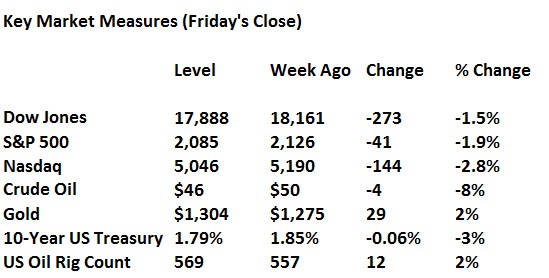
Key Market Indicators
-----------------------------------------------------------------------------
BMR Companies and Commentary
The Big Picture: Big Rally, Narrow Bench
While the last few months have been great for the S&P 500 and our stocks as well, the gains remain restricted to a narrow field of relatively safe bets. Investors simply aren't thinking outside the box right now. They're content to park their money in a few big stocks that don't require a lot of patience or even conviction. While we'd love a little of that capital to flow immediately to a few of our smaller and more neglected recommendations, we don't mind in the slightest.
For one thing, we already recommend many of the leaders. Just seven BMR stocks account for 40% of the S&P 500's gains for the past quarter, and Apple (AAPL: $279, up 2%) alone contributed almost half of that upside. If you weren't bullish on Apple in the last few months, you missed the boat. We were right to keep the giant in our sights, and it gave us everything we hoped to see. Apple has surged a full 77% this year, recovering $700 billion in market capitalization along the way.
Microsoft, Alphabet and to some extent Facebook, Berkshire Hathaway, Johnson & Johnson and Visa also contributed a significant amount to the market's gains in the last few months . . . not to mention the year as a whole. Big stocks got big because the enterprises driving them were some of the most dynamic companies around. This year, they got even bigger. All are hitting all-time highs. How far can they go before taking a break? We'll simply have to see, but as long as earnings keep outperforming everyone else around, the stocks have all the room they need.
Then there's Amazon (AMZN: $1,787, up 1%), which is as dynamic as ever but the stock hasn't gone anywhere in the last quarter. It's also down 12% from its peak, so there's no sense of straining any kind of historical limit. When investors come back, this can once again be a $2,000 stock and a trillion-dollar company. And in that scenario, the S&P 500 gets enough of a boost to break another record. No other stock has to do any work. Amazon can do it on its own.
We see that story play out again and again. A full 3 in 5 S&P 500 constituents are actively lagging the market and the lower you go on the market food chain, the rarer true leadership gets. A staggering 85% of the stocks on Wall Street have underperformed the S&P 500 this quarter. Most are doing okay. True losses are limited. They're simply getting left out.
But the market will never tolerate an imbalance for long. Sooner or later, one or more giants will hit a wall and the money that's flowing to them now will rotate into smaller stocks. When that happens, we'll have a reason to cheer. On average, our recommendations are still down 12% from their 52-week highs, let alone lifetime peak levels. We've come a long way back in the last few months without even clearing what are still formally correction conditions from late in the summer, when Technology took a huge step back. There's money to be made here.
Look at Roku (ROKU: $137, up 3%). It's up close to 350% YTD but is 22% off its peak. That's an opportunity. Even though a handful of giant companies are doing most of Wall Street's work, plenty of smaller names keep breaking records as well. Splunk (SPLK: $151, up 5% this week), for example, is once again within sight of an all-time high, set in early December, capping a year that's literally run rings around the market as a whole. This stock has gained 44% YTD but the ride has been wild. We've seen it plunge from above $140 to below $110 twice this year, so the moral here is to hold on tight through the retreats.
-----------------------------------------------------------------------------
Berkshire Hathaway (BRK-B: $226, flat last week but setting an all-time high)
This stock is a must-own. If you believe in America, then Berkshire is the place to put your money where your mouth is. The stock is worth $553 billion, making it one of the top 10 largest companies in the world. Do you want to know what they do? Well, here it is, straight from Yahoo Finance. Breathe it all in:
Berkshire Hathaway Inc., through its subsidiaries engages in insurance, freight rail transportation, and utility businesses. It provides property and casualty insurance and reinsurance, as well as life, accident, and health reinsurance; and operates railroad systems in North America. The company also generates, transmits, stores, and distributes electricity from natural gas, coal, wind, solar, hydro, nuclear, and geothermal sources; operates natural gas distribution and storage facilities, interstate pipelines, and compressor and meter stations; and holds interest in coal mining assets. In addition, it offers real estate brokerage services; and leases transportation equipment and furniture. Further, the company manufactures boxed chocolates and other confectionery products; specialty chemicals, metal cutting tools, and components for aerospace and power generation applications; flooring, insulation, roofing and engineered, building and engineered components, paints and coatings, and bricks and masonry products, as well as offers homebuilding and manufactured housing finance; recreational vehicles, apparel products, jewelry, and custom picture framing products; and alkaline batteries. Additionally, it manufactures castings, forgings, fasteners/fastener systems, and aerostructures; titanium, steel, and nickel; and seamless pipes and fittings. The company distributes newspapers, televisions, and information; franchises and services quick service restaurants; distributes electronic components; and offers logistics services, grocery and foodservice distribution services, professional aviation training programs, and fractional aircraft ownership programs. In addition, it retails automobiles; furniture, bedding, and accessories; household appliances, electronics, and computers; jewelry, watches, crystal, china, stemware, flatware, gifts, and collectibles; kitchenware; and motorcycle accessories.
Here are the company’s top five holdings:
Apple
Comprising 24% of the Berkshire Hathaway portfolio, Apple represents Buffett's largest holding, with a whopping 250 million shares in the tech giant, as of November 2019. Currently worth approximately $65 billion, in 2018, Apple surpassed Wells Fargo to capture the #1 spot after Berkshire Hathaway purchased additional shares of the Steve Jobs-founded company in February of that year.
Bank of America
Warren Buffett's second-largest holding is in Bank of America, valued at $27 billion and comprising 13% of his portfolio. Buffett's interest in this company began in 2011 when he helped solidify the firm's finances, following the 2008 economic collapse. Investing in Bank of America, which is the nation's second-largest bank by assets, falls in line with Buffett's attraction to financial stocks, including Wells Fargo & Company and American Express (see below).
The Coca-Cola Company
Buffett once claimed to consume at least five cans of Coca-Cola per day, which may explain why the Coca-Cola stock is his third-largest holding. But one thing is for certain: Buffett appreciates the durability of the company’s core product, which has remained virtually unchanged over time, with the exception of the ill-fated "New Coke" formula rebranding, in the mid-1980s. This makes sense, given that Buffett started buying Coca-Cola shares in the late 1980s, following the stock market crash of 1987. Presently with 400,000,000 shares, valued at $22,000,,000,000, Coca-Cola accounts for 10% of the portfolio.
Wells Fargo
At 9% of his portfolio, Buffett currently holds shares valued at over $19 billion. Although this is Buffett's fourth-largest position, Wells Fargo previously occupied the top slot for many years. A series of scandals that began in 2016, including the creation of millions of dummy bank accounts, unauthorized modifications to mortgage plans, and the fraudulent sale of unnecessary car insurance, has hurt the bank's reputation.
American Express
This company is the third financial services company to make Buffett's top five list, occupying 8% of the portfolio. Valued at nearly $18 billion, Buffett acquired his initial stake in the credit card company in 1963, when it sorely needed capital to expand its operations. Buffett has since been a savior to the company, many times over, including during the 2008 financial crisis. With 12.5% average annual return over the past quarter-century, American Express has proven to be a valuable asset.
We’d like to say THEY COVER IT ALL. Again, if you believe in America and free enterprise, you might just want to buy one share of the A series – it’s only $340,000 per share! (A good friend of ours used to call us up at the office back in our Morgan Stanley days in the 1990s and would leave a message: “I just called to place an order for 100 shares.” That’s when the stock sold for $35,000 a share, so 100 shares was worth $3.5 million. He thought this was hilarious! Well, how about now? 100 shares is worth $34 million! HAHA.
What’s the point about all of this hilarity? Get a piece of this company. 10 shares. 100 shares. 1000 shares. Whatever you can afford. You’ll never regret it. Our Target of $230 is about to be breached. We hereby raise it to $255. Our Sell Price remains the same: We would not sell Berkshire Hathaway.

-----------------------------------------------------------------------------
Good Investing,
Todd Shaver, Founder and CEO
The Bull Market Report
Since 1998
by Scott Martin | Aug 1, 2019 | 7am News Flash
Netflix (NFLX: $362, down 3% earlier this week) disappointed last night and the stock's precipitous overnight decline provides us with a different kind of wake-up call. Whether you're in Netflix or not, you're going to want to read this flash.
On the surface, Netflix delivered a quarter almost entirely in line with what investors told themselves they wanted to see. Revenue of $4.92 billion was only 0.1% below guidance and reflects healthy 26% year-over-year improvement. Even quarter-to-quarter, the company squeezed 9% more cash out of its subscribers than it did three months ago.
Furthermore, despite profit being a lower priority while management invests vast amounts in original content, it was nice to see that Netflix carried $0.60 per share across the bottom line, $0.04 better than we expected.
But the market found fault as Netflix missed its subscriber growth target, losing 126,000 paid U.S. accounts and only adding 2.83 million new viewers overseas. Management told us to expect the audience to grow by an even 5 million accounts, so it's a clear disappointment.
There are some compensating factors like the way revenue hit guidance. Netflix raised prices in many markets and this is apparently where the pain point is. We know that now. Furthermore, management has doubled down on its aggressive growth forecasts and now expects subscriber adds to accelerate again in the current quarter.
We've had it with Netflix. We've warned throughout that it's going to be a volatile ride. The stock is now down 20% since we started covering it this time around, after making 65% back in 2016-17. We're worried about competitors like Disney and Apple starting to crowd into the space. With a negative $3.5 billion of free cash flow this year and next, we'd rather be invested in a company that actually makes money. We hereby remove Netflix from our High Tech portfolio. We added them on July 16th last year. We're gone now on July 18th, 2019.
However, even for a volatile stock, the reaction to so-so numbers was so extreme that we now suspect that the market as a whole is getting overheated. It's not Netflix. It's Wall Street. And an overheated market can lurch lower as fast as it soars. Even counting the stocks that fizzled and left our list under a cloud, the BMR universe is up a dramatic 33% YTD. This is a great time to lock in some of that profit before a moody market can take it away.
Is It Time to Take Some Profits?
Why are we asking this question?We can’t predict the future. You may think we can, but we can’t. And we want YOU to think about where YOU are and where you are going with your investments. We have made some amazing stock picks and we’ve made you a lot of money in many of these. (We’ve had a few losers too.) Roku is now a triple since we added it last year. Shopify is up 350% in two years. Square is another quadruple play. PayPal, Twilio, Paycom, Microsoft, Apple, Visa: all strong performers.
Is it time to take some of that off the table? There are a lot of things to worry about in the world today: Trump, Chinese tariffs, Iran, immigrants, global slowdown, flat earnings for the past quarter and next; negative interest rates in Europe and Japan . . . can they happen here? If so, will the Fed run out of ammunition if short rates go to zero? What about the attacks on Big Tech by Congress and the European Union? Can Facebook, Amazon and Google survive this onslaught? Of course they will, but why sit around with someone hitting you on the head with a hammer. Maybe it’s better to step a little away from the scene.
Lots of questions. No solid answers. Irrational exuberance was proclaimed by Alan Greenspan on December 5, 1996 after an amazing bull run in the preceding few years. But the bull market continued to skyrocket until the Spring of 2000. That’s almost 3½ years after Greenspan’s call. So is it too early to start taking profits now?
Again, we don’t know, but we do know that there are things you can do. You can sell some calls against your stocks. This brings in cash and cushions you on the downside a bit. But if Roku, which was at $32 at the start of the year goes from $110 now to $90 or even lower, it’s not going to cushion you much with $5 of call option income. So perhaps you can take some profits off the table. Maybe you should put some stops in place. Sell some at $104. Sell some shares if it hits $96. Sell some more if it hits $90. Then if it goes to $70, which is a distinct possibility in a nasty bear market, you’ve protected your profits and have cash in the bank.
And don't forget, we’ve got 17 stocks in our High Yield and REIT portfolios that are paying from 3% to 11% dividends. (Be wary of Annaly and New Residential, though.) These stocks are just waiting for you to place some cash in them so that you can sleep better at night.
This content is for our beloved subscribers and anything you see on this page is just an excerpt!
Please note BullMarket.com access is available to paid subscribers only. Our Members Areas include archives of past Newsletters, News Flashes, our ten portfolios including STOCKS FOR SUCCESS, Healthcare, High Yield, High Technology, Exchange Traded Funds (ETF's), Energy, Senior Growth Opportunities, Financial, Long Term Growth, and Special Opportunities. Also, all of our in-depth research is available, and more.
Already a subscriber?
Login Here
Ready to join?
Subscribe Now!
by Todd Shaver | Nov 6, 2016 | Weekly Newsletter 7pm Sunday
The Week Ahead
The S&P 500 on Friday logged its first nine-day losing streak in 36 years. However, the magnitude of the sell-off has been a modest decline of just 3%. The re-pricing better reflects election uncertainty and the likelihood of a December rate hike. While it can be tough to sit through markets grinding lower, we think such pullbacks offer good opportunities. This week we consider Facebook, Google, CBRE, Goldman Sachs, First Solar, Home Depot, Apple and Twilio.
Highlights From The Past Week
Overblown inflation fear roils markets Thus far, financial assets have fared poorly during the fourth quarter. Fear of a fundamentally unwarranted climb by Treasury yields has weighed on performance. The latest climb by the 10-year Treasury yield from a September average of 1.63% to a more recent 1.81% has been ascribed to expectations of a series of Fed rate hikes in response to a possibly much faster than 2% annual rate of inflation. However, the current bout of inflation anxiety may be overblown, as the Fed is constrained by long-term borrowing costs reaching burdensome levels, particularly regarding the effect to the national debt.
Housing-sector stocks plunge The fourth-quarter-to-date’s 8% plunge incurred by the Nasdaq Housing index reflects considerable worry over a possible rise in borrowing costs that will stifle housing activity. Markets remember all too well how a climb in mortgage rates during the “taper tantrum”* of 2013 reduced home sales. Yes, the 10-year Treasury yield could jump up to 2% or higher, but its stay will be limited if housing buckles under the weight of higher rates. Recall, the housing market is one of the primary sectors driving the economy.
* Taper tantrum is the term used to refer to the 2013 surge in U.S. Treasury yields, which resulted from the Federal Reserve's use of tapering to gradually reduce the amount of money it was feeding into the economy. The taper tantrum ensued when investors panicked in reaction to news of this tapering and drew their money rapidly out of the bond market, which drastically increased bond yields.
Risk-off trade seen in big FANG sell-off In the last week the so-called FANG stocks (Facebook, Amazon, Netflix, and Google) have stumbled. As earnings and outlooks disappointed, shareholders have awoken to the new normal low growth world and wiped out over $100 billion in market capitalization of the four horsemen of the Fed's wealth creation bubble.
BMR Companies and Commentary
First Solar (FSLR: $32, -20%)
First Solar, the world’s largest manufacturer of solar solutions, reported EPS of $1.22 per share for the third quarter, beating analysts’ bottom line expectations of $0.75. Unfortunately, the quarter’s profitability was not enough to please inventors.
Sales fell 46% to $690 million. Worse, CEO Mark Widmar slashed sales guidance for 2016 to $2.9 billion from $3.9 billion due to the timing of certain utility-scale solar project sales. Widmar withheld comment on the company’s 2017 outlook deferring until November 17th when First Solar will give an outlook update. The combination of the decline for 2016 revenues and uncertainty in articulating visibility to 2017 revenues and earnings left the investing community with little choice but to sell first and ask questions later. First Solar sold off over 14% after the release.
BMR Take: The long term view is unchanged. Solar is a key pillar of our country’s future energy infrastructure. First Solar is a market leader. We think the choppy near-term sales trends and much lower stock price present an attractive entry point.
Admittedly, the volatility and the fall-off in the stock is hard to watch. One positive is that the company is trading at a little over one times sales. The market cap is $3.2 billion with sales projected to be $2.9 billion this year. The company has for years been trading at 2-3x sales. When the company rights itself next year we can see the stock trading at least 2x sales which should give us a price in the 50s or 60s towards the end of 2017.
We understand this is not a pretty picture at the moment. But the company isn’t going to dry up and go away, not with $3 billion in sales, and not within an industry that has such unlimited potential.
Goldman Sachs (GS: $176, -1%)
Goldman Sachs' recently made its 3Q16 quarterly filing with the SEC, the 10Q. Reading through 10Qs offers extra insights on business trends. What we learned in Goldman’s 10Q this time was very positive.
Goldman experienced just three loss days in its trading business in the quarter. This is significantly lower than the uptick last quarter to more than 10 loss days. The recovery highlights greater control over volatile markets. This is a favorable trend for their trading business.
Also, we note progress with regulatory issues, specifically the Volcker rule. The Volcker rule constrains Goldman from trading for itself where there could be a conflict of interest with its clients. Consequently, Goldman has not been able to make as much money as prior to when the rule went into effect. However, in the 10Q, it was disclosed that the negative impact from the Volcker rule is moderating. We see this as a strong positive.
BMR Take: Goldman is the #1 investment banking franchise. Given our recent findings reading the 10Q, as well as the recent flurry of deal activity, we see compelling value in the shares.
CBRE Group (CBG: $26, +2%)
CBRE is the world’s largest commercial real estate and services firm. The company just released a new report that provides a comprehensive analysis of real estate trends in the 20 major cities of the world.
The report provides perspective on key variables such as economic trends, occupier trends, supply trends, rent trends, yield trends, and investment activity, so that investors can quickly and easily understand pricing and market conditions. We live in an age of cities. In the developed world, where the service sector drives economic activity, cities have reinvented themselves as vibrant live-work-play destinations.
Beijing, Boston, Chicago, Frankfurt, Hong Kong, London, Los Angeles, Madrid, Milan, Munich, New York, Paris, San Francisco, Shanghai, Singapore, Sydney, Tokyo, Toronto, Vancouver and Washington, D.C. are featured in the report as key targets for international investors. These cities were selected based on size, transport infrastructure, corporate presence, real estate investment flows and several other indicators of importance.
BMR Take: CBRE is one of the top real estate services companies in the world, operating under the radar to most outside investors. The company is active in each of the major cities around the globe. We continue to believe in the company and are waiting patiently for other investors to notice as well, to move this stock in the mid-30s where it belongs.
Home Depot (HD: $121, -2%)
Home Depot has been languishing in recent weeks. Concerns include a softening traffic trend, the cyclical nature of the business, and a lack of upcoming catalysts to push shares higher. We think these views are short-sighted.
The consumer sector of the economy remains healthy. While we might not be seeing households spend at a particularly fast pace, household net worth is back to all-time highs and unemployment is low.
BMR Take: Home Depot may not have the exciting appeal of a stock that could double, but this blue chip is on very stable ground and we expect solid performance to continue.
Twilio (TWLO: $32, -10%)
After reporting strong results in each of its first two quarters as a public company, the tone of business at Twilio this quarter continues to be very positive. Management pointed out on the recent earnings call that the inputs to the business remain strong, the fundamentals are solid, and it feels strongly about its competitive position. Twilio continues to demonstrate remarkable growth with its business-to-developer model, cloud communications platform, and steady stream of new product innovations, including Voice Insights and the Twilio Enterprise Plan.
We still see a path to profitability. Twilio’s operating margin of -5% was above consensus of -10%, while EPS of -4 cents was above consensus of -8 cents. Operating cash flow of -$700,000 and free cash flow of -$7.1 million were above estimates. Management said it targets operating income breakeven in 4Q17.
BMR Take: Twilio is the leading cloud platform for communications. Similar to Amazon Web Services, Twilio plays a critical role for software developers by allowing them to easily and securely build communications services. We see bright future prospects for the space as seen by very strong performances at Amazon AWS, Microsoft Azure, and Google Cloud. The end market cloud opportunity is exploding and we see Twilio participating in a big way. But what a volatile stock! Not for the faint of heart.
Facebook (FB: $121, -8%)
The company reported earnings results that were outright stellar. As we said in our News Flash Thursday morning, 3Q16 net income rose to $2.4 billion from $900 million a year earlier. Earnings came in at $1.09 per share up from 57 cents a year earlier. The $1.09 handily beat the 97 cents that analysts expected. The company said that mobile was responsible for much of this growth. Revenue hit $7.0 billion in the third quarter, up 56% from $4.5 billion a year earlier, topping expectations of $6.9 billion. Management said that 2017 is expected to be an investment year with technology hiring ramping, while also reiterating that ad load growth is expected to slow in 2H17 impacting ad revenue growth. The market didn’t take to that and hammered the stock.
We are not concerned. In each of the past several years, management has been upfront about things like this and set a similarly low bar. The outlook is very beatable and most analysts argue that nothing new really surfaced this quarter (except for this amazing growth.) Fast money is driving the near term trading trends for Facebook. When the focus returns to the fundamentals, we see a lot of upside ahead.
One key indicator of health was that the ratio of daily to monthly active users stabilized this quarter. This demonstrates stronger engagement trends, which confronts a key issue institutional investors have.
BMR Take: Facebook remains a top pick in the internet/social media sector. The fundamental prospects remain bright. Monthly active users increased 16% to 1.8 billion this quarter. Wow! That is a lot of people – 25% of the total population of the world. Some say Facebook is set up to become the most profitable advertising company in the history of the world. We are not fighting anyone on that at all.
Upcoming Economic News
Tuesday, November 8th
US Presidential Election
Time: All Day
This week all eyes will be on the big event, Trump versus Clinton. We expect a close race. The thinking on the Street is that if Clinton wins, things will remain calm and peachy, just like things are now with Obama. In other words, a Clinton win will maintain the status quo. However, if Trump wins, the uncertainly of what he is and what he will do will cause the market to head straight down. And of course, this has been happening for the past few months due to the uncertainty of it all. The market hates uncertainty.
We have a different take. Presidents have been coming and going for over 200 years. This is no different. The market will assimilate the victor and then be able to go up or down over time as the economy moves higher or lower. At the moment, the Fed has interest rates at record lows – they have never been lower. Yes, they may raise next month but then again they may not. In either case, the market will accept it and move through it. And the country will survive and thrive and we will see higher stock prices in the future.
After the winner is chosen the market will have this veil of uncertainty lifted. It may not be who you expect, nor be what you wanted but the market will be able to adapt to it and get back to business.
A Word From Gary Jefferson
Jefferson Financial Group
First Vice-President, Investments
UBS Financial Services, Inc.
Last December the Fed hiked interest rates for the first time since the financial crisis of 2008. The market dropped a little, and then rallied back, dropped a little again, rallied back and then plunged straight down to result in what many call the worst January in the market's history. At the time, the market was experiencing an earnings recession with YoY earnings growth comparisons negative. It looks like 3rd Qtr earnings this year are going to finally be positive and break the streak of five consecutive down quarters. The question then becomes, "Can investors expect a repeat of last year's decline if the Fed hikes rates again this December now that the earnings recession is over?"
There is quite a bit of growing sentiment throughout the investment community (and excitement) that, because the earnings recession is finally over, we need not worry about a drastic decline based on any Fed hike this time around. Instead, they look for clear sailing ahead. But there are other experts who make a very valid argument that this market is not and has not been driven by earnings. The clear evidence for this is how it shrugged off five quarters in a row of earnings declines. Rather, the market has been all about low interest rates; i.e., there is no way it is trading at 18x earnings based on the earnings outlook. Thus, higher rates are a big threat to equities if this continues and current valuations provide little, if any, margin of safety at all. (Welcome to the wonderful world of clear and easy investment decision making).
We have always believed trying to time the market is never a good thing. However, while we don't believe a rate hike will be what triggers the next financial crisis, we do believe it has a potential short-term market risk attached to it. Long-term investors weather these types of risks year in and year out. Tactically, however, having some extra cash to take advantage of any pullback triggered by a rate hike could, at best, be a good thing and, at worst, not much of a bad thing. Kind of like, "Heads I win and tails we almost tie".
We are also not looking at a rate hike standing alone. Obamacare premiums are going up 25% for 2017. What we see is a double whammy for the average American – increased health premiums and a rate hike will directly and negatively affect the disposable income of nearly everyone. So, in spite of the end of the earnings recession, it is far from clear how the market may react to a rate hike considering other factors that tie in to it.
Adeptus Health Update (ADPT)
We loved this stock when we researched it in the Spring, as they were going to take over the hospital Emergency Room market, but by July we thought something was fishy, so we issued a News Flash on July 21st removing the stock at the $50 level. We even mentioned the possibility of fraud. Well, guess what? One quarter later the company announced terrible earnings and the stock which had sold off to the $27 level by Tuesday, the 1st of November, opened at $11 on Wednesday. It closed Friday at $8.50. Wow. What a story. We expect lawsuits.
Two Titles Here:
Update on Twitter - A Pure Speculative Play
The Options Corner
We have a hunch. We think Twitter (TWTR: $18.02) might just get bought out after all. We certainly don’t have any inside information and even if we did we couldn’t tell you about it! But we have been reading a lot about this company, the culture, the worldwide impact it has had and continues to have, the 317 million users. We can see someone stepping up and buying them now that the shark-feeding frenzy has worn off and the stock has receded. The company has a market cap of $12.5 billion now, down from $17.5 billion last month. That’s a lot of money, but to an Apple or a Google or a bunch of other companies that’s really not a lot of money. Someone just might step up to the plate with a nice $25 per share offer. Just a hunch.
Well, what if the stock is bought out for $28 a share? How would one profit from a move like this? You could buy a January 25 call for just 23 cents. 10 options that control 1000 shares would cost just $230. If the stock went to $28 the option would trade for $3.00 or $3,000. Not a bad profit. Of course, if the stock doesn’t go to $25 by January 20th, you would lose your entire $230. And if you did 100 options, controlling 10,000 shares for $2,300 and it went to $28, the option would be worth $30,000. Very interesting.
If you think you need more time, you could buy the January $25 2018 call (LEAP) for around $1.25. 10 options that control 1000 shares would cost you $1,250. If the stock went to $30, the option would trade for $5, or $5,000. Very interesting. (Oh – we just said that above!) Again – this is pure speculation. 90%+ of options buyers lose all their money, so be careful.
High Yield Corner
If you read the New York Times, then you saw this terrifying headline: "S&P 500 Index Marks Its Longest Losing Streak in 36 Years.” Scary, isn’t it? We are entering a period of intense de-risking that is causing people to sell off equities at a breakneck pace. The streak is pretty severe, but the trend is a lot like last year when stocks, bonds, and just about everything else fell shortly before (and after) the Federal Reserve’s rate hike in December. Something similar is happening now.
This time there are some extra jitters because of the election cycle, and several analysts have recently published notes warning that a Donald Trump victory could cause stocks to fall 5% or more. Whatever your politics, the volatility of the presidential election is something to be aware of and to look at objectively. The market is telling us that it does not want a Trump victory, with several economists and financial publications (including the Wall Street Journal, The Economist, and the Financial Times) warning that Trump’s win would be a bad thing. You need to be aware that many people are selling stocks off for this very reason.
Ironically, if the market sells off enough between now and election day, it might actually rise with a Trump victory even if the market still doesn’t like Trump. Why? Because the market hates uncertainty more than anything else, and until the election is over we will remain uncertain about what happens.
The volatility in stocks is amplified in the high yield world. Everything is down. The last month has been shockingly cruel for high yield assets. But not all of this is because of the election. The worst performers have been REITs. The SPDR Dow Jones REIT ETF (RWR: $89) is down over 7% in the last month. This massive decline is due to the run-up in REITs earlier in 2016. Many REITs are still up year-to-date, such as Bull Market Report pick Digital Realty Trust (DLR: $91), which is up 20% year-to-date and is still yielding a safe 4% with funds from operations far in excess of dividend distributions. Others aren’t doing so well. Omega Healthcare Investors (OHI: $29) fell over 6% this week and is down 16% year-to-date.
But Omega Healthcare is one of the best buys in the REIT space right now, which is why we encourage investors to double down on this great name. The decline has less to do with Omega’s fundamentals than with a sharp fall at HCP (HCP: $29.50), one of the biggest REITs, a S&P 500 constituent, and a dividend aristocrat. HCP is spinning off riskier assets which has negatively affected its income statement. EPS was a 6 cent disappointment partly because of the spinoff, and the firm’s future post-spinoff is less clear than many would like. Thus its sharp decline after reporting earnings this week.
But none of this has anything to do with Omega, which fell in sympathy because it’s another Healthcare REIT. This is indiscriminate selling. We recommended Omega over HCP for a number of reasons. Its FFO remains above distributions. The company announced results this week and, although FFO was one penny below expectations, it was up 5% on a year-over-year basis, and full year FFO is guided to be $3.39. Its annual dividend payments are $2.44, meaning the dividend coverage ratio is 140%. And that’s after the company raised dividends three times this year. There is more room for dividend increases and it is a very safe dividend. Should such a firm be yielding 8.4%? Of course not - but the market is scared and is indiscriminately selling. That makes it a great time to double down on Omega, and wait for it to recover. After the rate hike and election decision, that recovery is almost inevitable. (Powerful words from The Bull Market Report – hold us to it!)
The second-worst performers of late were the BDCs. The UBS Etracs BDC ETF (BDCS: $21) fell over 6% in the last month, after falling nearly 4% last week alone. The ETF has erased almost all of its gains and is no longer outperforming the S&P 500. This makes sense with such a volatile asset class.
Again, rising interest rates are a big part of the concern. Higher interest rates could cause non-performing debts to rise for BDCs, lowering their NAV and interest income. It will also make borrowing costs higher for BDCs, causing their profit margins to fall. This is all worrying - and is reminiscent of similar worries causing the industry to fall in 2015 (and in 2013 and 2011 before that).
That’s why we recommend a light and selective BDC allocation. Currently we only like Main Street Capital (MAIN: $33) and continue to rate it a hold thanks to its growing 8% total dividend yield including special payouts. Main Street reported earnings last week and beat on both net investment income and revenue. Its NAV is up 2% year-over-year, but its current price is a 50% premium to book value. That high premium is worrisome to risk-averse investors, which is why Main Street might not see much capital appreciation in the short term. However, its steady and long-term performance suggests it’s the best BDC to hold. We probably haven’t seen the bottom for BDCs yet, which is why we are cautious about the industry as a whole in the short term. Long term, though, we continue to like Main Street’s ability to continually deliver a high income stream, with no hint that this is going to stop anytime soon.
Let’s turn to MLPs. This was a wild week for oil, with reports and counter-reports about an OPEC oil production freeze deal causing spikes and declines in oil futures. It’s unclear whether Saudi Arabia and Iran are going to agree on an output freeze or not. This has big implications for MLPs, even the ones that do little in oil. Oil futures ended Friday down, finishing the week sharply lower. As a result, the Alerian MLP ETF (AMLP: $11.90) lost 5% of its value this week. The fund is now down slightly year-to-date. With MLP values so closely tied to the volatile oil market, it’s impossible to rate MLPs based on fundamentals alone, and it’s impossible to expect these to start trading higher if oil doesn’t go higher. A bet on MLPs is a bet on higher oil prices, and that’s frankly unpredictable. We remain cautious on MLPs and energy-related stocks as a general rule, but special opportunities can and do arise.
Finally, let’s turn to junk bonds and the corporate debt world. Rising interest rates are very bad for this asset class. It lowers the value of outstanding debts and makes it harder for companies to issue new debt and to pay back their new debts. Yet the Fed seems intent on raising interest rates next month. Thus the SPDR High Yield Bond ETF (JNK: $36) is down 2% over the past month after a 1% decline this week. The market is worried about rising default rates, but we remain contrarian on this point. Default rates have been rising for a while and high yield bonds have fallen in value for even longer as the market anticipated this dynamic. Keep in mind that the SPDR junk bond fund is down over 7% from the beginning of 2015, when the anticipated default rates really started to hit this market. We see the defaults and the interest rate increase priced in more readily than they were a year ago, so a steep decline isn’t likely. However, a short-term fall from now until the FOMC meeting in December remains a strong probability as short-term fear grips the market.
This is why we recommend doubling down on the Pimco Dynamic Income Fund (PDI: $28) despite its 3% decline this week. We recommend adding to this position slowly over the next three weeks. Its 9.5% dividend yield is about to get a huge boost, as the fund still has over $1 in undistributed net income, which will be paid out in a special dividend by the year’s end. Pimco Dynamic Income is trading at a slight premium to NAV (2%), and normally we would like to buy the fund at a discount. However, this is a tricky time to estimate when to buy PDI. Many investors may jump in after the special dividend is announced, which could happen any day this month. That could easily offset weakness in the corporate bond market. As a result, we suggest staggering purchases in PDI slowly on down days.
This is a moment of intense fear in the market. That fear is likely going to continue. Do not let it sway you; remember Buffett’s advice to be greedy when others are fearful. That’s what he did in 2009 and made a killing as a result. Now’s your chance. Don’t get swayed by the fear in the market and sell at the bottom. Wait this weakness out, perhaps adding to positions where conditions are clearly the most oversold, and enjoy the high income stream until the market realizes its error and starts buying again.
Michael Foster, High Yield Analyst
The Bull Market Report
Berkshire Hathaway (BRK-A and BRK-B) has a record amount of cash. At the end of June Berkshire had $73 billion and that is now up to $85 billion as of September 30th. Many are conjecturing on what the 86-year old Warren Buffett will buy next. This year he bought battery-maker Duracell for $5 billion and he paid $32 billion for Precision Castparts, a global supplier to the aerospace industry. The latter was one of his biggest acquisitions ever.
Operating earnings climbed 7% in the third quarter to $4.85 billion. Revenue was flat at $59.0 billion. The stock is trading at $214,545 per share! The stock is up 8% this year. The B shares are trading at $143, after a 50-1 stock split in 2010. The company is worth $353 billion, making it one of the world’s most valuable companies.
Apple Corner
Nothing much new this week, as the stock sold off as did most of the other heavyweights in the Tech realm. Apple (AAPL) closed at $109, down 4% for the week. They added another $750 million in cash to their coffers increasing the “pressure” on Tim Cook to do something with it: big dividend, buying some tech startups, and so on. We say “pressure” even though in reality there is not really any pressure for the company to do anything. They like it the way it is. We’re hoping that we will see an election relief rally later this week after the uncertainty is lifted. We are buyers here and expect a new all-time in the stock later this year or early next.
Good Investing,
Todd Shaver
Editor in Chief
The Bull Market Report
