

!-- Global site tag (gtag.js) - Google Analytics -->
Select Page
BlackRock - The ETF Powerhouse

BlackRock - The ETF Powerhouse
 

August 22, 2017
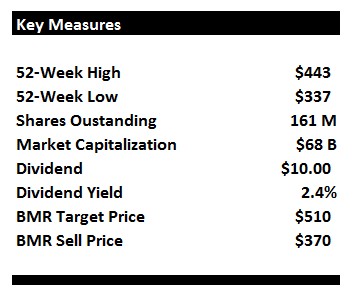
Stock at $415; symbol BLK

Company Description:

BlackRock provides diversified investment management services to institutional clients and to retail investors through various investment vehicles. The company manages funds and also provides risk management services to fixed income institutional investors.

Company Background:

BlackRock is led by CEO Laurence Fink, who has overseen a string of major acquisitions in recent years, expanding into private equity, real estate, energy, and hedge funds as investors look to diversify beyond stock and bond funds.

Fink engineered a blockbuster merger with Barclays Global Investors in 2009. In the deal, which was several years in the making, BlackRock bought Barclays Global Investors from UK banking giant Barclays for $15 billion. Barclays Bank retained a 20% stake in the combined firm, but Fink remained in charge of the enterprise. The merger nearly tripled BlackRock's assets under management and propelled the company to the top of the international money management industry by enhancing its investment and risk management capabilities. The deal also gave BlackRock a much larger footprint outside the US and added more than 3,500 new employees.

Overview:

With some $5.7 trillion in assets under management, BlackRock is the world's largest public investment management firm. It specializes in equity and fixed income products, as well as alternative and multi-class instruments, which it invests in on behalf of institutional and retail investors worldwide. It does not engage in proprietary trading. Clients include pension plans, governments, insurance companies, mutual funds, endowments, foundations, and charities. BlackRock also provides risk management services through BlackRock Solutions and is a leading provider of exchange-traded funds (ETFs) through iShares. The firm has offices in more than 30 countries and has investments in some 90% of the Fortune 100.

Operations:

BlackRock manages some $5.7 trillion in assets through 135 investment teams. The BlackRock Solutions division provides risk management, advisory, and enterprise investment system services. iShares, one of BlackRock's brands, is a leading provider of exchange-traded funds (ETFs). BlackRock's risk management technology platform, Aladdin, is used by over 25,000 investment professionals around the world.

The company offers active and passive retail investment services. Mutual funds account for the majority of retail investors’ assets, specifically about 80%. Retail has a US and an international arm.

BlackRock's iShares is the world's largest ETF in the world, with $1.3 trillion in assets under management. iShares also operates in the US and internationally.

The company possesses $2.9 trillion in institutional assets, of which $1.9 trillion are index funds and $1.0 trillion which are actively managed like Large Cap Growth, Mid Cap Value, etc. In other words, not ETFs. Their clients consist of pensions, foundations, and endowments, official institutions, and financial and other institutions.

Geographic Reach:

New York-based BlackRock has more than 70 offices in more than 30 countries. The company makes 66% of its revenue in the Americas. Europe accounts for nearly 30%, and the Asia-Pacific region 5%. BlackRock has clients and investments in more than 100 countries.

Sales and Marketing:

BlackRock serves 21 out of the 25 largest endowments and foundation organizations in the US. It also serves around 90 of the Fortune 100 companies, and more than 90% of the largest US retirement plans.

The firm focuses on establishing and maintaining its investment management relationships by marketing its services through financial professionals, pension consultants, third-party distribution relationships, or directly to investors themselves.

Clients include tax-exempt institutions such as defined benefit pension plans, charities and foundations; official institutions (central banks, sovereign wealth funds, supranationals and other government entities); and taxable institutions (insurance companies, financial institutions, corporations and third-party fund sponsors, as well as and retail investors).

Financial Performance:

Thanks to a rising stock market and a growing investor base, BlackRock has quadrupled its assets under management since 2007 -- from $1.3 trillion to $5.1 trillion at the end of 2016 -- which has led strong fee and advisory income growth over the past few years.

Revenue declined slightly in fiscal 2016, falling 2% to $11.2 billion due to lower investment advisory performance fees from equity and alternative products. Weakness was offset to an extent by stronger Aladdin revenue.

Net income fell 3% to $3.2 billion on the back of lower revenue. Cash flow from operations fell 28% to $2.2 billion due to a non-operating item not a part of the regular day-to-day business. But revenues and earnings were strong in the first part of 2017.

Strategy:

Even powerful fund managers' jobs are not immune to the threat of automation. In 2017, BlackRock sacked seven portfolio managers as part of a wider shift away from active stock pickers and towards a robot-led quantitative approach. Amid relative market stability, active fund managers are less able to beat the market than passive trackers. Investors pulled some $40 billion from actively managed funds on Wall Street during 2016. The robo-funds can be offered at a lower price than the more expensive, hand-picked investment funds.

Part of the shift to automation includes the transfer of $1 trillion in assets under custody of State Street to JP Morgan in 2017 which will cut operating expenses. JP Morgan has been investing in automation technology, enabling a less expensive provision of services.

Mergers and Acquisitions:

In 2017, BlackRock acquired First Reserve Energy Infrastructure Funds with $10 billion under management. The acquisition will help connect BlackRock's clients with energy infrastructure projects.

In 2016, BlackRock Real Assets added to its wind generations holdings with the purchase of GE Energy Financial Services' 50% interest in the Grandview wind project in Texas. BlackRock's renewable energy assets have 2 GW of generating power.

BlackRock expanded its presence in Mexico with the 2015 purchase of Infraestructura Institucional, the country's leading independently managed, infrastructure investment firm. The acquisition opens up infrastructure investments in Mexico to BlackRock's clients.

In 2015, BlackRock agreed to buy Bank of America's $87 billion-money market fund business, boosting its global cash-management business by 30% to $370 billion in assets under management. The deal comes as Bank of America and other large banks have faced regulatory pressure to simplify their businesses in the years following the global financial crisis. BlackRock was happy to oblige. BlackRock is the world's largest asset manager with $5.7 trillion in assets ..

Financial Outlook:
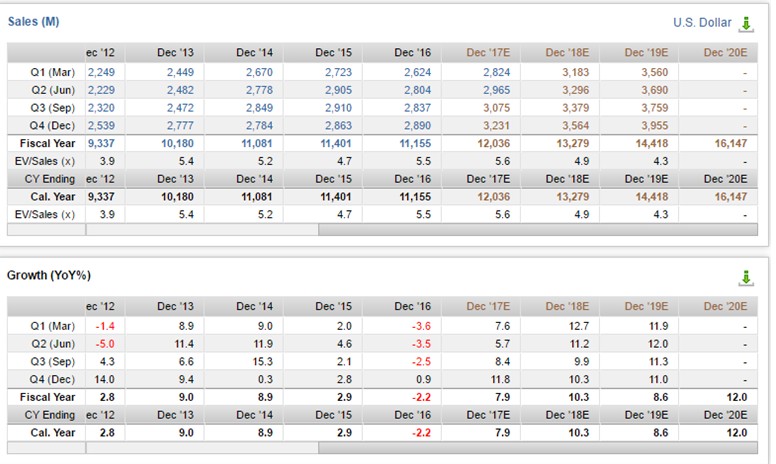
BMR Take: BlackRock is a compelling value trading at 17x next year’s consensus EPS estimate of $25. But don’t take it from just us. One of the world’s best hedge funds, Third Point, just bought the stock and believes BlackRock is a "misunderstood franchise" with a massive 38% market share of exchange-traded funds. Third Point’s CEO said he thinks this acceleration in ETFs is just getting started and BlackRock is valued like a traditional asset manager, but it has much greater potential for structural revenue growth and operating margin expansion.


 

Apple

Is Apple a growth stock or a value stock? Let’s take a look at the values. Cash and Investments equal about $40 per share, about 44% of the current market value of the company. Take out that cash and it leaves a value of only 6 times earnings...

This content is for our beloved subscribers and anything you see on this page is just an excerpt!

Please note BullMarket.com access is available to paid subscribers only. Our Members Areas include archives of past Newsletters, News Flashes, our ten portfolios including STOCKS FOR SUCCESS, Healthcare, High Yield, High Technology, Exchange Traded Funds (ETF's), Energy, Senior Growth Opportunities, Financial, Long Term Growth, and Special Opportunities. Also, all of our in-depth research is available, and more.

Already a subscriber?

Ready to join?
Subscribe Now!

UNITED PARCEL SERVICE

ups

UNITED PARCEL SERVICE (UPS)
Investment Research Report

<div class="smw smw-leaderboard smw-color-frame smw-ct-blue smw-visible" data-symbol="UPS" data-type="leaderboard" data-source="live"><div class="smw-header-left"><div class="smw-market-data-field" data-field="virtual.name"></div><div class="smw-quote"> <span class="smw-market-data-field" data-field="virtual.symbol"></span> <sup><span class="smw-market-data-field" data-field="virtual.currencyCode"></span></sup><span class="smw-market-data-field" data-field="financialData.currentPrice"></span> <span class="smw-change-indicator"> <i class="fa fa-long-arrow-down smw-arrow-icon smw-arrow-drop"></i> <i class="fa fa-long-arrow-up smw-arrow-icon smw-arrow-rise"></i> </span></div><div class="smw-change-quote"> <span class="smw-market-data-field smw-change-indicator" data-field="virtual.currentAbsoluteChange"></span> <span> / </span> <span class="smw-market-data-field smw-change-indicator" data-field="virtual.currentPercentChange"></span></div></div><div class="smw-header-right"><table><tr><td>52-Week High</td><td id="week_high"><span class="smw-market-data-field" data-field="summaryDetail.fiftyTwoWeekHigh"></span></td></tr><tr><td>52-Week Low</td><td id="week_low"><span class="smw-market-data-field" data-field="summaryDetail.fiftyTwoWeekLow"></span></td></tr><tr><td>Shares Outstanding</td><td id="shares_outstanding"><span class="smw-market-data-field" data-field="defaultKeyStatistics.sharesOutstanding"></span></td></tr><tr><td>Market Capitalization</td><td id="market_capitalization"><span class="smw-market-data-field" data-field="summaryDetail.marketCap"></span></td></tr><tr><td>Dividend</td><td id="dividend_rate"><span class="smw-market-data-field" data-field="summaryDetail.dividendRate"></span></td></tr><tr><td>Yield</td><td id="dividend_yield"><span class="smw-market-data-field" data-field="summaryDetail.dividendYield"></span></td></tr><tr><td>BMR Target Price</td><td>N/A No longer in portfolio</td></tr><tr><td>BMR Sell Price</td><td>N/A No longer in portfolio</td></tr></table></div></div>


UPS:  A Major Force in eCommerce
Talk about a company that has seen it all, United Parcel Service has been around as long as the automobile.  Or in this case we should say, the delivery truck.  Founded in 1907, UPS is the biggest package delivery company worldwide.  Delivering loads of things to lots of places is just one part of the UPS value proposition.  They serve up a multitude of technology-driven logistics designed to create major cost savings for their corporate customers.  In a world of global trade, companies like UPS play a key role.

UPS groups it business into three segments based, for the most part, on location.  US Domestic Package is the big gun at 63% of revenues and 63% profits.  International contributes 21% and 28%.  The balance comes from UPS logistics solutions - where UPS cements it relationship with corporate customers.

And here is how UPS customer loyalty measured up in 2015:
• Forbes’ 2015 ranking of America’s Most Reputable Companies
• Interbrand’s Best Global Brands,
• Millward Brown's Most Valuable Global Brands

At the core of great reputations are great employee relations.  UPS has approximately 76,000 worldwide workers and has invested $110 million in the UPS Foundation that promotes community safety, diversity and environmental issues.  No wonder it all works so well.  UPS is just a good corporate citizen.

Ecommerce is Eating Traditional Retailers Alive
UPS’s ever evolving skills in logistics and position of leadership in the so-called “less-than-truckload” industry, places them in just the right spot to benefit from the explosion of online package delivery.  Just take a look at this fast-growing area.

Since the dawn of the consumer Internet, eCommerce has been growing at big double-digit rates, taking market share from old time traditional retailers.  In the beginning it was nothing more than a novelty for a few geeks.   These days eCommerce is no longer an arrogant little upstart.  Now it is a real threat.  

According to US Census Bureau, eCommerce accounts for nearly 10% of retail sales.  That totals $350 billion, gaining 15% in 2015.  UPS is on record forecasting this total will double by 2020.  That growth rate is huge.  Online purchases have now reached the tipping point.  Major retailers are feeling the pinch.  New strategies are emerging.  Last year for the first time a major discount retailer, Kohl’s announced a series of store closings as more of their business moved online.  Traditional retailers like Kohl’s and Target are reaching out to sell to mobile customers.

There are a host of reasons why eCommerce will remain the fastest growing part of the US consumer economy.   Convenience tops the list.  Mainstream consumers have adapted to the virtual shopping world.  Buyers are offered increasingly rapid delivery.  Ecommerce companies have made it easy to return products.  Finally customized Apps allow customers to compare prices and find bargains online with little effort.  That is a big head of steam.

Competition
UPS may be the world’s largest package shipping company but not the only.  Federal Express and the United States Postal Service are noble participants in the battle.  There are also numerous regional and local delivery companies that play a role.  

And then there is Amazon.  Long time major engine of change, Amazon is the biggest US eCommerce store.  In addition, it owns a French based package shipper and has made much news recently about having it own delivery fleet of drones.  All this has led to speculation that Amazon’s presence alone will lay waste to all other participants in the small package home delivery business.  UPS and The Bull Market Report are not worried.  This is not Amazon’s business.  Delivering these packages IS UPS’s business.

The real battle is among the big three with each using price, speed and convenience as their weapons.  In this environment, UPS has dedicated itself to using technology to its advantage and we believe it will retain the #1 position.  Price, speed and convenience may be the weapons but technology is the silver bullet.

As for Amazon, their long-term objectives are far from clear, but currently their delivery targets appear to be limited to locations in close proximity to major distribution centers.  In the meantime, Amazon is one UPS’s biggest customers.

UPS Loaded With Silver Bullets
In order to meet the demand and ensure successful operations, the key is having full service during peak holiday season traffic.  To be ready for the rush, UPS invested over $1 billion in facility expansions and equipment modernization since 2014.  Here is how UPS aims to increase it share of the eCommerce business.  If it all sounds like the nuts and bolts of how to take a rock solid company and make it better, you are absolutely right.

• Cyber Week: Increasing ground and air pickup and delivery on Black Friday.
• Adding weekend pickup and delivery operations to smooth geographical volume spikes.
• Significantly expanding delivery fleet.  
• Automating facilities to expand existing capabilities through enhanced technology.
• Updating the UPS website and expanding UPS communications to enhance the timeliness and relevance of alerts when service disruptions occur.

More eCommerce in The Mix Equals Faster Growth
It is easy to overlook both the impact and outlook eCommerce shipping holds for UPS.  It grew up in a time of heavy focus on global wholesale and industrial trade rather than smaller residential customers.  Thus its revenue naturally reads like a United Nations report on global commerce.  However, if UPS forecasts are on the mark, the total eCommerce will hit 20% by the end of the present decade.  As the industry leader, that should translate into far more of the revenue mix at UPS

Recent Performance
Over the past three years revenues have increased an average of 3% and per share profits by 8%.  Nothing to be ashamed of, but the numbers hide several important facts.
                United Parcel Service    
           Year Ending December 31st
                           (In millions)              
                             2015        2014         2013
Revenues        $58,000   $58,000     $55,000         
Net Income      $4,800      $3,000        $4,400
EPS                         $5.35        $3.28       $4.61
      
First off, the strengthening US dollar left reported International revenues unchanged over this period.  Local currency revenues were far better but that’s true for virtually all American multinational companies.  It is just something we have to live with.  However, US Package Delivery revenues and profits increased 3%.  Global eCommerce-related deliveries increased closer to 20%.  To us, one thing is clear: It’s only a matter of time before it starts to step up the company’s overall growth.  

Wall Street Is Smiling on UPS
They are breaking out the brown on Wall Street.  The UPS brown that is.  The consensus this year calls for revenue gains of 6% to $62 billion and a 5% advance in profits of 5% to $5.80 per share.  Looking out to 2017 the forecast is for a solid 5% increase in revenues to $64 billion and earnings up 8% to $6.25.  As we said, growth is picking up, a good investment outlook for any company.

Financial Strength
For a company in the transportation business where loads of fixed costs are common, UPS is surprisingly liquid.  The balance sheet shows just under $5 billion in cash and $14 billion in long-term debt.  It’s good to know that the $1 billion in capital spending over the past year has been accomplished without the least bit of deterioration in balance sheet strength.


BMR TAKE

We love rock solid investments like UPS especially with a fast growing pearl called eCommerce locked inside.  While we wait with excitement for the oyster to open, the stock offers an excellent total return.  Selling for 18 times forecast 2016 profits, the stock is below the overall market of 21.  There is nothing whatsoever wrong with that.  In addition, the $3.12 dividend provides a solid 3% yield.  All together, UPS truly delivers.


Interested in additional research? Explore all references to UPS on BullMarket.com


Stock Price, Historical Chart

image1

Whole Foods

The world is no longer going Organic; it has arrived. Sales of organic food and non-food products in the United States, according to the most recent surveys totaled a record $39 billion in 2014, up over 11% from the previous year...

This content is for our beloved subscribers and anything you see on this page is just an excerpt!

Please note BullMarket.com access is available to paid subscribers only. Our Members Areas include archives of past Newsletters, News Flashes, our ten portfolios including STOCKS FOR SUCCESS, Healthcare, High Yield, High Technology, Exchange Traded Funds (ETF's), Energy, Senior Growth Opportunities, Financial, Long Term Growth, and Special Opportunities. Also, all of our in-depth research is available, and more.

Already a subscriber?

Ready to join?
Subscribe Now!

Under Armour

Move over sweat pants, the era of active apparel as a fashion statement is in full swing. Active apparel is mainstream. In fact, it’s the only growing segment of the apparel industry...

This content is for our beloved subscribers and anything you see on this page is just an excerpt!

Please note BullMarket.com access is available to paid subscribers only. Our Members Areas include archives of past Newsletters, News Flashes, our ten portfolios including STOCKS FOR SUCCESS, Healthcare, High Yield, High Technology, Exchange Traded Funds (ETF's), Energy, Senior Growth Opportunities, Financial, Long Term Growth, and Special Opportunities. Also, all of our in-depth research is available, and more.

Already a subscriber?

Ready to join?
Subscribe Now!

Visa

Visa is not a bank, although to many credit card holders, it may feel like one. In reality Visa doesn’t take deposits or lend money. It has no branches or ATM machines. It assumes no credit risk. It never even touches the billions of plastic cards that bare its name and familiar logo...

This content is for our beloved subscribers and anything you see on this page is just an excerpt!

Please note BullMarket.com access is available to paid subscribers only. Our Members Areas include archives of past Newsletters, News Flashes, our ten portfolios including STOCKS FOR SUCCESS, Healthcare, High Yield, High Technology, Exchange Traded Funds (ETF's), Energy, Senior Growth Opportunities, Financial, Long Term Growth, and Special Opportunities. Also, all of our in-depth research is available, and more.

Already a subscriber?

Ready to join?
Subscribe Now!