
!-- Global site tag (gtag.js) - Google Analytics -->
Select Page
April 23, 2017
THE BULL MARKET REPORT for April 24, 2017

THE BULL MARKET REPORT for April 24, 2017

The Week Ahead

Global tensions are escalating. Since the United States dropped the Mother of all Bombs (MOAB), the world has come to learn that President Trump’s words carry weight. The newspapers are filled with stories of military angling between Russia, North Korea, China and the US. Peace through strength will hopefully prevail, which will be a major boost to equity markets, but in the interim, we are seeing elevated volatility as fears run rampant. Economic fundamentals remain great as optimism is at record highs and many bankers such as JP Morgan and Wells Fargo expect the optimism to translate to real growth in the economy in the near-future.

There is always a bull market here at The Bull Market Report! This week we highlight the following securities: Mazor, PayPal, Shopify, Digital Realty Trust, Care Capital, and Amazon.

Highlights From The Past Week

More Executive Orders From Trump. As pressure mounts on Trump to post some victories within the totally arbitrary window of the "First 100 Days," the President this week joined Treasury Secretary Steven Mnuchin to sign a combination of executive orders and memos targeting the reduction of tax regulations and certain components of Dodd-Frank. The executive orders and memos signed are expected to 1) initiate a review and potential unwind of executive orders signed by Obama in 2016 to limit corporate inversions and 2) initiate a thorough review of the orderly liquidation authority granted to the Federal Deposit Insurance Corp under Dodd-Frank.

Government Shutdown Looms. The Trump administration is quietly preparing for the possibility of a government shutdown, even though the president and his staff believe one is unlikely to occur. We will know at the end on Friday if the government can reach a deal. We expect Washington to figure it out in the 11th hour as they usually do, but we admit the risk of the government’s potential inability to come to consensus on how to manage its finances poses a risk to the bull market and may present volatility next week. In fact, the Vix (^VIX) has risen from  11.42 on March 29th to 14.63 today.

Oil Recovery Update. Global oil inventories are falling because of OPEC and non-OPEC production cuts, but the road to market balance will be long. Production cuts have removed approximately 1.8 million barrels per day from the world market since November. The latest IEA Oil Market Report stated, “It can be argued confidently that the market is already very close to balance.” What does that mean? Market balance means that production and consumption are approximately equal. That is an important first step for a market in which production has exceeded consumption for most of the last 3 years, but it hardly means that $70 oil prices are around the corner.

BMR Companies and Commentary

Mazor Robotics (MZOR: $36, +15% - all percentage changes in this report are for the week.)

The CEO of Mazor Robotics, Ori Hadomi, our beloved surgical robotics maker was on TV on Thursday. Shares of Mazor jumped on the publicity, among other reasons.

Hadomi explained that Mazor derives revenue from three pillars. It sells the robots themselves for about $1.1 million each. It sells the disposables the robot consumes, and it offers service and support. The company has always been focused on the patient, he continued, which is why he's privileged to be in this business. Mazor machines are seeing six times fewer complications and 10 times lower numbers for repeated procedures, and the hospitals that have Mazor robots are promoting and marketing the fact that they can offer procedures that others can't, generating new business for them that they didn’t have before. Hadomi also spoke about his company's partnership with Medtronic (MDT: $80), saying there are many synergies in culture and mission, and both are the leaders in their respective areas.

Mazor announced that it has received the FDA clearance for its Mazor X Align software. Mazor X Align software is designed to assist surgeons in planning spinal deformity correction and spinal alignment for procedures performed with the Mazor X Surgical Assurance Platform.

The new software is being demonstrated this weekend at the 2017 American Association of Neurological Surgeons Annual Scientific Meeting in Los Angeles. Mazor X Align will be initially released to select customers in early May, followed by a widespread release in the second half of 2017.

Mazor X Surgical Assurance Platform is a transformative guidance system for simplifying spine surgeries. Strong demand for Mazor X systems during the first quarter brought the total number of its orders to 40 since its introduction in the second half of 2016. The company ended the first quarter with an order backlog of 14 Mazor X systems and will deliver these in 2017. It is slated to report financial results for the first quarter on May 10th.

BMR Take: The company is putting every penny into its growth strategy and is not profitable and won’t be this year. Street estimates call for the company’s earnings to turn positive in 2019. With the inflection point in sight, we think EPS growth is coming and are happy to participate in what is shaping up to be an exciting stock.  The stock has reached our Price Target of $36. Since we added the stock at $16 in June we are up 128%. We are hereby raising our Price Target to $44 and raising our Sell Price from $28 to $32. We don’t want to give away these amazing gains.

PayPal (PYPL: $44, +3%)

Earlier this week, it was announced that PayPal and Google will be partnering to integrate PayPal’s mobile payment options into Google’s smartphone payment app, Android Pay. No specific details of the arrangements were revealed, but according to Fortune, “PayPal’s chief operating officer, Bill Ready, said that his company’s partnership with Google will be implemented in the coming weeks.”

Executives at both Google and PayPal hope that the addition of PayPal as a funding source for Android Pay will serve to increase the number of smartphone owners who actively use Google’s digital wallet, while also making PayPal a more common choice for consumers making in-store purchases.

For years, PayPal has led the industry. Last year, PayPal processed more than 6 billion mobile transactions worth more than $350 billion. PayPal holds a commanding lead in the mobile payments industry, with 76% of digital wallet users reporting that they used PayPal.

BMR Take: PayPal is a one of the biggest growth stories of our generation. The company has 200 million users compared to Facebook’s 1.9 billion users. That leaves room for 10x growth still!

Shopify (SHOP: $76, +8%)

Shopify announced its new free Chip and Swipe card reader for in-person selling. With EMV support, the new Chip and Swipe reader lets any merchant in the United States sell offline in a fast and secure way. The card reader was launched at Unite, Shopify’s annual partner and developer conference.

Shopify makes every aspect of starting, running and growing a business easier. With the new Chip and Swipe reader, business owners can have the full power of Shopify behind them when selling in-person. The reader seamlessly connects with a seller’s Shopify store, eliminating the need for multiple systems to run a single business. Merchants benefit from the ability to manage their entire business from just one place and do not need to spend hours updating in-person sales with those made on their online store.

The first piece of hardware created in-house by Shopify, the new reader’s design was created using extensive research and user-experience feedback from their merchants. The Chip and Swipe reader is made for selling at festivals, pop-ups and markets. Unlike other readers that must plug into a headphone jack, the reader features wireless functionality and an extra-long battery life. The card reader was also developed to grow with business owners as they move from casual selling to a permanent retail location.

BMR Take: What can we say, Shopify is plugged into the massive growth of online, mobile e-commerce. Street estimates see sales growing from $390 million last year to $600 million this year to $1.4 billion by 2020.  We saw a new all-time high this week ($78) and expect a LOT more from this stock.

Digital Reality Trust (DLR: $113, +3%)

Digital Realty, a leading global provider of data center, colocation and interconnection solutions, announced its 10th consecutive year of "five nines" of uptime – with 99.999 percent availability throughout 2016.

We are thrilled that the company has reached this important milestone, which reflects a steadfast commitment to developing and delivering the world's most dependable data center solutions. The company’s data centers are built and operated to rigorous standards by the most talented and best-trained team in the industry, which allows the business to consistently deliver solutions that provide the reliability customers require to run their businesses.

Digital Realty has 145 properties, encompassing approximately 23 million square feet in 33 metropolitan areas around the world.  The company's global portfolio and comprehensive solutions enable their customers to expand from a single cabinet to a multi-megawatt facility as their needs grow, with no change in providers and no interruption in service.
BMR Take: With a 3.3% dividend yield and EPS power of $2+, the stock is a stable performer we think that should add nice gains in your portfolio.

Care Capital Properties (CCP: $28, +3%)

Care Capital Properties announced that it has entered into a definitive agreement to acquire six behavioral health hospitals in a sale-leaseback transaction for $400 million and to fund up to $50 million in capital expenditures to finance expansion and improvements in the portfolio. The properties are currently owned by affiliates of Signature Healthcare Services, one of the largest privately owned behavioral health care providers in the United States.

Upon completion of the transaction, which is expected to occur in Q2 of 2017, Care Capital will lease the properties to affiliates of Signature on a 10-year triple-net basis, with five renewals of five years each. The initial yield on the transaction is just under 9%, which is fantastic considering the leverage used to finance the deal was modest.

The acquired portfolio is comprised of six behavioral health hospitals located in California, Arizona and Illinois. The properties contain a total of 712 beds, and all six properties either have recently been expanded or are currently in planning or under development to increase bed capacity. The whole company now has about 350 properties, which is a nice size already and could potentially be much larger.

BMR Take: With an 8% dividend yield and a visible EPS run rate of $1.68, we like the value we see here.

Amazon (AMZN: $899, +2%)

As delivery firms struggle to manage overwhelming numbers of parcels, e-commerce giant Amazon is expanding its same-day Prime Now delivery service to include cooked meals and other items.

Amazon Japan said Tuesday it teamed up with Mitsukoshi's flagship store in Tokyo's Nihonbashi district to deliver foods such as deli fare and Japanese wagashi confections sold at the store. The online retailer also announced it has teamed up with pharmacy chains Cocokara Fine and Matsumotokiyoshi Holdings to deliver cosmetics and other daily supplies within one hour after an order is placed.

The Prime Now service, launched in 2015, has been available to Amazon Prime members who pay an annual fee of $36. Customers may choose items via a smartphone app with a minimum purchase of at least $23. The service is currently available to customers in parts of Tokyo, and a few other prefectures.

Amazon is also reportedly considering a rollout of same-day delivery service of fresh food including fish and vegetables. Similar options already exist in other countries such as the United States and the United Kingdom.

Competition over same-day delivery of groceries via online shopping is heating up in Japan but when Amazon puts its mind to something, great things usually happen.

BMR Take: We seem to say this every week: The Amazon innovation machine did it again. With so many new services being launched like the latest in Japan, earnings are expected to go to $20 in 2020 from $7 this year. The ride is far from over.


US Economic Outlook

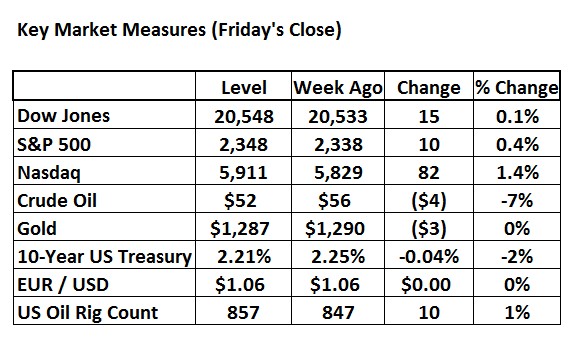
Industrial production will look decent on the surface; we forecast it to have risen 0.4% in March. Mining production will likely increase, consistent with rising rig counts, as noted above in the Key Market Measures chart. Manufacturing production will be weak and is forecast to have dropped 0.4% in March, held back by Autos.

Unseasonably warm weather in January and February likely boosted housing starts, but temperatures were more seasonably normal in March. Also, an East Coast snowstorm should have hurt starts temporarily. Other housing data will look better, as we expect existing-home sales to have risen from 5.48 million annualized units in February to 5.58 million in March.

The first two regional manufacturing surveys for April are expected to have weakened, generally consistent with other survey-based data that have begun to surrender some of their post-election gains.

Financial market conditions also bear watching. Long-term interest rates have slid, which is a positive for investment and housing. However, equity prices have struggled recently. Though the immediate implications are minor, further declines would lend more downside risk to our outlook for consumer spending. Volatility could continue to rise because of geopolitical tensions, particularly in North Korea. Tensions are building between there and our forecast does not include a military conflict. Odds favor this conflict being eased with China imposing economic sanctions on North Korea.

We wouldn’t be surprised if the VIX continues to climb. The VIX curve is strangely inverted. In other words, investors expect volatility to be higher in the near term but revert to lower levels in the longer term. Volatility is normal and the economic implications of the VIX rising to the level consistent with fundamentals are not significant at the moment. If there were a sudden, significant and persistent increase in the VIX, there would be economic costs which would weigh on hiring and investment.

Goldman Sachs (GS: $217) had another bad week, dropping $7 or 3%. We removed the stock from our portfolio on Jan 19th at $232. Weighing on the bank’s results was a 2.4% decline in trading revenue to $3.36 billion. But the overall numbers were surprisingly good in our opinion: Profits per share of $5.15 were higher than the $2.68 it earned during the same period of 2015, but below Wall Street’s expectation for $5.31 a share. Revenue, meanwhile, came in at $8.0 billion, 27% above the year ago period, but missed the Street’s target of $8.44 billion. Wall Street is just funny sometimes.  Those numbers appear pretty good to us. If the stock gets down below $200 we would be buyers again. Goldman is a money minting machine and they had a little hiccup last quarter, but you can’t hold this company down for long.

Home Depot (HD: $150) sets a new all-time high this week.  The market cap is now $180 billion. Huge. Our Target is $160 which we are keeping, but we are raising our sell price from $130 to $144.  We don’t want to lose these gains.  We added them at $118 over a year ago and are up 27% on this powerful company.

Microsoft (MSFT: $66) quietly set a new all-time high this week. Go Bill Gates!  The stock is up 14% since the election.  Not bad for a company worth over $510 billion. Our target is $70 which we would love to see this summer.  Our Sell Price remains the same:  “We would not sell Microsoft.”

Splunk (SPLK: $62) had another good week, up 5%, and it is approaching its 52-week high of $66.  Our Target is $70.  Earnings are coming up in the 3rd week of May and we are quite optimistic that we will see strong revenues and earnings to keep this stock going higher.

Visa (V: $91) sets a new all-time high this week.  We love this $210 billion market cap company.  Ah – the business of MONEY.  How can you beat it? The company reported revenue of $4.48 billion, up from $3.63 billion from a year ago, a gain of 23%. Wow. Excluding one-time items, Visa earned 86 cents a share, beating analysts' average estimate of 79 cents. The company said total payments volume jumped 37% to $1.73 trillion in the second quarter. The growth in payments volume was helped by the addition to Visa's results of Visa Europe, a former subsidiary Visa bought in June last year in a deal worth $23 billion. Visa Europe made up nearly a fifth of total payments volume. This company is truly and international company.  We can’t wait to raise our Price Target of $95 to $110 when it hits $95. We would not sell Visa.
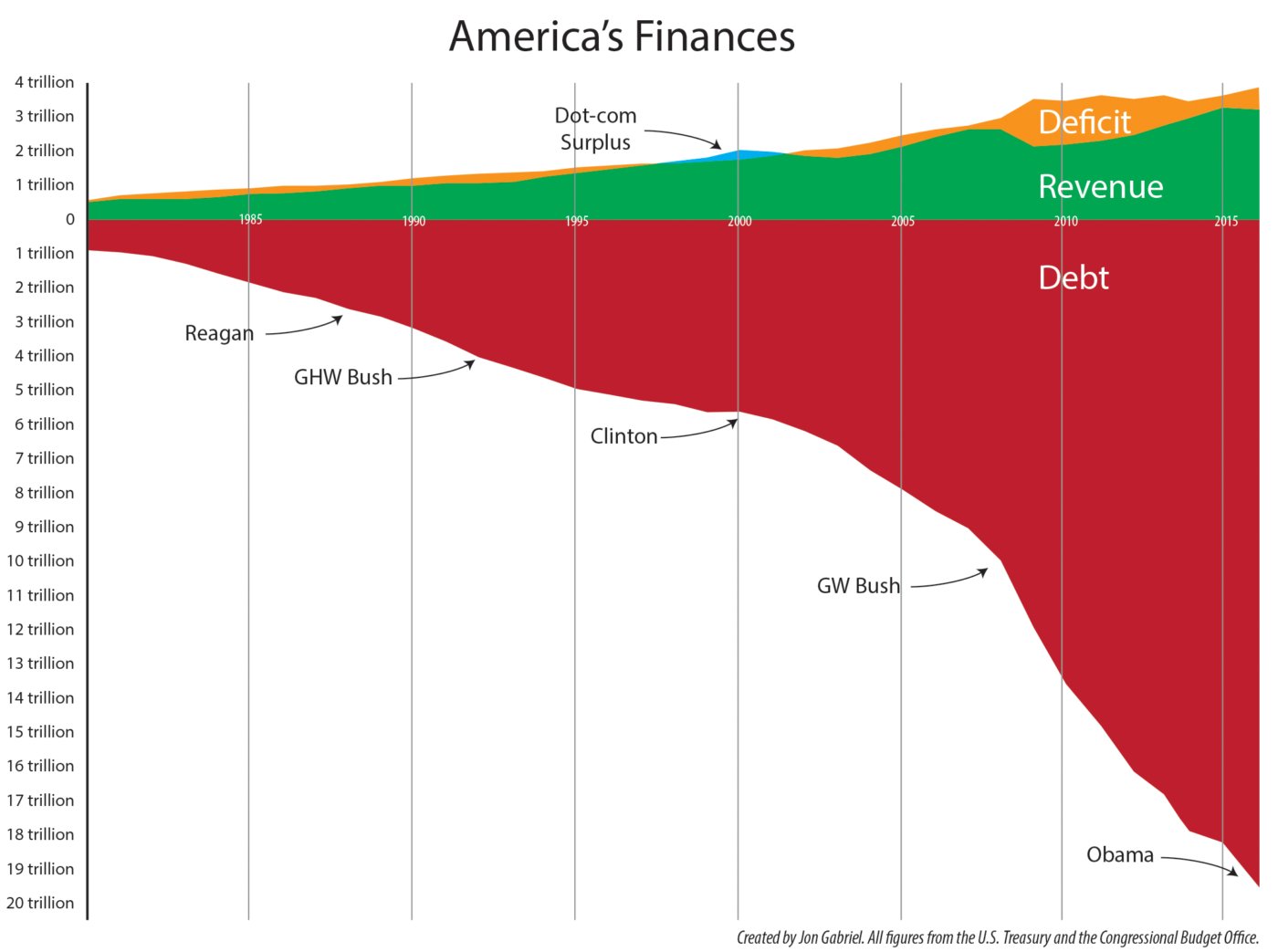
This stuff scares us here at The Bull Market Report.  What more can we say? Well, Herbert Stein had a few things to say about these types of things.  Herbert Stein (August 27, 1916 – September 8, 1999) was an American economist, a senior fellow at the American Enterprise Institute. He was chairman of the Council of Economic Advisers under Richard Nixon and Gerald Ford. Stein was the formulator of "Herbert Stein's Law," which he expressed as "If something cannot go on forever, it will stop," by which he meant that if a trend cannot go on forever, there is no need for action or a program to make it stop, much less to make it stop immediately; it will stop of its own accord. It is often rephrased as: "Trends that can't continue, won't."


A Word From Gary Jefferson
Jefferson Financial Group
First Vice-President, Investments
UBS Financial Services, Inc.

The pundits are all hopping on the "sentiment-remains-depressed-by-geopolitical-risks" bandwagon. Maybe, but sabre rattling has never really been a reliable forecaster of market direction. It's more likely that sentiment is flattening out because the Atlanta Fed’s real GDP forecast for the first quarter of 2017 is a measly 0.6% as of April 7th. Everyone knows the Fed would prefer to have some additional leeway to combat future economic weakness, but with that paltry number it may need to reconsider its current projected pace of rate increases as 0.6% is not near enough "runaway growth” to use as an excuse for rate hikes. Nor does it indicate inflation is going to become an urgent issue anytime soon.

There are other things worrying the market besides geopolitical risks. Transports, which have always played a meaningful role in measuring market moods, have fallen from a high of around 6% in March to the low for the year of about -1.5%. And small cap stocks, which roared at the end of 2016, have completely stalled out so far this year.

Maybe the market will digress back into the "bad news is good news".  Hopefully not.  Many pundits are now talking up a gridlock scenario where all the Republican squabbling and Democratic grandstanding will create the type of gridlock that the market thrives on where Washington does little to interfere with the private sector. Again, hopefully not.

Another pause in rate hikes means earnings aren't there and the economy is still stuck in low gear. That would be a serious headwind against further market gains if you consider that in the first quarter the S&P 500 was up 5.5% versus that 0.6% GDP performance. That kind of stock market performance needs better GDP support. We still feel that, contrary to what the mainstream media would have you believe, the Trump growth agenda has not been derailed. Yes, corporate tax reform hasn't gone anywhere. Basically, it is not happening as fast as many hoped for, but what else is new in the world of politics and bureaucracies?

What we still see in the countless projected earnings reports we have read is that, even with a derailment of the growth agenda, earnings this year will beat last year. Earnings should remain the catalyst for a decent year in which stocks end up higher than they are today.


The High Yield Corner
Special to The Bull Market Report
by Michael Foster

There’s one data point that we find particularly worrisome: the 10-year Treasury constant maturity minus the 2-year Treasury constant maturity. This somewhat esoteric macroeconomic metric effectively measures the market’s expectations for government bond yields in the short and long term. By comparing the two side by side, we can see how the market expects economic growth, inflation, and bond yields to trend in the future.

This metric was in a constant decline from its peak in 2014 to the Trump election for one simple reason: Expectations about inflation were getting weaker and weaker. Of course this made sense in a world where oil prices seemed to be in a never-ending freefall, so it’s not surprising that the trend was virtually uninterrupted until November’s election. Then it jumped to its highest point in a year and has been steadily declining since.

Why does this matter? Because that short-term spike, combined with the inevitable decline afterwards, indicates that the bond market simply doesn’t really believe that inflation and economic growth are going to spike. What’s more, the bond market also doesn’t really believe the Federal Reserve is going to raise interest rates three times in 2017.

We have been somewhat agnostic on the matter. While the bond market has made this pronouncement loud and clear, the stock market has been saying the opposite. The S&P 500’s P/E ratio keeps climbing, and the rationale behind the higher valuations rests largely on a belief that price inflation and strong economic growth will boost earnings. We have recently written about the 12% EPS growth expectations for 2017; those expectations have not disappeared. Thus it’s no surprise that the S&P 500 is still up 5% even after the slight pullback following early March’s peak.

As high yield investors, we are constantly trying to reconcile the stock and bond markets. There are two reasons for this. Firstly, corporate bonds, BDCs, preferred stocks and convertible bonds are a tad schizophrenic. Sometimes they trade with equities, sometimes they trade with bonds. When both markets are in agreement, there’s no problem; when they disagree, however, there’s a chance for a major price correction. Since the run-up in stocks and in bonds has caused all of these instruments to perform strongly, the chance of a downside correction, if not a brief bear market, deserves serious attention.

The other reason we always try to reconcile both markets is because our high yield strategy involves an incorporation of stocks and bonds. Bull Market Report pick AGIC Equity and Convertible Income Fund (NIE: $19.51) is a perfect example of this strategy at work. This fund has both stocks and convertible bonds in it, and its net asset value can often fluctuate because of one or other side of the portfolio. The balanced approach means the fund has massively outperformed the market, rising 6% year-to-date while paying an 8% dividend. It also outperformed the broader market this week, with a 1.3% boost.

Compared to standalone bond funds, the AGIC fund has been a massive outperformer. Bull Market Report pick Invesco Municipal Trust (VKQ: $12.68) was flat for the week and is up a bit over 3% year-to-date. Here’s a question for us all: Why is the AGIC fund performing so much better, despite the fact that the Invesco fund and other municipal bonds had a major correction in 2016 and are in recovery mode, while AGIC had an awesome 2016?

The key to this puzzle is in conflating what’s going on in the bond markets and the stock markets. AGIC is doing better than bonds alone because it has both equities and bonds, and both markets are doing extremely well for different reasons. Stocks are strong because of higher earnings expectations, and bonds are strong because the market doesn’t believe the Fed’s threats to jack up yields several times in the near term. We don’t either!

Can we merge both of these hypotheses into a coherent market view that makes sense?

We can. Both markets seem to be telling us that company performance is going to be strong but this will not result in runaway inflation that will give the Federal Reserve the justification it needs to raise interest rates. How can stronger earnings and more sales NOT translate into inflation? This seems like economic gibberish from a micro or a macro perspective - but it actually makes a lot of sense if you synthesize the two. Stronger earnings and more sales on the micro level can easily be offset by weak population growth; keep in mind that the population growth rate in the U.S. has fallen from 1.0% in 2008 to 0.7% in 2013 and has fallen below 0.7% this year for the first time since the 1930s.

Of course, if Donald Trump’s promises to lower immigration and deport illegal/undocumented immigrants are fulfilled, this will put downward pressure on population growth even further. Regardless of your political beliefs on the topic, the economics of such a dynamic are quite simple: Fewer people will mean lower GDP growth. However, that doesn’t mean you’ll have lower GDP per capita growth or that companies won’t be able to make higher profits in U.S. dollar terms.

We actually have a historical precedent for such a trend: Japan. GDP per capita has been going up since the late 1990s to today despite the fact that total GDP has barely budged. In 1995, Japan’s GDP exceeded $5 trillion. Its GDP is $4.1 trillion as of the last reading in 2016. However, GDP per capita has gone from less than $40,000 in the middle 1990s to $45,000 as of the last reading. That’s not terribly great growth, but it is growth - whereas GDP in total has gone down.

We could see a similar situation in America: Fewer people but more GDP per person.

Of course this kind of GDP growth hasn’t really translated itself into strong earnings at Japanese companies because the country depends on exports and has faced growing competition from South Korea and China. And that’s where the comparison between Japan and America falls apart. America is a net importer, not exporter, so the loss of people could impact firms quite differently. As a consumption-focused economy, that higher GDP per person could result in higher consumption, thus higher sales and higher profits. Or it could give companies room to grow prices (thus increasing revenue per customer) without actually causing inflation (because there will be fewer customers, meaning total spending isn’t going up). Thus we would be in a world of weak inflation, weak aggregate growth, but strong growth per person and higher earnings. Good for bonds and good for stocks.

This kind of granular analysis is foreign to the talking heads, political pundits, and headline writers who are financially motivated to stir up controversy, anger, fear, and all sorts of portfolio-destroying emotions.

So the Fed is not going to face the kind of economic conditions that can justify raising interest rates significantly. At the same time, there is tremendous pressure on the Fed to raise interest rates, so we can’t expect them to lower rates either, unless the bond market shoots higher from here and rates collapse. In other words, a very slow pace of interest rate hikes alongside higher earnings is probably going to be the big macroeconomic story for the next couple of years.

Is this good or bad for high yield investors? We believe it’s very good for a number of reasons. Firstly, it means lower bankruptcies for junk bonds (default rates have been falling for quite some time). Secondly, it means higher earnings potential for companies (thus more bond issuances and more tolerance for higher interest rates on new issues). Thirdly, it means that big capital flows out of high yield investments and into safer Treasuries is unlikely to happen. (This was the big bear case for junk bonds in 2014, 2015, 2016 and it’s a tired thesis that has been proven wrong so many times that it’s no longer a big hindrance to high yield bond price growth).

Is there any reason this could be bad for high yield investors? Perhaps the biggest risk is of the market overpricing the upside of this high earnings/low interest rate paradox.

For that reason there’s good reason to remain cautiously optimistic and look closely at what happens in the bond and stock markets over the next few weeks. But that doesn’t mean it’s time to sell or start to worry.

Good investing,
Todd Shaver, Editor in Chief
Founder and CEO
The Bull Market Report
Since 1998

January 19, 2017

Goldman Sachs Removed from Stocks for Success

We love Goldman Sachs (GS: $232) and believe big things will happen in the future.  But a few weeks ago we said we are removing it from the portfolio if it hits $234.  Well, yesterday it did and it is trading at $232 today as we write this.  Having added the stock at $147 in February of last year, we’ve had good run.  But we are going to book this 58% gain.

As to what YOU do with your stock, that’s up to you of course.  If you don’t feel this is the time to sell, you can put a stop in at a lower price, say $225 or $220, and see what happens. If it goes lower, you will lose a little bit of your gains.  But if it goes higher, you can gloat back to us at The Bull Market Report!

If you are options-oriented, you could sell a call against your stock which would bring in some cash, lowering your cost basis and giving you some room for it to start moving higher.  For example, if you sell the June $240 call, you could bring in about $10 a share.  If you sell the $250 call, you could bring in about $7.  You will be obligated to sell at these strike prices, so be wary. In any case, there are lots of “options” for you! Please consult your broker about selling options.

We will be looking at the Financial sector in the coming month.  Stay tuned.

January 17, 2017

Earnings Preview for the Week of January 16, 2017

Goldman Sachs (GS: $239)

Earnings Date: Wednesday, 4:00 PM ET
Consensus:  4Q16
Revenues: $7.7B
EPS: $4.82

Year Ago Quarter Results
Revenues: $7.2B
EPS: $1.27

Key Things to Watch For in the Quarter

Analysts throughout Wall Street estimate that Goldman Sachs will report a drastic increase in earnings per share by 280% to $4.82 along with a 7% increase in revenue to $7.7 billion in the fourth quarter of 2016.  The election played a large part in the performance of bank stocks, which received positive response.  With relaxed regulations on the horizon for the Financial sector, analysts expect to see gains from trading desks across Wall Street.  We remain bullish on Goldman for their leadership, strategy, and their impeccable intelligence.

------------------------------------------------------------

Kinder Morgan (KMI: $22.50)

Earnings Date: Wednesday, 4:00 PM ET
Consensus:  4Q16
Revenues: $3.5B
EPS: $0.19

Year Ago Quarter Results
Revenues: $3.6B
EPS: $0.13

Key Things to Watch For in the Quarter

Wall Street analysts estimate earnings growth of 45% to $0.19 for Kinder Morgan in the fourth quarter with a decrease in revenues of 3% to $3.5 billion.  The company’s forward P/E ratio (measure of price-to-earnings using forecasting earnings) of 31 is comparable to many of its competitors, and with Mr. Trump in office the outlook for the gas and oil pipeline industry is very bright.  Kinder Morgan’s shares have nearly doubled over the course of the last year, after hitting the $11 level in January, supporting our bullishness even further.

---------------------------------------------------------

Netflix (NFLX: $133)

Earnings Date: Wednesday, 4:00 PM ET
Consensus:  4Q16
Revenues: $2.5B
EPS: $0.13

Year Ago Quarter Results
Revenues: $1.8B
EPS: $0.10

Key Things to Watch For in the Quarter

Analysts estimate a healthy fourth quarter for Netflix, with an estimated 30% increase in earnings per share and a 4% increase in revenues.  The country’s growing economy and bull market have provided Netflix stockholders with significant gains over the past year, with shares climbing almost 25%.  As a major leader in the streaming business, Netflix will continue to outperform its competitors and the market into the new year.

December 11, 2016
THE BULL MARKET REPORT for December 13, 2016

THE BULL MARKET REPORT for December 13, 2016

The Week Ahead
This was the first week in history that the Dow Jones, S&P, and Nasdaq all moved higher every single day in a week. What a rally we are experiencing! Some of our subscribers have suggested worry over these new highs. Our thoughts below.

The week ahead brings a FOMC meeting and a certain rate hike. We will all need to watch to make sure Yellen doesn’t point to raising rates more than two times next year, which would turn down the music at this market rally party.

This week we provide some insights on our latest thinking for Athenahealth, Goldman Sachs, Under Armour, Aetna, Blackstone, and Bristol Myers-Squibb.

Key Market Measures (Friday’s Close)
key-measures

Highlights From The Past Week
Financials Valuations. The sounding board of the stock market is arguably the Financials sector. These are controlled by the so-called money men. They live and breadth arbitrage, risk-parity, and all things finance. With the recent big run-up in the past several weeks in the Financial sector, what are we all to make of it? Here are two anecdotes. First, JP Morgan CEO Jamie Dimon was asked at this week’s Goldman Sachs Financials Conference what he was currently doing with the company’s stock buyback program. Dimon answered by saying the buyback program has been halted as he wants the staying shareholders to be getting a deal not the exiting shareholders. How telling! Second, Customers Bank (CUBI) issued a press release stating how big of an accomplishment that its market capitalization has reached $1 billion since the company was founded seven years ago, which is being ridiculed as an indicator of euphoria not seen in a long time - what company issues a press release regarding their market capitalization?!?

Looming Pension Crisis. Two days after the Mayor of Dallas filed a lawsuit against the Dallas Police and Fire Pension system to block withdrawals, which he referred to as a "run on the bank" of an "insolvent" pension system in "financial crisis”, the Pension's board has finally taken steps to halt further withdrawals.  Of course, this delayed action has come only after $500 million in deposits have been withdrawn since just August. Nonetheless, The Dallas Police and Fire Pension System's Board of Trustees suspended lump-sum withdrawals from the pension fund Thursday, staving off a possible restraining order and stopping $154 million in withdrawal requests. Approving the request would have sent the pension below mandatory minimum liquid asset levels. This is just the tip of the iceberg of a looming pension crisis. It is unclear exactly how bad the situation will get.

ECB Starts Tapering. In an unexpected twist to the consensus announcement, Mario Draghi turned hawkish after all, and while the European Central Bank kept all rates unchanged, it announced that it would effectively taper its bond purchases from €80 billion a month to €60 billion starting in April, until the end of the year. This matters big time. We saw the taper tantrum in the US back in 2013 crush bond returns. The implications of Europe now heading this direction could spell at the very least volatility overseas that spreads to US markets.

BMR Companies and Commentary

Under Armour (UA: $28, +16%) Big news out of Under Armour this week! The company will outfit all Major League Baseball players starting in 2020 in a 10-year deal announced Monday, marking the brand's first uniform agreement with an American professional league. The sports apparel and footwear maker will supply all 30 MLB clubs with uniforms. Under Armour's partner in the agreement, sports merchandise retailer Fanatics, will have licensing rights to manufacture and distribute fan gear. The deal represents a "watershed moment" for the 20-year-old Baltimore-based company. You are watching Under Armour continue to cement itself as the millennials’ leading sports brand.

Separately, the company’s class A shares now trade under the ticker UAA and the class C shares have the old ticker UA. The A shares have one vote and the C shares have none. Founder and CEO Kevin Plank still owns all outstanding B shares, giving him 65% of the company's total voting rights. Thus, the voting rights that come with Class A shares offer virtually no benefit to the vast majority of smaller investors. For us, the jury is still out on which shares to track from here on out, although we think that ultimately the class C shares (UA) will be the stock to buy. We will let you know as time progresses which one we favor. For now, if you are an owner there is nothing for you to do.  Just sit back and enjoy this stock getting back to its all-time highs of $72 in 2014. We will settle for $40 in the first half of 2017 though.

BMR Take: We remain very excited about the prospects for Under Armour. Management sees revenues hitting $10 billion in the years ahead versus current levels of $7-8 billion. We think the stock at this level is a compelling value.

Goldman Sachs (GS: $242, +8%) Goldman Sachs had another great week pushing to fresh new highs. What’s happening?

The large-cap banks and investment banks have been the most structurally impacted by the burdensome regulatory regime following the financial crisis. Accordingly, the Trump administration’s general proposals for “less regulation” will most positively impact these sectors, which includes Goldman Sachs.

What could change? Financial companies like Goldman Sachs may be required to hold less capital on their balance sheet as reserves for future losses. However, all the specifics remain unclear at this point. Looking at the Financial CHOICE Act as a potential blueprint, we note that both Morgan Stanley and Goldman Sachs are currently operating below the 10% leverage ratio threshold. (Goldman is at 6.3%.) What does this mean? In order to fall into the technical category for having "too much regulation", the Financial CHOICE Act states you would need to currently have a 10% leverage ratio or higher. Those with 10% leverage ratio or higher will be given an "off ramp" to less regulation in a Trump Administration. However, since Goldman doesn't meet the initial qualification in terms of capital levels, they may not even get to participate in what the Trump Administration is planning.

BMR Take: The stock is trading well above book value of $172 as of the most recent quarter. Goldman has been a great pick for is and the franchise is strong. This is a company that knows how to make money in good markets and bad.  But good markets are always much better for Financial firms like Goldman.  And we are in a big bull market now as you know.  We issued a News Flash on Thursday raising the Target to $270 and moving the Sell Price to $234 which will cement our gains, having added the stock in January at $147.

Bristol Myers-Squibb (BMY: $57, +2%) Bristol shares are putting in a strong bottom at this point. The stock moved off of the $50 lows around the third quarter earnings release and it hasn’t looked back. This week Bristol announced it increased its quarterly dividend by 2.6% to $0.39 from $0.38 per share. The dividend hike is tiny, yes, but it is also a reminder to the market that Bristol is delivering very healthy profitability and returning a lot of money to shareholders. Recall, along with the release of 3Q16 results, Bristol announced a new $3 billion repurchase authorization and a commitment to flat operating expenses through 2020. Also note that Bristol has an extensive track record of not just paying their dividend, but hiking it, and current earnings are comfortably above the dividend level, meaning it is safe.

BMR Take: We see a turnaround ahead for Bristol and considerable upside. The immuno-oncology franchise has recently stumbled, but the core business is healthy and there remains prospects for a turnaround in immuno-oncology. The stock screams cheap relative to the 2017 EPS outlook of around $3.00 where expectations call for 15% EPS growth through 2020.

Athenahealth (ATHN: $96, flat) Athena shares are still finding their floor. We continue to like what we see from the company and would be buyers at this level. On the drug pricing front, Athena’s CEO did some public relations work this week to help people better understand the drug pricing debate that is crushing sentiment for many Healthcare stocks including Athena. He said a lot of the criticism is misplaced. If new drugs are keeping people out of the hospital, and offsetting the much higher cost of surgery, then they're worth it. This thinking is underpinned by what's called “value-based care,” a way of paying for healthcare that aims to improve the quality of care and cut costs. He said, "If you make a 99% profit on a $80,000 drug, and you take $120,000 of 2% profit margin hospital cost out of the system, God bless you, you just took $40,000 of cost out of the Healthcare system." It’s a very insightful perspective, we believe.

Second, Athena is the leading cloud IT company in the Healthcare market and they aren’t holding back. This week Athena announced a deal with Automatic Data Processing (ADP) to offer payroll, and time and attendance software to the small hospital market. This is great news as ADP is a wonderful partner for Athena. We hope to see more products offerings like this.

BMR Take: Sentiment remains weak for Healthcare stocks including Athena but the company is fighting back. The core business is doing well with new product offerings cementing the company’s leadership as the top cloud IT company. We think shares are a compelling value on this recent pullback.

Blackstone (BX: $30, +14%) The sails of Blackstone are catching wind causing momentum for the shares to acceleration. We’ve been saying this for months now, and are almost blue in the face.  But this week the market finally took notice.  Beyond the broader market rally, there is a particular force at play garnering more attention from the investment community for Blackstone.

Recall, this past quarter management reiterated the “huge” opportunity within the Retail channel (retail in reference to products sold with little to no minimum requirements, as opposed to institutional products that require at least a $1 million minimum purchase). All of Blackstone's products fully comply with the new Department of Labor (DOL) Fiduciary rule, which will do away with more aggressive products being sold. Basically, the new rule expands the standard of fiduciary obligation to apply to more brokers in more circumstances. Accordingly, many corners of the market, like non-traded REITs in particular, are not going to be able to be sold like they used to.

What does all this mean for Blackstone? Blackstone offers a world class investment product line-up, which should benefit as the new DOL rule cleans up some of the bad behavior in the industry and pushes the investment community toward Blackstone's products.

Demonstrating early favorable indicators of the trend, retail fundraising historically represented about 10% of firm-wide capital raised, but accounted for a higher 15-20% over the past three years, a trend we anticipate will persist.

BMR Take: Given the elevated growth trajectory at Blackstone, we view shares to be a compelling risk/reward. We think the stock is still cheap trading at under 10x the 2017 EPS outlook, and you get a huge 5.6% dividend yield along the way.

Aetna (AET: $129, -3%) The Justice Department hammered away in court Thursday at the viability of a plan by Aetna and Humana to sell off assets to alleviate antitrust concerns about their proposed $34 billion merger. The department, which is suing to block the merger, questioned the ability of the proposed asset buyer, California-based Molina Healthcare, to keep the market competitive for private Medicare plans for senior citizens if Aetna and Humana combine. Currently the two large health insurers compete head-to-head in hundreds of counties for the sale of Medicare Advantage plans, which are government-backed alternatives to traditional Medicare.

BMR Take: With the big recent run-up in the stock, the valuation is looking pretty reasonable on earnings assumptions that account for the merger happening. If the merger were to be blocked and were to fall apart, there could be severe damage ahead for the stock. We added the stock at $105 in February and currently at $129 the stock is up 25%. We hereby exit our position considering the unfavorable risk/reward.

But stay tuned for a substitute that we will issue a News Flash about on Tuesday morning.

Upcoming Economic News

TUESDAY, DECEMBER 13

Import Price Index – November
Time: 8:30 am
Forecast: -0.4%
The Import Price Index is projected to fall in November after two straight monthly advances. Even after expanding in seven out of eight months through October, the Import Index only managed a piddling 0.5% annual advance. Uplift in oil prices can boost the index in the near-term, yet dollar strength is likely to limit gains in the year ahead.

WEDNESDAY, DECEMBER 14

Retail Sales – November
Time: 8:30 am
Forecast: 0.4% overall, 0.5% ex auto
Retail sales look to grow strongly for the third consecutive month in November, bolstered by steady job and income gains. Disposable personal income grew 4.1% year-over-year in October, the fastest such pace since January. That acceleration in income growth suggests strongly positive, but not overly robust results for holiday retail sales.

Producer Price Index – November
Time: 8:30 am
Forecast: 0.1% overall, 0.2% core
The Producer Price Index is forecast to edge higher in November after holding flat in the previous month. Although the 0.8% annualized increase in the PPI in October is the highest in almost two years, that pace points to very modest pressure on business costs. The core PPI presents a similarly subdued trend, rising no more than 1.3% annually at any point over the past 21 months.

Industrial Production & Capacity Utilization – November
Time: 9:15 am
Forecast: -0.2% industrial production, 75.1% capacity utilization
Industrial production is expected to decline for the third time in four months in November, with warm weather greatly limiting utility sector output. Manufacturing sector production has been lackluster over the long-term, falling 0.2% yearly as of October. Positive industrial orders data in recent months and auto sales volume that has beat expectations of late can help turn around overall output trends.

Business Inventories – October
Time: 10:00 am
Forecast: -0.1%
Business inventories are projected to fall slightly in October after expanding in the two previous months. After long being a drag on overall output, businesses have a better handle on their stockpiling needs. Inventories added 0.5% to third quarter GDP growth, the first such positive contribution of the past six quarters.

FOMC Rate Decision
Time: 2:00 pm
Forecast: 0.5%-0.75% fed funds target range
The first and only fed funds hike of 2016 is all but certain to occur at the December 2016 FOMC meeting. The more interesting question revolves around policymaker projections for the fed funds rate in 2017. Consistent uplift in inflation and wage growth will be needed to increase the pace of policy tightening. Until the data for inflation and wage growth comes in consistently strong, we don't see Yellen quickly moving up the Fed Funds rate. It will be slow and steady, unless the numbers portend an overall economic slowdown.

THURSDAY, DECEMBER 15

Consumer Price Index – November
Time: 8:30 am
Forecast: 0.2% overall, 0.2% core
The Consumer Price Index is in line to increase steadily in November, keeping the annual core price trend north of 2%. Housing costs are keeping the core price growth elevated, with the cost of shelter rising 3.5% year-over-year in October.

FRIDAY, DECEMBER 16
Housing Starts & Building Permits – November
Time: 8:30 am
Forecast: 1.23 million starts, 1.23 million permits
After jumping to the 9-year high in October, housing starts are likely to step backwards in November. Yet an improving permits trend will continue to guide starts higher over the long-term. Permits rose 4% year-over-year in the three months ending October, greatly improving on the 10% yearly decline recorded in the second quarter.

Ferrellgas Partners (FGP: $6.65, up 19% after paying a 10 cent dividend) has been hit hard as you know. What do some of the big Street research firms have to say about the company?  Barclay’s is looking for $15.  Janney Montgomery Scott has a $20 price target.  Royal Bank of Canada - $11.  Citigroup - $21. Wow.  
BMR Take: We think the selloff is way over done.  This is a franchise that has been making money for decades.  They made a bad mistake by buying into a new business they knew little about. And now they are paying for it with increased debt service and much lower profits.  For the patient investor hopefully the bottom has been reached and we can see $10 in the first half of 2017.

The Google Amazon Apple Race
Google (GOOG: $789, up $40, 5%)
Amazon (AMZN: $769, up $29, 4%)
Apple (AAPL: $114, up $4, 4%) - $798 equivalent, reversing out the 7-1 split in 2014.
Apple leads the race!

Tesla On Track to Ship 80,000 Cars This Year
Tesla (TSLA: $192, up 6%) has stated numerous times that it will produce the first Model 3 by late 2017. This is the car that almost 400,000 people gave the company $1000 as a down payment earlier this year when it was announced. (That’s $400 million in cash that the company gets to use.) Other pundits state it will be late 2018 before the first unit roles off the assembly line.  And remember, the company has said they will produce 500,000 cars by 2018. So there is conjecture in the air.  This is why we have always said the stock could be so volatile, perhaps hitting $150 before it hits $300.  And some skeptics think there is no chance that Tesla will ever survive.  But Tesla has hired an expert production executive from Audi to help make this transition from assembling around 100,000 vehicles annually to 500,000 by 2018. All this appears completely doable to us and we continue to be believers in the company.

OPEC CUTS
OPEC has persuaded 11 non-members to cut oil production.  Non-members agreed to cut almost 600,000 barrels per day for six months starting Jan. 1st, renewable for another six months after that. These non-member cuts come on top of an OPEC decision in late November to reduce their own output by 1.2 million barrels a day.  We personally feel this is a drop in the bucket, as the world burns 95 million barrels of oil a day, but sentiment is important here.  The thinking is that if OPEC can cut here, they may just cut more in order to prop up the price of crude which hovers around the $50 mark. The 11 non-OPEC countries taking part in the agreement are: Azerbaijan, Bahrain, Brunei, Equatorial Guinea, Kazakhstan, Malaysia, Mexico, Oman, Russia, Sudan and South Sudan. Most of the cuts would come from Russia.

High Yield Corner
It’s been something of a quiet week for high yield after weeks of volatility and uncertainty. This is ironic, since we’re a week away from the Fed’s expected rate hike announcement, but that is already priced in to just about every asset class, and the market seems to be accepting higher interest rates. Some believe that high yield bonds are not pricing this rate hike in well enough, which is why we have diversified our high yield portfolio with stocks, REITs, and other asset classes that are pricing in the rate hike more clearly. That said, we are confident that bond markets will not collapse after the Fed makes its move, and we believe the response is going to be quite muted. Remember, last year the rate hike was relatively unprecedented and unexpected; this year it’s widely expected and we have recent history to guide us in how high yield assets will respond. High yield assets are all up strongly before the rate hike, which suggests the risks aren’t really that great. The lack of a sell-off right now makes a lot of sense in that context.

So let’s take a look at individual asset classes. The SPDR High Yield Bond ETF (JNK: $36) and the iShares AMT-Free Municipal Bond ETF (MUB: $108) rose over 1% this week. The market seems to have accepted that the rate hike is coming and is already well priced in. Some high yield asset classes acted as if the market has over-priced the rate hike in. The SPDR Dow Jones REIT ETF (RWR: $94) surged over 3% this week, and many of our REIT picks performed even better. REITs were theoretically going to be hard hit by rate hikes with higher borrowing costs and less investor demand. While that’s true, the downside was clearly overstated in the recent sell-off. The market now realizes this, and REITs are climbing upwards.

AstraZeneca (AZN: $27) got a huge bump this week after durvalumab, a new cancer drug being developed by the company, got priority review status by the FDA. When we first recommended AstraZeneca, we liked the drug pipeline of this company, and we’re happy to see the pipeline perform strongly. The company still has a long way to go; the stock is down 20% year-to-date and down 4% from when we recommended it. Still, we fully expect investors to realize this company has many tricks up its sleeve, and we’re confident that the company will outperform the Biopharma industry even as it appears to be under attack by newly elected Donald Trump, who has targeted high drug costs as one focus of his upcoming presidency.

On the issue of government intervention in capitalism, Government Properties Income Trust (GOV: $19.70) surged over 6% this week and is up 24% year-to-date. The REIT rout that we’ve suffered since summer is waning and the market finally realizes it has oversold many great companies. We’re not surprised to see this REIT return to a more appropriate valuation, although we are getting close to our price target. When we recommended this company, it was yielding 11%. Don’t expect that yield to return anytime soon. FFO over the last 12 months is 142% of the dividend, meaning the company will have no problem paying out distributions in the short term. This dividend coverage is also higher than many other REITs, meaning its high yield implies more risk than is really there.

What about our other REIT picks? Starting with Kimco Realty (KIM: $26), up over 3% for the week. Yet Kimco is still down slightly year-to-date, meaning more upside is available very soon. The company’s FFO has gone up since we started the year, and the dividend went up 6% in October while FFO also went up 6%. This all demonstrates the durability of this high-yielding REIT and makes it a hard hold. Ignore analysts at Goldman Sachs who downgraded the REIT to Sell at the end of November. The stock is flat since they made that call, and the argument that rising rates will hit REITs is getting weaker - the market has clearly already priced that risk in.

Digital Realty Trust (DLR: $94) is one of the most exciting REITs in our portfolio because it benefits with the growth of cloud computing yet has little volatility relative to tech stocks. We’re up 6% last week, bringing DLR’s year-to-date performance to 24%. FFO is still far above the payout and 25% year-over-year revenue growth last quarter shows just how much growth is in this stock. At a 3.7% yield, the market has realized there’s limited risk in this stock, but that also means we’re reaching a sell point. We aren’t there yet, however, so we recommend holding this stock for now.

Finally, we have two Healthcare REIT picks to go over. Omega Healthcare Investors (OHI: $31) and Care Capital Properties (CCP: $25) rose nearly 5% each this week on fundamental optimism in the Healthcare REIT sector. With this entire sector down double digits year-to-date and many Healthcare REITs near 52-week lows, it seems clear that investors realize we’re at a bottom for this asset class. That’s why we recommend holding and enjoying the 8% to 9% yields these REITs offer.

Now let’s turn to the more diversified funds, which had a subdued week. AllianzGI Equity and Convertible Income Fund (NIE: $18.80) rose over 2% thanks to steady NAV appreciation in its equity holdings. This fund holds great companies like Amazon and Google, but it trades at a 14% discount. This means for every $1 you spend on NIE shares, you’re getting $1.14 in assets. Unfortunately, this fund has traded at a discount to NAV since 2009, and it hasn’t traded at a discount larger than 10% since early 2015. We feel this price pressure is due to the smallish size of the fund and concerns that rising interest rates (which have been an ongoing drama for years now) will hurt the value of the convertible bonds in the fund. Ironically, rising rates will help the covered call side of the fund, meaning the downside is hedged internally in the fund. The market doesn’t really care about this, though, so its discount is still large. But markets don’t stay inefficient forever, and we’re fairly confident the market will realize it has underpriced this fund for years. That’s why we recommend holding it and enjoying the NAV appreciation and the 8% income stream.

Our other big fund pick is Pimco Dynamic Income Fund (PDI: $29) which was flat this week and paid out another 22 cent dividend. There’s nothing to report on the Pimco fund from a price or performance standpoint, but the real frustration is that Pimco still hasn’t released its special dividends for this fund or any other fund. This fund traditionally pays a very large special dividend, and there is a lot of undistributed net investment income that is likely to be paid out by the end of the year. Last year, Pimco announced its special payouts on December 11th; since the 11th is a Sunday this year, we were expecting Pimco to announce earlier. The announcement is coming later, however, and we wouldn’t be surprised if was made on Monday. It could be as late as Friday, however. This means sit tight and wait one more week to see just how much extra income we’re going to get. It seems there is a high probability that the extra income will be over $1.00 and could be even as high as $1.40. We just need to be patient and see.

Good Investing,
Todd Shaver
Founder and Editor
The Bull Market Report

December 8, 2016

Goldman Sachs Hits Our Target - AGAIN

Goldman Sachs (GS: $240, up $5 today and $30 in the last 10 days) The stock hit $240 today and that is our newly raised target. We raised it in our newsletter four days ago. We hate to remove the stock because it could shoot higher from here.  So we will raise our Sell Price from $214 to $234.  That will protect our gains, which are now at the 63% level since we added it at $147 in February. And we are raising our Price Target to $270. We will have more to say this weekend.  So stay tuned.