August 13, 2017
by Todd Shaver | Aug 13, 2017 | Weekly Newsletter 7pm Sunday
The Weekly Summary
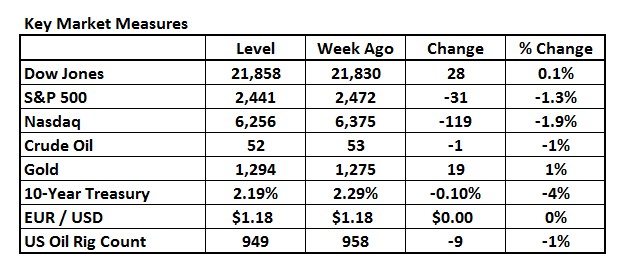
Talk of “fire and fury, the likes of which the world has never seen” aimed at North Korea spooked anybody listening. The markets have been calm for so long and then BOOM, the VIX (^VIX: 15.45) spiked 44% in one day and 60% in two days of trading this week. Our take is that we had been in an unsustainable lull of inactivity. These things happen and you have to be prepared for them. But in the long run, they work themselves out and things get better. Stay the course. If you are worried, consider dialing back your exposure to some of the more aggressive equities out there in favor of looking toward our REIT and High Yield portfolios, where the income stream of dividends offers greater downside protection.
But no matter what is happening out there, there is always a bull market here at The Bull Market Report! This week we highlight some of our favorite stocks/funds: Shopify, Apple, The Carlyle Group, Sabra, AstraZeneca, AllianzGI Equity & Convertible Income Fund, Twilio and Amazon.
BMR Companies & Commentary
Apple (AAPL: $158, up 1% - all prices are for the week)
Apple is hard at work sublet shifting its brand. Everybody knows Apple. But Apple isn’t the name of its products. Apple's greatest hits over the past 30 years don't have "Apple" in their name: Macintosh, PowerBook, iTunes, iPod, iPad, iPhone, Siri. The newer stuff that does carry the Apple moniker -- Apple Watch, Apple Music, Apple TV-- have been either outright disappointments or solid but not wildly popular businesses.
But Apple is as good a brand as any. Think Proctor & Gamble, Ford, General Electric - you get the point. It's hard to transition from a corporate brand to additional brand franchises, but if you can do it, the future is bright!
CEO Tim Cook is working hard to make it happen. The Apple brand speaks to the firm's culture and reputation to employees, shareholders and governments. A product brand communicates a specific message about the item's quality, design, or function to consumers. There is so much potential.
BMR Take: Apple is just one of the companies that always figures it out - just as we are seeing them do now with the focus on services revenue and rethinking the brand.
We remain very bullish. The stock is trading at 17x this year’s consensus EPS of $9.00. The Services business is on pace to double over the next few years. Our Target of $155 has now been breached. Yea! We hereby raise our Target Price to $170. This will bring the company close to a $900 billion valuation, now at $813 billion. Our Sell Price remains the same: “We would not sell Apple.”
The Carlyle Group (CG, $21, flat*)
Carlyle is really a master of the universe. The company’s private equity investments are behind so much of the world’s underlining economic activity it’s ridiculous. The latest example is with McDonald's.
This week McDonald's announced the successful completion of a strategic partnership with CITIC Capital Partners and The Carlyle Group. Ramping up a new era of growth and innovation, the partnership will operate and manage McDonald's businesses in mainland China and Hong Kong, leveraging combined expertise and strength to drive an expansion strategy.
The transaction has obtained China's regulatory approval and was completed on July 31st, creating the largest McDonald's franchisee outside of the United States. The sale to the new McDonald's China franchisee includes McDonald's existing businesses in Mainland China (2,500 restaurants) and Hong Kong (240 restaurants).
The new partnership announced a series of development initiatives for mainland China. Termed "Vision 2022," this strategy aims to drive double-digit sales growth in each of the next five years by increasing the number of restaurants from 2,500 to 4,500 by the end of 2022, bringing unparalleled convenience to Chinese customers. The opening pace of new McDonald's restaurants in mainland China is expected to progressively ramp up from approximately 250 per year in 2017 to 500 per year in 2022 under the new partnership. Vision 2022 also includes an increase of "Experience of the Future" restaurants to over 90%, which will enable the brand to offer a digitalized and personalized dining experience to more customers.
BMR Take: We believe Carlyle is heading to $30. Consensus is looking for a solid dividend of $1.80 next year and $2.15 the following. EPS is running closer to $3. Few institutional investors can buy the stock because the K1 tax structure creates issues. But that will change and when it does, look out on the upside.
* The stock was down 40 cents this week, but CG paid a 42 cent dividend on Thursday and when a stock pays a dividend the stock always opens that day down the amount of the dividend. Thus Carlyle was flat this past week.
Shopify (SHOP: $92, down 5%)
Shopify’s plan is to let half a million merchants run their business via Alexa and bots. Shopify wants its 500,000 merchants to be able to run their businesses almost entirely through the use of bots or voice apps like Alexa.
At F8, Facebook’s annual developer conference, Shopify announced plans to launch a Facebook Messenger bot, named “Kit”, the first commerce platform to do so. Through conversations on Facebook Messenger or SMS, Kit can do things like place a Facebook ad or start an email marketing campaign.
The development roadmaps of voice apps like the Shopify Alexa* skillset and text bots like Kit will begin to converge, so that the same merchant analytics available today by voice will become available in a text interface, and the same actions to run your business available today through text will someday be available with your voice.
* Shopify Alexa is a partnership with Amazon to use Alexa.
The Shopify Alexa skill first became available in January, but was launched with no marketing or promotion in order listen to the queries put forward by merchants to better understand the kinds of questions they want the skill to be able to answer. Before merchants are given the ability to run business operations in a conversational interface, a few other features will be added first.
Based on merchant feedback, more long-term business performance insights are on the way, and work will continue with engineers to ensure the bot can handle the range of questions a merchant has and understands the variety of ways a merchant may ask a question.
BMR Take: When we look at the core building blocks of how this company is advancing its growth potential of Total Addressable Market (TAM) is expanding. In addition, we see opportunities in international, in new merchant solutions and apps, and building scale with Shopify Plus, the company’s enterprise-focused solution. In our view, the valuation is supported by the long runway and expanding TAM given Shopify’s lower relative market share, still less than 5%. We reiterate our bullishness on the stock. The stock is currently trading at about 9 times the estimate of next year’s sales. This valuation is rich but justified.
Sabra Health Care REIT (SBRA: $21.45, down 7%)
We have decided to take our chips off the table in Sabra. Two reasons. First, the core senior housing portfolio growth is essentially flat so it’s hard to see any organic upside from the business. Second, the pending merger with Care Capital is being fought creating noise and possibly more risk.
Regarding the latter, two activist investors are urging Sabra to drop the Care Capital deal. They say shareholders of the healthcare-focused real estate investment trust should reject the merger at a shareholder meeting next month. Why? Sabra was overpaying for Care Capital's assets by up to 30%, the hedge fund said in a presentation. Ouch.
Consensus for Sabra Healthcare REIT:
1 Sell Rating, 6 Hold Ratings, 1 Buy Rating
BMR Take: We like to listen to the market and to other shareholders invested in the stocks we own. Especially when the other shareholders do great research and make objective points. We added the stock at $24 in May and are down a bit, but with the dividend, it wasn’t a great loss. Let’s move on to the next one.
AllianzGI Equity & Convertible Income Fund (NIE: $19.79, down 2%)
This fund seeks total return with capital appreciation and high current income through investment in convertible equity, income producing securities and through utilizing an options strategy. It’s top holdings are Microsoft, Apple, Amazon, Facebook, and Google. It does not use leverage. It does not hold fixed income.
60% of the stocks it holds are in the largest giant companies, and 37% in large cap companies. The Funds PE ratio is 19 versus the 17.2 benchmark, but sales, EPS, book value, and cash flow growth is all better than the benchmark.
See more discussion in The High Yield Report later in this newsletter.
BMR Take: Sometimes it is nice to own a fund and have some help picking all the right places to be. We like AllianzGI with its 7.7% yield. You can buy right now at a discount to the net asset value of $21.75, a very opportune entry point.
AstraZeneca (AZN: $29, flat*)
Fierce pharma rivals collaborating on cancer treatments are increasing the competitive landscape, hurting AstraZeneca. But we believe we must stay the course. AstraZeneca reported disappointing results for its clinical trials examining Tremelimumab combined with Imfinzi for the treatment of lung cancer. The market has become crowded with checkpoint inhibitors and immunotherapy drugs, which means that the number of such potential combinations of treatments is growing. Pharma rivals are now cooperating -- last week Merck bought half the rights to AstraZeneca's Lynparza, and in July Eli Lilly said it would out-license or co-develop one-third of its oncology pipeline.
BMR Take: Healthcare has been a minefield for months now. AstraZeneca has been beaten down. Analysts have been upgrading the stock on valuation. It is very cheap versus expectations for around $2 of EPS for next few years. Consider the 3% dividend yield on top of that. It’s a classic value here as the stock is truly undervalued. Our Target remains $42, and our Sell Price of $32 has been breached, so please make a decision with your own portfolio as to whether you personally wish to stay the course. We are trying to be patient here to give the company more time to perform.
*A dividend was paid on Wednesday of 45 cents.
Upcoming Economic News
Retail Sales
August 15th , 8:30 AM
Period: July
Consensus: 0.40%
Prior: -0.20%
Housing Starts
August 16th, 8:30 AM
Period: June
Consensus: 1,220,000
Prior: 1,215,000
Initial Claims
August 17th, 8:30 AM
Period: Through August 12
Consensus: 240,000
Prior: 244,000
A Word from Gary Jefferson
Jefferson Financial Group
First Vice-President, Investments
UBS Financial Services, Inc.
Stocks finished mostly higher again the week before last, mainly because of good corporate earnings, a stronger-than-expected Jobs report, solid GDP performance, healthy Consumer Confidence and a little better than expected Export & Import numbers. Is it all "too good to be true?" [Well, indeed it was!]
According to the latest American Association of Individual Investors survey, individual investors are now holding their lowest cash allocation since 2000. They are now among the most invested in financial markets since 1988. The three other time periods with the lowest cash allocations were in 1998, 2000, and 2015, and all of these preceded times when investors probably wished they had more of a cushion.
We certainly do not think we're on the brink of another 1999 dotcom bubble or a 2008 financial crisis crater. But one thing's for sure, stocks don't always go straight up forever. There will be volatility and pullbacks as Fed-tightening continues. According to recent news reports, there is now a 50/50 chance the Fed will raise rates again in December. Whenever a pullback occurs, it is not going to be unexpected. It's overdue and as natural to the market as hot dogs are to ball games. With a backdrop of really solid earnings, we expect any pullback to be fairly brief in duration. If earnings keep growing and the job numbers keep getting stronger, pullbacks will just be setting up the next move higher. If Congress grows up and we get tax relief and corporate tax reform, investors will be saying, "Laissez les bon temps roulez".
Note what UBS has to say in their latest report on the Equity Markets: The bottom line: stocks are not cheap, BUT ARE NOT in "bubble" territory.
Amazon Update (AMZN: $968, down 2%)
The stock got hit last week as the rest of the market had some tough times as you know. There is an ongoing discussion over valuation with this company. We had a heated argument with a very astute investor who thinks the stock is overvalued saying that the company will NEVER report substantial earnings; that Bezos will ALWAYS have a new project in mind that will cause him to spend, spend, spend on new infrastructure.
We agree to a certain extent, but disagree with the profit story. As you know, we have said many times revenues are the key to all success in the market. Amazon had revenues of $89 billion, $107 billion and $136 billion in the last three calendar years. This year? Hard to say, but it looks like at least $175 billion? This is just huge of course. We remain bullish for as far as we can see forward.
We hereby raise our Price Target from $1000 to $1100 and leave the Sell Price at $900.
Twilio (TWLO: $31, up 7%)
Twilio had a huge week after reporting blowout revenues as we reported via News Flash on Tuesday. Total revenue – $96 million, up 49% from the second quarter of 2016 and 10% sequentially from the first quarter of 2017.
Loss from operations – $7 million, compared with a loss of $11 million for 2Q16.
And we love this stat: 43,000 Active Customer Accounts as of June 30, 2017, compared to 31,000 Active Customer Accounts as of June 30, 2016.
Profits are still at slightly below breakeven, but as you know, we are banking on the huge revenue gain.
Here is the consensus on the Street:
2 Hold Ratings, 15 Buy Ratings
Price Targets:
8/8/2017 Canaccord Genuity $38
8/8/2017 Robert W. Baird $39
8/8/2017 J P Morgan Chase $40
8/8/2017 Mitsubishi UFJ Financial Group $35
7/17/2017 Summit Redstone $36
BMR Take: We love this company and think it can be a monster. An Apple? A Microsoft? Hard to predict the next 10-15 years, but watch this one closely.
Wall Street Consensus for United Parcel Service (UPS: $111, up 1% in a very tough week, and after an 83 cent dividend on Thursday)
Consensus: 10 Hold Ratings, 5 Buy Ratings
Price Targets:
8/8/2017 Citigroup $128
7/3/2017 Sanford C. Bernstein $127
SNAP (SNAP: $11.83, down 13% - still at a $14 billion market cap)
Don’t buy SNAP
Don’t buy SNAP
Don’t buy SNAP
Revenues: $182 million up from $72 million
Loss: $443 million up from a loss of $116 million last year. WOW! (How is this actually possible?)
Don’t Buy SNAP
Don’t Buy SNAP
A Letter from a Subscriber about Netflix (NFLX: $171, down 5%)
From: Stan Makovsky [mailto:stan@stanxxxx.com]
Sent: Wednesday, August 09, 2017 3:11 PM
To: 'Todd at The Bull Market Report'
Subject: Netflix
Hi Todd,
Disney pulling out of Netflix seems to be a big deal for both stocks. Your thoughts please?
Best Regards,
Stan Makovsky
Our Response:
Hi Stan –
I am not really concerned too much. The market is getting slammed today as I write this [Wednesday] and Netflix is down just $4. If it were down $20 I’d be a little concerned. But I believe Disney needs Netflix more than Netflix needs Disney. Netflix is a force now and as you know is spending billions of dollars a year on programming. They will be just fine. The scary thing about Netflix is their profit level – which is tiny. This needs to change.
Todd Shaver
Founder and Editor in Chief
The Bull Market Report
A Powerful Financial Newsletter
Since 1998
@BullMarketRept on Twitter
The High Yield Report
By Michael Foster
Special to The Bull Market Report
It’s been a long time coming, but we finally see a bit of fear entering the market.
For high yield investors, this is a concern because downturns and mini-corrections tend to be amplified in high yield investments. The S&P 500 slid over 1% last week but many high yield investments fell much more, especially closed-end funds (CEF). The AllianzGI Equity and Convertible Income Fund (NIE: $19.80) fell nearly 2% over the last week due to a considerable decline in the fund’s NAV, which fell over 1% in a single day of trading last week. In many cases, a market correction will result in CEFs’ discounts widening as investors sell off the fund. Surprisingly, however, holders of the AGIC fund have been surprisingly calm, resulting in the discount staying less than 10% by the week’s end. Recently, the discount had shrunk to less than 9%, so this is definitely not as good as it has recently been. But it’s surprisingly not as bad as it could be.
Of course, if the selloff continues throughout the coming week, it would be more than reasonable to expect Allianz to see a larger discount as slower and more risk-averse investors finally get around to selling this and other closed-end funds. What does this mean for you? Well, we maintain a bullish outlook for the economy and for stocks, with corporate profits continuing to rise year-over-year and the Allianz fund in particular maintains a strong portfolio of respected and strong-performing stocks. There’s no reason to sell off amongst the fearful, but anyone with extra cash on the sidelines who wants a sustainable near-8% dividend stream could consider picking up some of this fund.
Similarly, The Bull Market Report’s second CEF pick, the Pimco Dynamic Income Fund (PDI: $29), had a rough week during the market’s selloff, falling over 4%, after paying out a 22 cent dividend on Wednesday. This has resulted in PDI’s premium price falling slightly, and now the fund trades at slightly over a 2% premium to NAV.
After the sell-off, investors may be eager to buy more of the Pimco fund and capture that 9% dividend yield plus the potential upside of special dividends at the end of the year. Before rushing to buy, however, there are a few things to consider. The fund’s NAV has risen 10% so far this year even after accounting for dividend payouts, which means the fund’s payout remains sustainable. However, this is a relatively weak performance compared to its past performance. Part of the reason for that is the growing burden of its promised payouts. Because it trades at a premium, it has been significantly harder for the fund to pay out dividends than to earn the comparable income in the open market. Since the fund’s premium rose to as much as 10% earlier this year, those dividend payouts were particularly burdensome for Pimco’s managers. Now that the premium is at its lowest point since November last year, that dividend is going to be slightly easier to pay.
Easier, but not easy. The real problem with this fund is that it has years and years of a solid track record thanks to its contrarian nature. The fund invested heavily in mortgage-backed securities (MBS’s) after 2008, when they were synonymous with financial ruin. In reality, however, many of these assets were extremely undervalued because of investor fear, and Pimco had the chops to find the good ones and buy them. Hence the fund’s massive outperformance.
However, 2008-2009 is becoming a fainter memory, and the market is finally realizing the huge mistake it made in avoiding many quite valuable MBS’s. As a result, more capital is coming into that market and creating more competition for Pimco. Ultimately, that means diminished returns for investors holding this fund.
Unfortunately, this has also happened as more investors have discovered the fund’s tremendous returns. Holding this fund has become a crowded trade. Back in 2013-2015, the fund almost always traded at a discount; in late 2015, shortly before The Bull Market Report recommended it, its discount fell to 11%. But now a flood of capital has come in and driven the fund to a consistent premium, while earning superior returns through MBS’s is getting harder for the fund.
This doesn’t mean you should sell the Pimco Dynamic Income Fund. But it does mean one has to wait before buying more and instead choose other strong dividend payers like the AllianzGI fund.
Finally, let’s briefly discuss REITs. These were a mixed bag, with pretty much all REITs down and some down much more than others. Omega Healthcare Investors (OHI: $30) fell 2% over the week alongside the broader market, with its greater volatility amplifying losses. Yet the similarly volatile Government Properties Trust (GOV: $18.13) fell about 1% over the same period, even beating the market. There are a couple of pretty obvious reasons for this. For one, Government Properties Trust’s big decline earlier this month means it’s found a bottom and can’t plunge much lower. Obviously this means buying now makes sense. Omega, however, hasn’t exactly found its bottom yet and only went negative YTD at the end of last month. There’s no fundamental reason for this – there is sustainable income, the dividend is still rising, and Omega’s expansionary plans are on track. But there is a lot of fear in the market, and that is reflected in the rapidly fluctuating price of this stock.
While buying Omega now is buying a bargain, investors should be prepared for more volatility. Government Properties, while not exactly strong, seems to have found a floor that is limiting further downside, making it a more appealing buy right now. But no matter what you do right now, selling is not a good idea. There is no fundamental reason to fear for the future of equities or high yield assets, so ignore the panic selling. It will be intense but brief-lived, as always.
Good Investing,
Todd Shaver, Editor, CEO and Founder
The Bull Market Report
Since 1998
August 6, 2017
by Todd Shaver | Aug 6, 2017 | Weekly Newsletter 7pm Sunday
The Weekly Summary
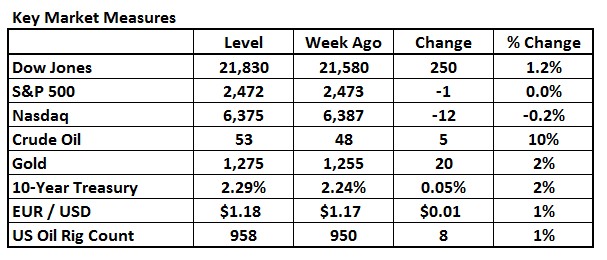
Months of boredom broken up by moments of terror. And then quickly back to the boredom. That’s how it’s been for U.S. stocks lately, where vast stretches of tranquility are occasionally interrupted by sudden bouts of selling on headlines trumpeting entanglements of President Donald Trump. It happened again during the last 30 minutes of trading Thursday, when the S&P 500 Index surrendered a quick five points after the Wall Street Journal reported special counsel Robert Mueller was said to have impaneled a grand jury in the Russia probe. More than half the swoon was erased by the close. A similar frenzy occurred July 20th, when Bloomberg News said Mueller was examining a broad range of financial transactions involving Trump’s businesses. The message from professional investors: In a market where the CBOE Volatility Index has consistently hovered just above 10 at historic lows, get used to it. Both the drops and the recoveries.
However, there is always a bull market here at The Bull Market Report! This week we highlight some of our favorite stocks: Apple, The Carlyle Group, Athenahealth, PayPal, Teva Pharmaceutical Industries, and Tesla.
BMR Companies & Commentary
Apple (AAPL: $156, up 5%)
Apple delivered solid third quarter results. Let’s break it down for you.
iPhone revenue was $24.9 billion versus the $25.5 billion consensus. Just shy. iPad revenue was $5.0 billion versus the $4.0 billion consensus. Mac revenue was $5.6 billion versus the $5.7 billion consensus. Services (the App Store) – the spot to watch – did $7.3 billion versus the $7.1 billion consensus. All in all, no complaints on the top line.
Average selling prices did trend lower, but who cares. The iPhone sold for an average of $606 versus the $621 consensus. The iPad sold for $435 versus $440 last year. Mac was $1,303 versus the $1,334 consensus. This is minor stuff in the long run. People should be concerned about the long term, big picture vision like we are.
Gross margin of 38.5% beat the Street’s 38.3% and hit the top end of guidance. Operating expenses were $6.7 billion vs. the consensus of $6.6 billion. Profits continue to flood in to the tune of about $800 million per week and now sit at $262 billion.
At the bottom line the company did $8.7 billion in earnings or $1.67 per share vs. $7.8 billion a year ago, $1.42 per share. Fabulous.
An overall great quarter. Apple reported unit and revenue growth in all product categories in the June quarter, driving 17% growth in EPS. The business also returned $11.7 billion to investors during the quarter, bringing total cumulative capital returns to almost $223 billion. Wow!
BMR Take: We remain very bullish. The stock is trading at 17x this year’s consensus EPS of $9.00. The Services business is on pace to double over the next few years supporting growth.
The Carlyle Group (CG: $22, up 6%)
Carlyle reported another strong quarter with EPS of $0.81, beating the $0.41 consensus by a mile. Revenue was $910 million versus the $680 million consensus. The company paid the $0.41 dividend shutting up all the naysayers about the businesses’ ability to consistently return capital.
Part of the big out-performance was admittedly just due to a one-time insurance recovery. But the core business looks great. The company is fundraising hand over fist and continues to generate great investment returns.
Overall, Carlyle produced another strong value creation quarter, with net unrealized gains awaiting to be returned to investors increasing 46% year to date. As a result of the strong performance Carlyle has delivered to fund investors, demand for new funds is high. The company raised over $8 billion of capital in the second quarter with acceleration likely in the second half of 2017.
BMR Take: Carlyle is probably heading to $30. Consensus is looking for a solid dividend of $1.80 next year and $2.15 the following. EPS is running closer to $3. Few institutional investors can buy the stock because the K1 tax structure creates issues. But that will change and when it does, look out on the upside!
Athenahealth (ATHN: $141, up 1%)
Athenahealth announced that the board and management team are conducting a strategic review of the company’s operational and financial strategy, leadership. and governance. Management has commenced a comprehensive review of its operations, cost structure and capital allocation, with the assistance of a globally recognized consulting firm. In conducting its review, the company has identified $100 million in cost-savings opportunities that will drive efficiency and targeted investment in the company's hospital and network services businesses. Athenahealth will provide additional information regarding details of these strategic initiatives by its Q3 earnings release in October. Co-founder Jonathan Bush, a cousin to former U.S. President George W. Bush, will remain as the chief executive of the company.
Athenahealth also intends to augment its senior management structure to establish the role of president. The president will be responsible for the execution of Athenahealth’s business operations and will report to Athenahealth CEO, Jonathan Bush. As previously announced, the company is also working to identify a CFO. The board has retained a search firm to fill the president and CFO roles promptly. Finally, the board plans to separate the roles of chairman and CEO and is working to recruit an independent chairman. In addition, the board has begun a search process to appoint an additional independent director. Recall, all this has been brought about by Elliott Management, a major activist hedge fund that disclosed a 9.2% stake in the company back in May.
"Athena needs a management team and operating plan that can successfully tackle the next stage of growth," said a portfolio manager for T. Rowe Price New Horizons Fund. "This plan is a large step in the right direction."
The company said its bottom line climbed to $20.5 million, or $0.51 per share in 2Q. This was higher than $13 million, or $0.34 per share, in last year's second quarter. Revenue for the quarter rose 15% to $300 million, up from $260 million last year.
The company, said it would invest in its fast-growing hospital and network services businesses.
BMR Take: With Elliott Management in there shaking things up, there is a lot of excitement ahead. We love this company but believe now is the time to take profits. We are up 38% since we added the stock at $103 in November. The PE is still a ridiculous 280 and to get it down to a ridiculous 70, profits will have to quadruple, which will take years. We hereby remove the stock from the portfolio.
What should YOU do? Totally up to you of course. You can sell, or you can stay the course and maybe the stock will continue its big ride. If you stay, you can protect yourself two ways. You can sell calls on the stock, say the December $150 for $10. Or you can put a stop order in place at say $135 or $130, to protect your gains. If the stocks goes higher, fabulous.
PayPal (PYPL: $59, down 1%)
PayPal is on a roll with new partnerships. The latest - Skype!
Skype is all about trying to make your life easier and more efficient. That’s why they recently developed Send Money, a Skype feature that allows you to transfer funds via the Skype mobile app while you’re in the middle of a conversation using PayPal. Sweet!
Skype users wishing to send money from a PayPal balance or a U.S. debit card won’t be charged for transactions, making it similar to how PayPal’s other peer-to-peer payment platforms function.
Potentially more important than this alone is that this is a deal with Skype's parent company, Microsoft, which now establishes a relationship with them. Last month, PayPal inked deals with the likes of Samsung Electronics, Apple, and JPMorgan. Skype has reportedly been downloaded over a billion times and boasts approximately 300 million monthly active users. Wow!
BMR Take: PayPal is at 200 million users in a world where Facebook is running a global internet business model with 2 billion. You see the growth here? !! We are riding PayPal far into the future.
Teva Pharmaceutical Industries (TEVA: $21, down 36%)
Teva announced earnings and got rocked. Revenues of $5.7 billion versus $5.0 billion last year. EPS of $1.02 versus $1.25 a year ago. Dividend of 8.5 cents, down 75% from 34 cents in the first quarter of 2017. The company only lowered EPS guidance from $5.10 to $4.40, which makes the stock very inexpensive relative to where it is trading right now on earnings. However, the problems are big.
Second quarter results were lower than anticipated due to the performance of the U.S. Generics business and the continued deterioration in Venezuela. In the U.S. Generics business, the company experienced accelerated price erosion and decreased volume mainly due to customer consolidation, and greater competition as a result of an increase in generic drug approvals by the FDA, and some new product launches that were either delayed or subjected to more competition. Not good.
In response, Teva must take swift and decisive actions. The company is now focused on executing meaningful cost reductions, rationalizing assets and maximizing value, actively pursuing divestiture opportunities and strengthening the balance sheet.
BMR Take: Life brings adversity. You, dear reader, have been around long enough to know this. This stock has just been rocked as bad as the loser in a UFC title fight. But it is just silly cheap right here. Buy more? Yes, if you are ready to take on some volatility. Sell? Not here. Hold? This seems like the best course of action with intentions to exit once the price gets up off the floor mat.
Tesla (TSLA: $357, up 7%)
Tesla reported Wednesday that its net loss widened in the second quarter as they opened new stores and prepared for the launch of its new lower-cost Model 3 sedan.
The loss grew 15% percent to $335 million from a loss of $290 million in the year ago quarter. But Tesla's adjusted loss of $1.33 per share, handily beat Wall Street's forecast of a $1.88 loss.
Revenue more than doubled to $2.8 billion, also beating Wall Street's forecast of $2.5 billion. Tesla's shares jumped 6% percent after the earnings release. Tesla saw significant growth in its energy generation and storage business, which contributed about 14% of its revenues. It bought solar panel maker SolarCity late last year and said it began taking orders for its new solar roof tiles in the second quarter, and recently began installations.
But most attention was focused on the Model 3, which was delivered to its first 30 customers — all Tesla employees — last week. CEO Elon Musk said the company has 500,000 reservations for a Model 3 and it wants to ramp of production as quickly as possible. But Musk has warned of “production hell” for the next six months or longer as the company goes from building 100 Model 3’s in August to 20,000 Model 3’s by December. He wants Model 3 output to grow to 40,000 cars per month by sometime in 2018.
Musk made a surprise announcement during Wednesday's second-quarter earnings call. Musk said Tesla will no longer use an entirely different vehicle architecture to build the Model Y, the compact SUV due to hit the market by 2020. Tesla will instead borrow from the Model 3's platform. That should make Model Y production a lot easier in the future. "Upon the council of my executive team to reel me back from the cliffs of insanity, the Model Y will, in fact, be using substantial carry over from Model 3 in order to bring it to market faster," Musk said. "I have to thank my executive team from stopping me from being a fool," Musk said. "Model Y will have relatively low technical and production risk as a result."
Tesla is averaging about 1,800 orders per day for its Model 3 since its big event a week ago Friday. Extrapolated, that’s over 50,000 orders a month. It opened 29 new stores and service centers in the second quarter in order to meet Model 3 demand. It's also planning to double the number of fast-charging Supercharger outlets this year to 10,000 worldwide. The company delivered 22,000 Model S and Model X vehicles in the second quarter. That was up 53% from the same quarter a year ago, but down from 25,000 in the first quarter.
Management is expecting positive Model 3 gross margin in Q4 and targeting 25% margin in 2018. Model S and Model X deliveries are expected to increase dramatically in the 2nd half of 2017.
During the initial phase of the Model 3 ramp in Q317, the volume produced will be tiny relative to the installed production capacity. As a result, Model 3 gross margin in Q3 will be impacted by the excessive allocation of labor and overhead costs and depreciation over this tiny volume. In the absence of these one-time elevated cost allocations, Model 3 gross margin in Q3 would already be positive, resulting in a positive cash contribution.
BMR Take: The future of automobiles are electric and Tesla runs the show. We are looking at EPS estimates of $14 in 2020.
Upcoming Economic News
Consumer Credit
August 7th, 3:00 PM
Period: June
Consensus: $16.0 billion
Prior: $18.4 billion
JOLTS Job Openings
Tuesday, August 8th, 10:00 AM
Period: June
Consensus: N/A
Prior: 5,666,000
Wholesale Trade
Wednesday, August 9th, 10:00 AM
Period: June
Consensus: 0.40%
Prior: -0.50%
PPI
Thursday, August 10th, 8:30 AM
Period: July
Consensus: 0.10%
Prior: 0.10%
CPI
Friday, August 11th, 8:30 AM
Period: July
Consensus: 0.15%
Prior: 0.0%
Google Reports Earnings
Google (GOOG: $928, down 1%) continues to reports huge gains in sales and earnings, despite having to pay the European Commission a $2.7 billion fine. EPS of $5.01 beat estimates by $0.60 and revenues of $26.0 billion beating estimates by $400 million. Total revenue was up 20% year over year, and was in fact up 23% when adjusted for currency fluctuations. 87% of Alphabet's $26 billion of revenue during the quarter came from advertising, which was up 18%. Google’s “other” business - everything that’s not advertising, including its cloud business and Google Play app store - grew 40% year over year to $3.1 billion. “Other” now represents 12% of Google’s business, up from 10%. Sales from the Europe and Africa account for about 34% of the company’s overall revenue,
Google's paid clicks were up 52% year over year. The average cost-per-click was down 23% year over year. We are not fretting over the last statistic. But we are salivating over the first. 52% growth. Huge.
Advertising revenue growth was driven by mobile and YouTube. And the cloud business was big. Cloud deals larger than $500,000 tripled year over year.
BMR Take: Buy today. Buy tomorrow. Buy next month. Buy next year.
A Word from Gary Jefferson
Jefferson Financial Group
First Vice-President, Investments
UBS Financial Services, Inc.
The number one question to us over the past few weeks has been, "When is this bull market going to end?" Run away as fast as you can from anyone who tells you they know. That said, however, it is a very important question to ask because, believe it or not, risk matters. And you can rest assured that Murphy's Law will prove that risk matters most when it appears risk no longer exists. The S&P 500 is up nine straight months and the VIX hit an all-time historical low last week. The media seems to think that, somehow, no one seems nervous. That's not what we see. We see a lot of nervousness and the question we prefer to answer instead of being asked to foresee the future is, "What signs of a bear market do you see today?"
Aside from the always present danger of a global conflict, we do not see the most common indicators used to predict coming recessions such as falling sales, production and earnings. What is happening instead is a real turnaround in earnings growth momentum to the upside. The key ingredients for a typical bull market are still in place:
The economy is expanding.
Earnings growth is accelerating – we've seen three quarters in a row and 2Q17 looks like it will be the best so far. Stocks are not cheap, but with few exceptions they still offer a more attractive value than bonds (The 10-year Treasury is still around 2.3%)
One Wall Street research firm recently said, "Just realize that this bull is eight years old. The easy gains have been made. Now it's a slower grind higher. So stay focused on the key long term trends and be patient waiting for the profits to unfold".
What we read into the words, "a slower grind higher" is a market that has more of a pattern of two steps higher and one or one-and-a-half steps lower, rather than the four or five steps higher to each step backward that we have enjoyed for several years. It is a rare year that the market doesn't experience a 5% pullback at some point – we think that would be not only be normal but also a "healthy" thing to see. Stock Traders Almanac, researching patterns in the market over the past 50 years, reports that strong post-election years typically point to summer selloffs. Looking at the 50-year charts, these seem to range in the 4% or the 9% area with the "average" being somewhere in-between. We don't see anything that would make us disagree with historical norms because "It's different this time". Thus, we expect to see some sort of sell-off over the August-October time frame that's in line with historical averages.
However – Oppenheimer announced last week that it was raising its 2017 earnings estimates for the S&P 500 from $125 to $129 per share, and raising its year-end target for the index from 2450 to 2650. Most resources we follow have a price target between 2500 and 2650. Should we see a decline from 3% to 10%, most experts are saying that there will be a substantial year-end rally from that low point which will propel the market to further all-time highs by next year. But that's the "slower grind higher", and watching the market drop 10% and then going all the way back up to get another 5% or 6% will not be "easy". To that end, patience will be a true friend and we would also keep in mind that, "Without a selloff, there can be no rally".
The High Yield Report
By Michael Foster
Special to The Bull Market Report
Earnings season for REITs continues, and the news for Bull Market Report subscribers has been great.
Government Properties Trust (GOV: $18.35, up 1.5%) saw sales and earnings beat expectations by a healthy margin. Revenues rose 9% year-over-year to $70 million and FFO for the quarter beat expectations by a penny at 60 cents per share. On a trailing 12-month basis, dividend coverage is now 132%, above the 130% cutoff that we prefer and far beyond many more “conservative” REITs.
Government Properties Trust is a really interesting stock, because it is always seen as extremely high risk despite its business model and fundamental results. Quarter after quarter, Government Properties Trust reports high occupancy rates, strong revenue, and a healthy amount of income that is higher than dividend payouts. So why does the market give this stock a 9.5% dividend yield, when some REITs with worse dividend coverage ratios are yielding 5% or even less?
A large part of it has to do with the company’s size. At a $1.8 billion market capitalization, the firm is definitely one of the smaller and less geographically diverse. But that lack of diversification is more than offset by its business model: renting to United States government agencies and offices, usually with long-term lease contracts. Back in 2013-2016, when expectations of a shrinking government were rampant (and actual downsizing was happening a bit), this didn’t seem like a good thing. But we’ve seen this REIT weather that storm, thanks in no small part to its tenant mix and, most recently, its move into more conventional office leasing.
But now that government downsizing is not as sharp of a focus in D.C., Government Properties is quietly driving revenue with strong demand from government agencies, who are also quietly expanding. On the firm’s earnings call, President David Blackman announced that 290,000 square feet of new and renewal leases were completed in the second quarter, with 235,000 square feet being rented to government tenants. The weighted average lease term for those leases is 8 years.
This means 82% of the revenue the company is going to get over the next 8 years is virtually guaranteed by the full faith and credit of the United States. On top of this safety, the REIT reported that 22% of the firm’s rented space is going to face an expiration in the next two years. Let’s dig into that. If that 22% remains vacant, and there’s no growth anywhere else in the firm’s portfolio, that means annualized FFO would drop to about $1.76 just a hair above the company’s $1.72 dividend.
Obviously, this is an extreme scenario that is virtually impossible to occur. Even in the depths of the 2008-2009 recession, REITs simply did not have a 78% occupancy rate. So even in the most absurdly dire, extreme hypothetical scenario, Government Property’s dividend is secure.
This is why the stock is really worth buying even as its yield is over 9% and despite the 24% price drop we have seen over the last year. The stock is volatile because there’s a lack of investor enthusiasm - but as a vehicle for capturing an income stream, it’s a solid choice, especially now after its drop.
Let’s talk about another REIT that released earnings this week - Apollo Commercial Real Estate Finance (ARI: $18.01, up 1%), which reported a slight miss on revenues that rose 33% year-over-year and EPS of 46 cents, in line with expectations.
Looking over the press release and listening to the earnings calendar, there really isn’t much to raise eyebrows - which is why the stock didn’t really change much. In a way, the firm’s results are best summarized by CEO Stuart Rothstein, who said this during the earnings presentation:
"Importantly for Apollo's business, transaction volume remains healthy driven by both a significant amount of capital committed to or targeted for value add real estate equity investment and the availability of various debt financing alternatives. At present, Apollo has a strong pipeline consisting of both new opportunities many of which involve repeat clients, as well as the option and opportunity to participate in the refinancing of some existing transactions.”
There are no surprise new investments, no sudden influx of demand for commercial loans or new borrowers coming to the table. It’s very much business as usual. And that means $800 million in new investments year-to-date for the firm and an extra $150 million in funding on previously closed transactions. This contributed to 46 cents in net interest income, giving the dividend a pretty worrisome coverage ratio on a trailing 12-month basis: 98%.
There are a couple of things to keep in mind. This is a mortgage REIT (mREIT), where dividend coverages tend to be significantly lower than in property REITs. Investors are compensated for this with a higher dividend yield, and Apollo Commercial is giving a 10% yield right now. However, investors need to brace for the possibility that the dividend could get cut in the future - although the cut could be miniscule to bring the company back to a 100% dividend coverage ratio.
Fortunately, that is extremely unlikely for one reason: This company has been growing like a weed, as you can see from revenue jumping by a third from a year ago. This is very much a growth income stock - an odd thing that is hard to find, but needs to be thought about differently. High yield stocks tend to rise in price, and thus have a lower yield, as the company proves the sustainability of its income stream over time.
Of course, there is a risk that the growth will slow or stop, and that’s one of the big risks that this stock’s big yield is compensating investors with. So far, there is no indication that the growth will stop - the healthy pipeline of loans makes it clear that there’s still room for the company to grow into its dividend. But there’s also no indication that growth is on track for a rapid expansion - instead, it’s simply chugging along. That probably means investors can expect its yield to continue and its stock to stay where it is - which means it’s a great hold for now to capture those 10% dividends.
Good Investing,
Todd Shaver, CEO, Editor and Founder
The Bull Market Report
Since 1998
July 31, 2017
by Todd Shaver | Jul 31, 2017 | Earnings Preview 6 AM
Shopify (SHOP: $92)
Bull Market Report Target Price: $90
Bull Market Report Sell Price: $65
Earnings Date: Tuesday, 8:00 AM ET
Consensus: 2Q17
Revenues: $145 million
EPS: -$0.07
Year Ago Quarter Results
Revenues: $85 million
EPS: -$0.04
Key Things to Watch For in the Quarter
Analysts estimate that Shopify will report a 65% increase in revenue to $144 million but still show earnings slightly in the red. Shopify has beaten estimates in the past four quarters, contributing to the 150% appreciation in the stock since this time last year. The stock has started to level out over the past few months in the $90-$92 range, but we are confident this is merely a hesitation before the next breakout.
……………………………………………………………………………..
Apple (AAPL: $149)
Bull Market Report Target Price: $155
Bull Market Report Sell Price: We would not sell Apple
Earnings Date: Tuesday, 04:00 PM ET
Consensus: 2Q17
Revenues: $42 billion
EPS: $1.57
Year Ago Quarter Results
Revenues: $45 billion
EPS: $1.42
Key Things to Watch For in the Quarter
Analysts across Wall Street expect that Apple will report a healthy 10% growth in EPS to $1.57 and a 5% decrease in revenue to $42 billion. Apple has beaten estimates in each of the past four quarters. This success has contributed to the 40% appreciation in the stock since this same time last year. Although Apple’s top line has slowed down, we expect its innovative board and executives will roll out offerings to spur growth in future quarters.
……………………………………………………………………………..
Carlyle Group (CG: $20)
Bull Market Report Target Price: $22
Bull Market Report Sell Price: $13
Earnings Date: Wednesday, 8:00 AM ET
Consensus: 2Q17
Revenues: $680 million
EPS: $0.43
Year Ago Quarter Results
Revenues: $530 million
EPS: $0.35
Key Things to Watch For in the Quarter
Carlyle Group is expected to report strong revenue and EPS growth for 2Q17. Analysts estimate that Carlyle will report an 18% increase in revenue and a 23% increase in EPS. Despite having only beaten analyst estimates in two of the past four quarters, the stock is still up over 20% since this time last year. Carlyle’s stock currently trades at a PE ratio of 23, which is extremely cheap compared to the industry’s average PE of well over 50.
……………………………………………………………………………..
Tesla (TSLA: $335)
Bull Market Report Target Price: $350
Bull Market Report Sell Price: $280
Earnings Date: Wednesday, 04:00 PM ET
Consensus: 2Q17
Revenues: $2.5 B
EPS: -$1.80
Year Ago Quarter Results
Revenues: $1.3 B
EPS: -$1.61
Key Things to Watch For in the Quarter
Analysts across Wall Street expect that Tesla will report revenue growth of 100% to $2.5 billion and an increase in its earnings deficit to -$1.80 per share. Tesla’s is unique because unlike most equities its price is not driven by earnings. Yet. Of the past four quarters, Tesla has only beaten estimates once, but the stock has still appreciated 45% year-over-year. Tesla recently took a 20% hit in early July from the $380 range all the way down to $308, providing investors with a window of opportunity to enter the stock.
……………………………………………………………………………..
Square (SQ: $26)
Bull Market Report Target Price: $29
Bull Market Report Sell Price: $20
Earnings Date: Wednesday, 04:00 PM ET
Consensus: 2Q17
Revenues: $535 M
EPS: -$0.05
Year Ago Quarter Results
Revenues: $440 M
EPS: -$0.08
Key Things to Watch For in the Quarter
We believe Square will increase its revenues by 22% to $440 million and improve its earnings deficit. Square has beaten estimates the past four quarters rewarding stockholders with 135% year-over-year appreciation. We are very bullish on Square as they continue to break all-time highs and continue to set themselves up for growth in future quarters.
……………………………………………………………………………..
Annaly Capital Management (NLY: $11.93)
Bull Market Report Target Price: $12
Bull Market Report Sell Price: $11
Earnings Date: Wednesday, 04:00 PM ET
Consensus: 2Q17
Revenues: $595 M
EPS: $0.30
Year Ago Quarter Results
Revenues: $455 M
EPS: $0.29
Key Things to Watch For in the Quarter
We expect Annaly will report EPS growth of 3% to $0.30 and a 23% increase in revenue. Annaly has beaten estimates in two of the past four quarters and is up 7% year-over-year. Yielding a 10% dividend makes Annaly an extremely attractive stock for investors who are looking for both growth and income potential.
……………………………………………………………………………..
Sabra Health Care REIT (SBRA: $23)
Bull Market Report Target Price: $30
Bull Market Report Sell Price: $21
Earnings Date: Wednesday, 04:00 PM ET
Consensus: 2Q17
Revenues: $55 M
EPS: $0.29
Year Ago Quarter Results
Revenues: $57 M
EPS: $0.53
Key Things to Watch For in the Quarter
Sabra is expected to report a slight decrease in revenue and a big drop in earnings for 2Q17. Sabra has missed estimates in the last three of four quarters, but its stock has remained fairly flat over the past year, only losing about 3% of its overall value. It still trades at a relatively cheap PE of 16 and yields a 7.4% dividend. We expect Sabra to turn things around as the economy continues to show signs of strong growth.
May 7, 2017
by Todd Shaver | May 7, 2017 | Weekly Newsletter 7pm Sunday
The Week Ahead
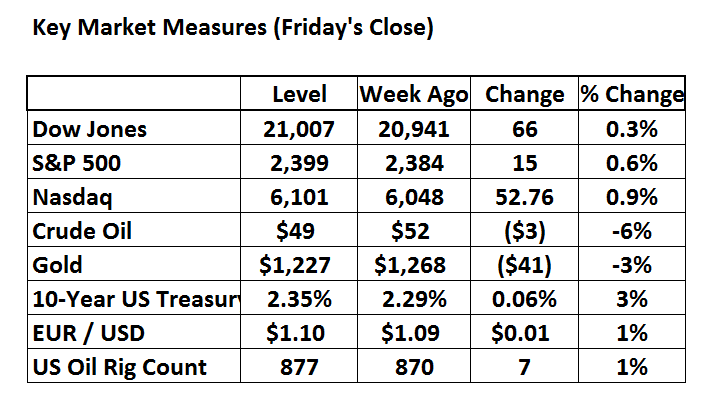
Well, it’s graduation week. Class of 2017 graduates are hitting the stage to accept their diplomas, listen to a keynote speech, make one last party, and then head out into the great big world. What will they find? GDP growth moving to 4% or stalling out around 2%. Will geopolitical tensions escalate as early as this year or find a sustainable comfort zone? Can equity prices hold? How bad will rising rates hurt the bond market? Everybody from the newest participant in the labor force to the most experienced must wrestle with these questions in the year ahead. We at The Bull Market Report hope to help you with some good insights about what to make of it all—week in and week out.
There is always a bull market here at The Bull Market Report! This week we highlight the following securities: Eli Lilly, Home Depot, Netflix, Splunk, PayPal, and VMWare. And a few others!
Highlights From The Past Week
Federal government expanding investigation of Fox News. The aggression against the media continues. Current and former Fox News employees have been interviewed, as authorities try to determine how settlement payments for sexual-harassment allegations were structured and which executives played roles in the payments. One source tells the WSJ that the investigators seem to be interested in intimidation tactics that former CEO Roger Ailes signed off on. The investigators are in the securities unit of the US attorney’s office, and no prosecution will necessarily follow. What does this all mean? You need to find trusted sources of information in this world. We strive to make The Bull Market Report a reliable and honest source of information for you to rely on.
It's the strangest thing: A hedge-fund manager apologizing for bad calls. Wellington Management Sr. VP Nick Adams isn't just apologizing for his mistakes on Silicon Valley venture deals -- which differ from the bank stocks he has a proven record with -- he's refunding fees. Adams, who has lost money two out of the past three years, put hundreds of millions of dollars into Mozido and Powa Technologies, which are both financially distressed. Adams has promised he won't ever invest in similar private deals in his flagship fund again. People familiar with the firm's finances say that after investors including Blackstone (BX) withdrew their cash, Adams's portfolio at the start of 2017 was $6 billion, down 40% from 2014. Adams has now returned to investing in traditional lenders like Bank of America and Citi, and his main fund rose 12% in Q1. We think there are lots of lessons to learn from this situation. For instance, if you ever wonder why many of The Bull Market Report’s stock picks are in household names that are often large cap stocks, well, now you know why. Traditional investing is a proven money maker and we try to take you where you can make money.
Don't assume the Healthcare industry will be fine. We think the market is right to assume that the Republican replacement for Obamacare won't be passed in its current version, but anything that hurts earnings for the sector could bring prices down, and the failure to pass any sort of healthcare reform may make a tax reform harder to achieve, which will be a negative for stocks more broadly. We all must keep an eye on this important event unfolding in Washington in the weeks ahead.
BMR Companies and Commentary
Eli Lilly (LLY: $83, +0.5% - All changes are for the week) Eli Lilly has more growth drivers than all its peers, but its continued pledge of "at least 5% annual sales growth" for 2015-20 is being called into question because a big portion of growth comes from two drugs - Jardiance and Trulicity - that have recently faced setbacks. We think Eli Lilly is a topnotch franchise in Healthcare and will overcome these hurdles.
Jardiance is a drug for type 2 diabetes. Johnson & Johnson has a competing drug called, Invokana, which is set to release new trial data in June. Everybody is saying that if Johnson & Johnson’s drug has good data, then there will be more pricing competition in 2018 for Eli Lilly’s drug. We think this risk is widely known, already factored into the numbers, and not a reason to not own Eli Lilly’s common stock.
Trulicity is also used for type 2 diabetes. It faces risks from the FDA's decision last August on Novo Victoza, specifically that this drug had problematic heart effects. Will the FDA say the same thing about Trulicity? We will find out in 2018. For now, it is overly pessimistic to assume Trulicity faces serious FDA challenges.
Note that Lilly's drug unit accounted for 83% of 2016 sales, with the balance coming from animal health, so the story is not just all about drugs. Also, Eli Lilly's operating margin trails most of its peers, except Bayer, and by leveraging new-drug launches, it aims to reduce R&D and SG&A expenses to 50% or less of sales in 2018 versus 56% in 2015. This target is achievable by Pharma standards as Jardiance's new heart label drives growth and Trulicity, an established product, continues to add to margins.
Lilly investors may be relieved by the good set of results in 1Q following recent drug setbacks. Older drugs, such as Cymbalta and Strattera, beat consensus, lifting margins and feeding through to the 2% EPS beat. Diabetes was strong with both Trulicity and Humalog beating consensus, while Jardiance missed by a little. Jardiance is a key driver of growth and while the miss raised eyebrows we say stay the course.
BMR Take: Eli Lilly is a top franchise in Healthcare boasting a market cap of $91 billion. On track to clear $5 of EPS, the stock is a good value.
Home Depot (HD: $156, flat)
A lingering debit/credit card breach has kept a lid on shares of Home Depot. The bad news is that it is so sad to see some large-scale breaches at US companies like Target and now Home Depot. The good news is Home Depot has taken strong steps to remedy the situation. In any case the stock is $1 from an all-time high, fast approaching $200 billion in market cap.
Companies hit by data breaches often face class action complaints filed by consumers. They also face lawsuits from shareholders looking to thwart future breaches and restore financial stability to companies in which they have invested. Home Depot's willingness to take meaningful but financially limited remedial mitigating action achieves a mutually beneficial resolution that companies facing any kind of data breach lawsuits, such as Yahoo, may rely on to improve their corporate data governance.
Under the proposed settlement, Home Depot will change many of its cybersecurity corporate governance policies. Home Depot agreed to document the duties and responsibilities of the chief information security officer; conduct table top exercises; monitor computer networks; maintain a “Data Security and Privacy Governance Committee;” hire a “dark web mining service;” receive reports on the company's information technology budget; join an information sharing program; and authorize the board to retain its own IT and data security professionals. Home Depot also agreed to pay $1.1 million in attorney’s fees and and $1.5 million to the shareholder representatives. They agreed to the settlement because it saw the attorneys’ fees as a minimal money issue and it believed the actions “would restore trust” in the company.
BMR Take: Home Depot is on track to deliver $10 of EPS and $100+ billion of sales. Don’t sweat the small stuff. Sorry to see the cyber breach, but the core business is doing great.
Netflix (NFLX: $157, +3%)
What could be more exciting than a Netflix merger with Apple? The world continues to talk about the prospects. Let’s break down the potential reality.
There may be as good as 40% odds that Apple acquires Netflix. The research arm of the investment bank Citi released a report with seven potential merger and acquisition targets for Apple. Tops on the list is Netflix. Elon Musk's Tesla, on the other hand, is only 5% likely. The full list of acquisition targets includes three media firms, three game developers, and, of course, one car manufacturer. Disney and Hulu are the media firms joining Netflix, while Activision, Electronic Arts, and Take-Two are the gaming companies.
Netflix makes a ton of sense, of course, as the company dominates streaming media both domestically and abroad. Disney has a strong list of properties as well, but slightly more oriented to traditional media consumption, whereas Netflix is well-positioned to take advantage of the continuing trend to cut the cord (cord-cutting has jumped 5x). Plus, Disney is worth $177 billion, whereas Netflix is worth $67 billion.
BMR Take: The future of TV consumption swings in the balance as the world moves away from traditional cable to the internet. Netflix is the powerhouse making the company a coveted asset in media. On track to do $10 of EPS by 2020 we see compelling value in the shares as a standalone entity even at current levels. A take-out could offer huge upside.
PayPal (PYPL: $49, +3%)
The PayPal network effect is working like charm. Investors in PayPal had plenty of reason to cheer last week when the company reported earnings. Nearly every metric was up by a better-than-expected percentage, surpassing expectations of all but the most bullish on the company.
More exciting to long-term investors, however, was the account growth and increase in user engagement with the company's core platform. Six million active accounts were added during the quarter, increasing the total to 203 million for the digital payments company. These active accounts now average almost 32 transactions per year, a 12% increase year over year. More customers using the company's platforms more often was a winning combination that the market liked.
PayPal's growth is beginning to fuel a powerful network effect opening a new window for the company. The beauty of this type of growth is that it drives itself. The more users that sign up for the platform the more important the service becomes for retailers to adopt it and the more places that accept it, the more attractive it becomes to new users. Get it?
At the end of March, 16 million retailers were accepting PayPal's core platform as a method of payment. Management is well aware of this virtuous cycle. During the conference call, CEO Dan Schulman stated: “Our powerful two-sided network engages both consumers and merchants, and the larger our scale, the stronger our network effect becomes. We made meaningful progress in advancing merchant adoption of PayPal in the quarter. At the end of March, the number of active merchant accounts on our platform increased to 16 million. The size of our merchant base is a formidable competitive advantage and is extraordinarily difficult for others to replicate.”
BMR Take: We think PayPal is in the middle of a decade-plus growth cycle that will deliver real value for shareholders. Stick around. They are already closing in on $3 of EPS.
Splunk (SPLK: $67, +4%)
Progress at Splunk is happening. Splunk, a provider of the leading software platform for real-time Operational Intelligence, recently announced support for SaaS Contracts in AWS Marketplace. Working with Amazon is a big deal!
The new globally available API capability* enables seamless procurement and deployment of Splunk® Cloud. The automated and accelerated purchasing process for Splunk Cloud via AWS Marketplace ensures fast time-to-value for customers leveraging Splunk solutions to gain real-time security, operational and cost management insights across their Amazon Web Services (AWS) and hybrid environment.
* Application program interface (API) is a set of routines, protocols, and tools for building software applications
The University of San Francisco is home to an innovative academic community of more than 12,000 students, faculty and staff. “As a higher education institution, USF prides itself on being at the forefront of technology, which is why we turned to Splunk and AWS,” said the vice president of information technology and chief information technology officer, University of San Francisco.
BMR Take: Working with Amazon gives Splunk big growth potential. The EPS outlook calls for great than 3x growth from $0.41 of EPS in 2017 to $1.35 of EPS in 2020. Ride this growth wave!
VMware (VMW: $94, flat)
VMware is out with some good news. The company is the first mobile application management provider to manage and secure hundreds of Oracle business applications and custom applications. As such, enterprise IT organizations can manage their Oracle application suite on a single unified platform together with their other business-critical applications and devices. Users who count on Oracle's business applications to make better decisions, reduce costs and increase performance can benefit by being able to access these applications through a simple digital workspace environment – be it from a mobile device, laptop or desktop – with VMware Workspace ONE and AirWatch.
What does that mean? VMware is continuing to make end roads in the lucrative cloud business, where growth is driving real results for stockholders.
The Chief Operating Officer, customer operations, said: "Mobilizing critical business processes is at the core of both of our organizations' DNA and this collaboration will help us advance this shared vision for our customers and their end users alike. We're proud to come together with Oracle to make it easier for IT administrators to secure and manage these critical mobile apps and help their end users seamlessly access them from any endpoint.” VMware Workspace ONE is the industry's only integrated platform for application and access management and unified endpoint management that enables simple enterprise secure access to any app from any device, accelerating adoption of digital workspaces.
BMR Take: The company is working. EPS is on track for $4.90 this year with growth upside to $6 in the next few years led by the cloud business and partnerships like the one described above serving Oracle.
Economic Outlook for the Coming Week
Monday, May 08, 2017 10:00 AM ET
United States - Labor Market Conditions
Period: APR
Actual: N/A
Consensus: N/A
Prior: 0.40
Labor market conditions index is derived from a dynamic factor model that extracts the primary common variation from 19 labor market indicators. It measures the changes of condition in the labor market. We expect to continue to see signs of a healthy labor market.
Tuesday, May 09, 2017 6:00 AM ET
United States - NFIB Small Business Index
Period: APR
Actual: N/A
Consensus: N/A
Prior: -$176B
NFIB Research Foundation has collected Small Business Economic Trends data from a sample of members from the National Federation of Independent Business (NFIB). Data from quarterly surveys since 1973 is based on 10 survey indicators. We expect to see an improving small business economy.
Tuesday, May 09, 2017 10:00 AM ET
United States - JOLTS Job Openings
Period: MAR
Actual: N/A
Consensus: 5,750K
Prior: 5,740K
Part of the US Bureau of Labor Statistics, the Job Openings and Labor Turnover Survey (JOLTS) program produces a monthly study that has been developed to address the need for data on job openings, hires, and separations. With the release of 2003 data, the JOLTS program began publishing industry estimates. We expect to see the JOLTS figures reveal a healthy labor market.
Wednesday, May 10, 2017 2:00 PM ET
United States - Treasury Budget NSA
Period: APR
Consensus: $166B
The monthly U.S. government surplus/deficit is published in the Monthly Treasury Statement (MTS). The MTS is assembled from data in the central accounting system. The major sources of data include monthly accounting reports by Federal entities and disbursing officers, and daily reports from the Federal Reserve banks. These reports detail accounting transactions affecting receipts and outlays of the Federal Government and off-budget Federal entities, and their related effect on the assets and liabilities of the U.S. Government. It is very critical what happens with Trump now negotiating the government budget and we are excited to see if he can get it under control and address the national debt.
Friday, May 12, 2017 08:30 AM ET
United States - Retail Sales ex-Auto
Period: APR
Actual: N/A
Consensus: 0.45%
Prior: 0.0%
Retail and food service sales data excluding motor vehicle are included in the Advance Monthly Sales for Retail and Food Service report, which provides an early indication of sales of retail and food service companies. We are keenly concerned about brick and mortar Retail sales declines and look to this economic release to assess the damage and potential impact.
MORE COMMENTARY ON BULL MARKET REPORT STOCKS
First Solar (FSLR: $35, up 17%) reported first-quarter earnings of 25 cents a share. The Street was looking for a loss of 13 cents.
Revenues hit $890 million in the quarter destroying the estimate of $700 million. (Who are these analysts anyway?) Revenues grew slightly from last year, up 2%. Profit was $84 million, down from $275 million a year ago. Ouch, but expected.
First Solar has $1.65 billion in cash, up from $1.35 billion at the end of the previous quarter. Long-term debt is $265 million at the end of the first quarter.
The big news is guidance. The company raised its revenue guidance to $2.9 billion from $2.85 billion. This is minuscule, but the Street liked it, pushing the stock up big. Gross margins guidance was moved to 13.5% from 12%.
Full-year earnings are now expected in the range of 25−75 cents per share, compared with the prior guidance of a breakeven to 50 cents.
We’ve said many times that this company is innovative and successful and that the turnaround will take time. This is the first positive information we have seen publicly that good things are actually happening. If you have patience, stick with First Solar. If you don’t, now is the time to take it off the table after this nice 17% run-up.
Facebook (FB: $150, flat)
Monthly active users totaled 1.94 billion while daily active users hit 1.28 billion. Expectations were for these numbers to hit 1.90 billion and 1.26 billion, respectively.
Facebook reported earnings of $2.5 billion or $1.04 per share on revenue of $8.03 billion. Expectations were for earnings of $0.87 on revenue of $7.83 billion. Huge beat. “We had a good start to 2017,” Mark Zuckerberg, Facebook founder and CEO, said. “We’re continuing to build tools to support a strong global community.”
Mobile is big at the company, as advertising revenue on mobile represented 85% of total advertising revenue, up from 82% a year ago. Ad revenue grew 51% over last year to $7.85 billion.
As of the end of the first quarter, the company had $32 billion in cash, and had almost 19,000 employees, up 38% from last year.
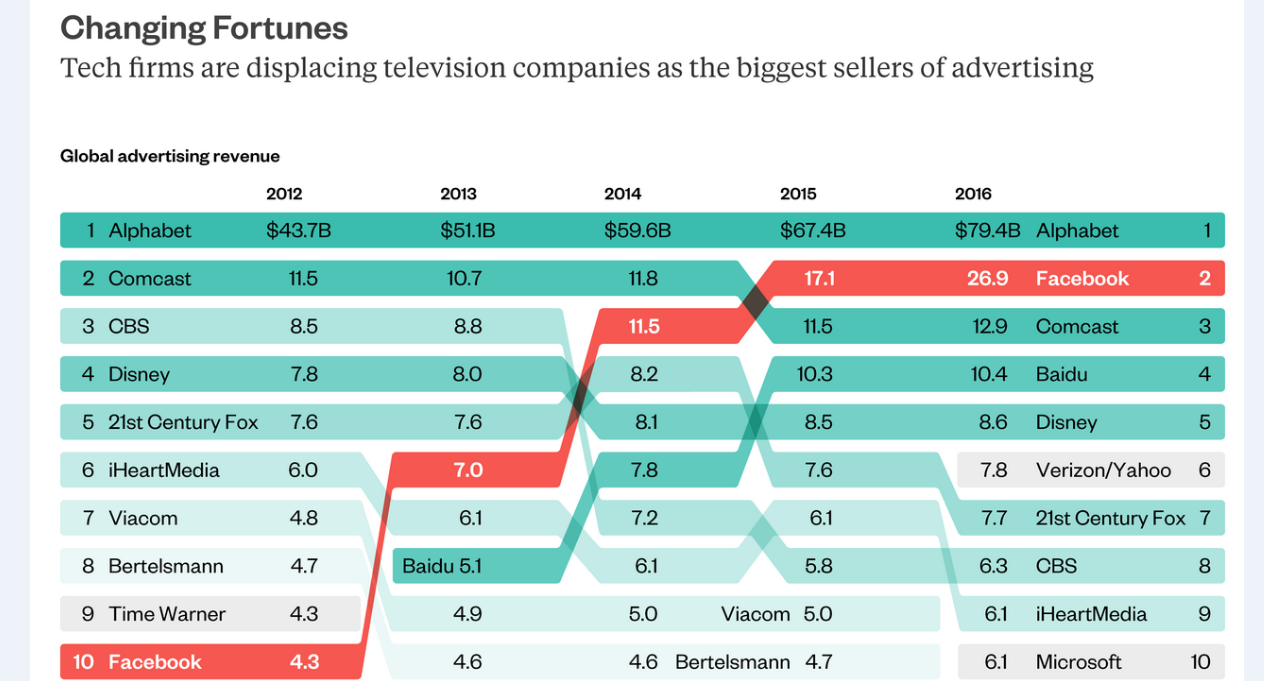
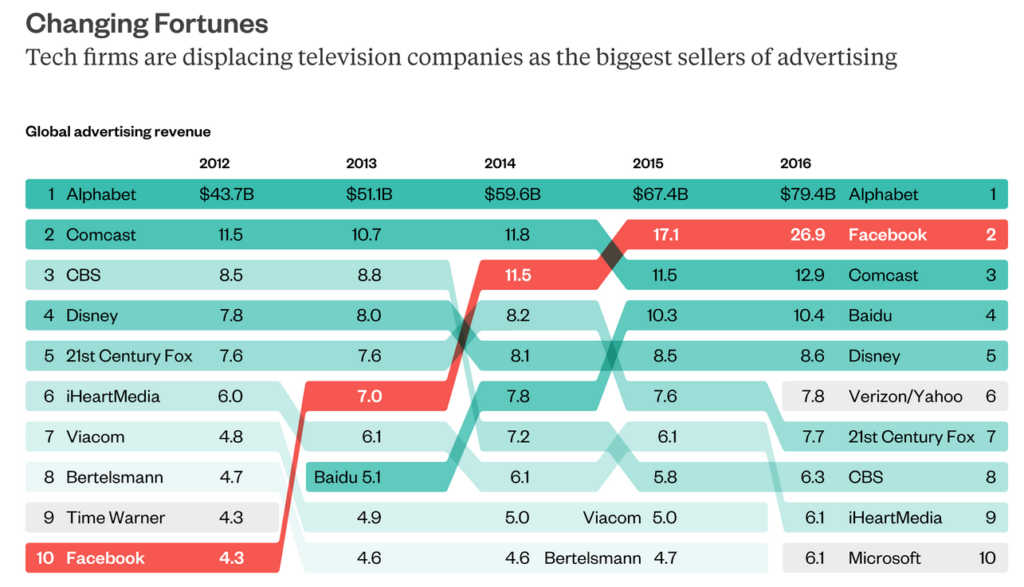
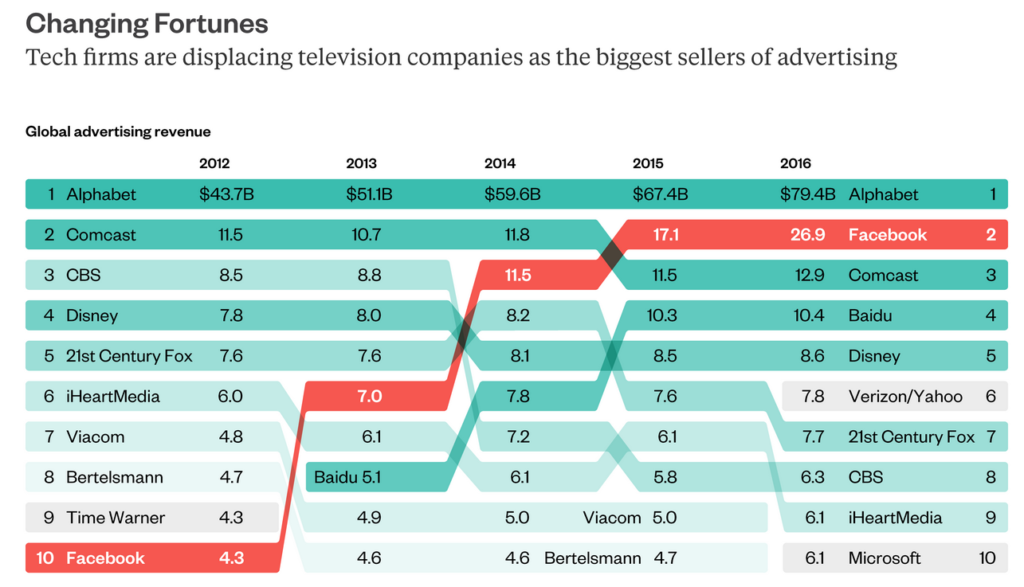
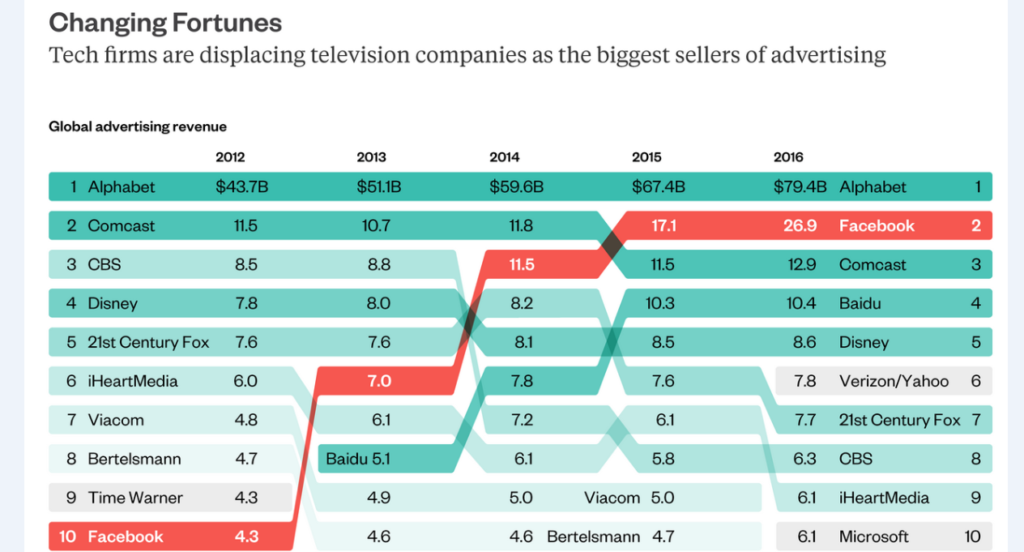
As Facebook nears the 5-year anniversary of its initial public offering, note this: In 2012, Facebook was the world's 10th-biggest seller of ads behind a bunch of traditional media companies such as CBS and 21st Century Fox. It has trounced almost all of them to rise to number two in the rankings, surpassed only by Alphabet, the Google parent that dominates search ads. Together, these two companies controlled 20% of the $550 billion spent on ads last year, up from 10% in 2012.
Source: Zenith Media
Jefferies hiked its price target on Facebook to $192 from $175, JPMorgan to $182 from $170, RBC Capital to $185 from $175, and Cowen to $170 from $156.
BMR Take: Our Target is in reach at $165. We would add to our positions at every opportunity. Wait until they hit 2 billion users. There will be fireworks and articles about the company galore and we just might see this as early as July. When this happens we can predict new all-time highs hit left and right.
Shopify News
We Tweeted this out on Friday:
“Shopify is on fire! All-time high at $86, up 5%. Stock was $73 a week ago. STRONG REVENUES will do it! Will eBay make an offer?” [The stock closed at $86 on Friday, up 13% for the week!]
The stock (SHOP) closed at $86 on Friday. We’re up 18% since we added the stock a little over a month ago. Our Target is $90. We can’t wait for it to hit so we can raise it to $100 or higher. And wouldn’t it be nice to see a stock split soon? What ever happened to stock splits? The markets in the 80s and 90s LOVED splits. We could see a 10-1 split for Amazon, bringing the price down to $93, and Google could split 20-1 bringing the price down to $46. Now wouldn’t THAT shake things up on Wall Street! The market would go wild.
Square (SQ: $19.78, up 8%) had a super good week. Square makes credit-card readers that plug into mobile phones and tablets and we were happy to see Square swing to a profit in the first quarter and raise full-year revenue guidance.
Led by Twitter Chief Executive Jack Dorsey, the company posted a quarterly loss of 4 cents per share on a revenue jump of 22% of $460 million. Analysts had expected a loss of 8 cents per share on revenue of $450 million, so of course the market liked what they saw. Square has predicted 2017 total revenue of $2.14 billion.
The company's gross payment volume - the total dollar amount of all credit card payments processed by sellers - jumped 33% to about $14 billion. We like numbers like this.
Another subsidiary, Square Capital, which offers loans to customers in exchange for a fixed percentage of their daily card sales, originated $250 million in loans in the first quarter of 2017, up 64% from a year earlier. We like large percentage increases like this. (We sound like a broken record…)
Square continues to move towards bigger customers. They said that 44% of the money flowing through its systems came from merchants that have over $125,000 in volume on the company’s platform, up from 39% a year ago. CFO Sarah Friar said: “That ongoing shift is good to see because those folks are not new to the payments world.”
Citigroup upped its price target on Square to $23 from $21, and Pacific Crest to $21 from $19.
BMR Take: We’re looking for $24, and hereby raise our Sell Price from $14 to $17.
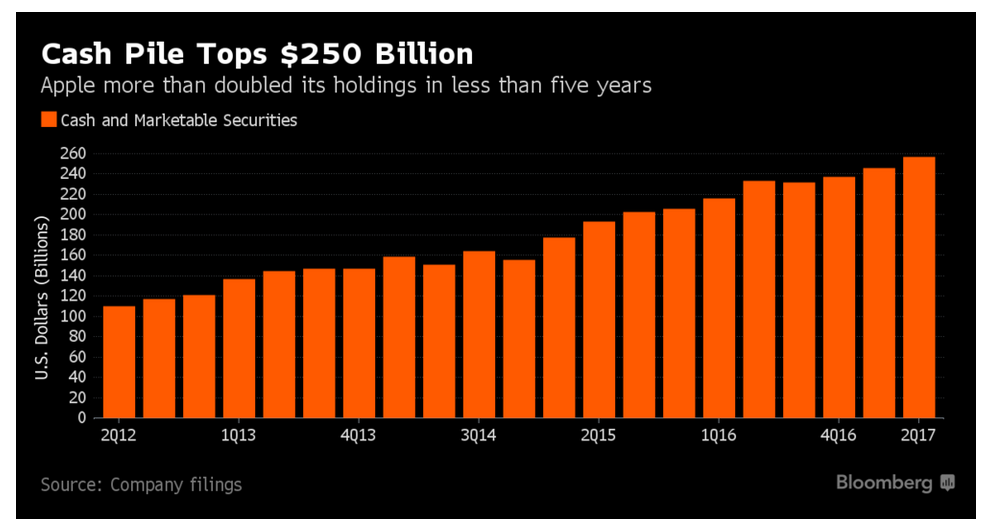
Apple (AAPL: $148, up 4%) announced that it has $257 billion in cash as of the end of the quarter. They added $10 billion in the quarter which equates to about $800 million a week, or over $150 million per work day! Repeat: $150 million per work day. The company said it will return more of that to shareholders, announcing $50 billion in new stock buybacks and a 63-cent quarterly dividend. The company had already announced $175 billion in repurchases, helping maintain the stock price in lulls between new products, so the upcoming total is now $225 billion. Take a look at this chart of their cash buildup over the years:
Twilio (TWLO: $24, down 27%) We reported via News Flash on Tuesday that despite strong revenues the market didn’t like the results. The biggest knockoff was the fact that one of their big customers, Uber, has decided to go it alone. Uber provides 12% of total revenue for the company, but Twilio grew revenue by 60% not including Uber. So ultimately, we are not that worried about future revenues. We believe they will continue strong. (We think they will come back to Twilio at some point.) WhatsApp, owned by Facebook is also a large customer, so some people are worried about this large concentration of revenue in one customer. We’re not. There is no word as to whether they are considering leaving. We would suggest that they are quite happy with the service they receive. And again, note that the company added 4,000 customers in the quarter – amazing really – giving them more than 41,000 customers, up from 29,000 at this time last year.
We had a letter from a reader about Twilio and we said this to him:
Bob -- Be prepared for anything that might happen. We could see $20 before we see $30. I hope this is not the case, but it could happen. Uber is slowly leaving as a customer and they had 12% of revenues. So, this will take some time to work out. They did add 4000 customers last quarter and are now over 40,000. They normally add 2800 a quarter. But unfortunately, like First Solar, this is going to take some time.
The Options Corner
We had mentioned in our News Flash about Twilio that we would do a column about options if anyone was interested. Well, we had a strong show of support for this. So here you go.
There are myriad of options strategies if you want to maintain a position in Twilio and you believe it will come back like we do. Of course, most options trades are risky except for selling covered calls, which are still risky but less so than buying options outright. The premiums on Twilio options are relatively high so that usually points to two types of options trades: doing covered calls, and selling naked puts or calls. The latter two are very dangerous.
Selling covered calls: Selling covered calls on Twilio is fairly straight forward. With the stock at $24 you can get about $1.80 for the January $30 call. If you have 1000 shares, you can sell 10 options and receive $1800 in your account that day. The downside is that you would be obligated to sell your stock at $30 if it goes higher than that. But, you can always buy back the option if the stock goes above $30. Depending on how long it takes the stock to get there will determine the price at which you have to buy back the options. If the stock goes to say $32 by January, then you could buy them back for about $2, losing about 20 cents, or $200. But with the stock at $32, you would feel good about that. The downside is that if someone buys Twilio out at $40 a share, you would be forced to sell your stock at $30. Not pretty.
If the stock stays below $30 until January, then you can turn around and sell another out-of-the-money option for a few dollars and wait for the stock to move higher and each time you do this you put cash into your account.
As you can see there are lots of scenarios that can happen so you have to watch carefully. Make sure you have the advice of your broker.
Buying options: If you think the stock can get to the $40 level or higher by say January 2019, you can buy out-of-the-money options inexpensively. But you could lose all of your money if the stock doesn’t reach the strike price that you choose. For example, you can buy 10 options, controlling 1000 shares, at a strike price of $40 expiring in January 2019 for about $2,300. If the stock goes to $45, these options would be worth at least $5,000. If it goes to $50, the options would be worth $10,000.
Or you could buy the January 2019 50s for about $1400 and if the stock goes to $55 they would be worth $5,000. BUT, if the stock doesn’t get to your strike price, they expire worthless.
Selling naked puts: YOU SHOULD ONLY DO THIS IF YOU WISH TO BUY THE STOCK and if you have the money to do so. You could sell the January 2019 $25 put for about $7, or $7,000 for 10 options. That would obligate you to buy the stock at some point between now and the expiration date at $25, BUT you got $7 per share so your net price is $18. You could do the same thing with a $20 put and get $4.30 per share, obligating you to buy the stock for a bit below $16. We like this latter strategy. Suffice it to say that selling naked puts on stocks you want to buy at a lower price, is a good thing. Again – very risky. Why? What if the stock goes to $10. You would be forced to buy the stock at $18 or $16 as described above. Not fun.
Send us your questions and comments please! Info@BullMarket.com.
Tesoro (TSO: $80, up 1%) moves in the wind with crude oil. Crude got down to $45 early Friday and bounced back to $46 by the close. We like the company but can’t be part of it if crude is headed to $40. If you know where crude is headed you’ll know what to do with your position in this fabulous refiner. Unfortunately, we don’t. If we knew, we could make $1 million trading crude oil futures. We added the stock at $85 in November and have a Sell Price of $75. But we would hate to have the stock go that low, so we are hereby raising our Sell Price to $78, which is two dollars below the current price. So, if Tesoro closes below $78 we are out.
Carlyle Group (CG: $18.10, up 2%) posted first quarter earnings that handily beat expectations on Wednesday, in line with its peers, after a strong stock market last quarter lifted investment returns. Carlyle's peer Blackstone Group (BX: $30, down 2%), a Bull Market Report favorite, reported first-quarter earnings that surpassed expectations.
Carlyle said it earned economic net income (ENI)* of $365 million after taxes, more than six times what it earned a year earlier. That translated into $1.09 EPS, well above analyst forecasts for 38 cents per share and the second-highest on record since the fourth quarter of 2013.
* ENI is a crucial performance measure for U.S. private equity firms as it accounts for unrealized gains or losses in investments.
Carlyle said its private equity investments appreciated 9% in the first three months, better than a 5% gain in the S&P 500 index in the same period. Carlyle Co-CEO William E. Conway, Jr. said, “We deployed capital at a strong pace in the first quarter, with $4.4 billion of capital invested despite a difficult environment. We believe we are well-positioned to continue this strong pace. We have already announced substantial new investments and almost $4 billion of exits that we expect to close in the coming quarters.”
BMR Take: Carlyle is still way undervalued but is paying you 4% while you wait. We’re waiting patiently for the market to recognize this situation. We are up 12% since March, but we sure would like to see our Target hit of $20.
The High Yield Corner
By Michael Foster
It’s finally started.
It’s a bit late, but we’re finally seeing a correction in the BDC world. The UBS BDC ETF (BDCS: $23, down 3%) got hammered in a week that was pretty humdrum for high yield and not bad for the stock market as a whole, despite a lot of drama. Yet BDCs are back to underperforming, as they should. Overstretched valuations and high premiums to NAV were unjustifiable before this week. Now that many companies have reported lackluster earnings, those premiums are even less justifiable.
Ironically, however, this isn’t hurting the most overvalued BDC of them all: Main Street Capital Corporation (MAIN: $40, up 1%), which closed the week strong as investors sighed relief following the company’s earnings. Net interest income rose 9% from a year ago to 61 cents per share and the company’s NAV rose nearly 2% to $22.44. There are two big implications for this: firstly, the company’s dividend coverage is 109% and there’s room for years of dividend growth to continue. We have a feeling Main Street management has the ultimate goal of becoming the first BDC Dividend Aristocrat*. We’ve still got about two decades until they can qualify, so it won’t be easy. But if that is their goal, Main Street is easily the best managed and most long-term focused BDC in the world.
* The Dividend Aristocrats are a select group of 51 S&P 500 stocks with 25+ years of consecutive dividend increases.
That doesn’t mean you should go out and buy. We at The Bull Market Report were happy with our pick and happy to see it rise. But we are not happy to pay an 80% premium to net asset value. Consider this: if you considered Main Street to be the best BDC in the world, you wouldn’t want to compare its premium valuation to the valuation of other BDCs. You’d probably want something safer, like a megabank like Bank of America, which not only lends to small and medium sized banks but also mega-corps and governments while diversifying in other banking activities like M&A advisory, retail deposits, and so on. Or at least you’d want your BDC valuation to be less than the valuation of these banks, right? But if you compare Main Street’s valuation to the price-to-book valuations of these big banks, Main Street is overvalued by 40% at a minimum. This just isn’t good enough for a very well-run but extremely undiversified asset.
The market has begun to realize just how silly BDC valuations were getting, but the market has made an exception for main Street largely due to the fact that just about every other BDC reported awful earnings. Net investment income fell for almost all BDCs that have reported so far, with Hercules Capital (HTGC: $13) seeing NII down 33% from the prior quarter. The dividend is now less than 100% covered. NAV fell a bit as well (over 1%). What happened? The market dumped shares, which fell over 16% in a week. This used to be considered one of the safest and best specialty BDCs out there, but the market can turn very quickly on this asset class. We’re not saying anything similar will happen to Main Street anytime soon, but it is a serious risk.
Then there’s Goldman Sachs’s BDC (GSBD: $24), which fell 3% this week due to a decline in net investment income and virtually flat NAV. The stock is still up 3% year-to-date so you’re paying a higher premium for shares, though. Now you’re paying 32% over what the underlying assets are worth. Of course, this BDC is up big over the past year, thanks in part to the secular bull market in BDCs and thanks in part to the Goldman brand. But, as we’ve written here previously, there is a complicated conflict of interest going on with this BDC that makes us extremely cautious. Goldman Sachs’s management is not duty bound to restrict their deal making just to this BDC, and so there’s a chance (although no evidence this is the case) that management can select better deals for the parent company and keep lesser deals for the BDC business. Without clearer governance resolutions, this makes us extremely cautious. And, at the end of the day, this demonstrates one of the structural problems with many BDCs: management and investors’ interests do not align.
Some of the BDCs in the business were loved for avoiding this trap. The big Ares Capital Corporation (ARCC: $16.60, down 6%) is a good example. But this stock tanked as well, after reporting earnings fell 50% from a quarter ago and NAV rose less than 1%. We don’t need to emphasize how bad those results are, and how they deserve a discounted valuation. But Ares is still trading at a slight premium to NAV.
Obviously, a bigger correction in the BDC market is coming, so where else can we look? REITs and municipal bonds remain our favorite corners of the high yield market. The iShares S&P National AMT-Free Municipal Bond Fund (MUB: $109, flat) remained sleepy due to the risk-on nature of the market encouraging more investors to avoid the asset class, despite the growing number of undervalued bonds and great opportunities to get low risk yield for fund managers. Bull Market Report favorites remained flat for the week, Invesco Municipal Trust (VKQ: $12.69, flat) and The Nuveen AMT-Free Fund (NVG: $14.79, flat) Buying more of either fund at this juncture would make a lot of sense.
And then as REITs go, the SPDR Dow Jones REIT ETF (RWR: $92, down 1%) fell slightly with investor apathy hitting the asset class on little news. This again is resulting in plenty of good deals among REITs, and The Bull Market Report continues to have high conviction for long-term sustainable yields from Digital Realty Trust (DLR: $114, down 1%), Omega Healthcare Investors (OHI: $32, down 2%), and Care Capital Properties (CCP: $27, flat) in particular. Looking forward, we will be looking closely at how REIT earnings results and more market responses from the BDC market causes a reset in high-yield land that offers an opportunity to rebalance the portfolio.
Good Investing,
Todd Shaver, Founder
The Bull Market Report
CEO and Editor in Chief
Founded 1998
May 1, 2017
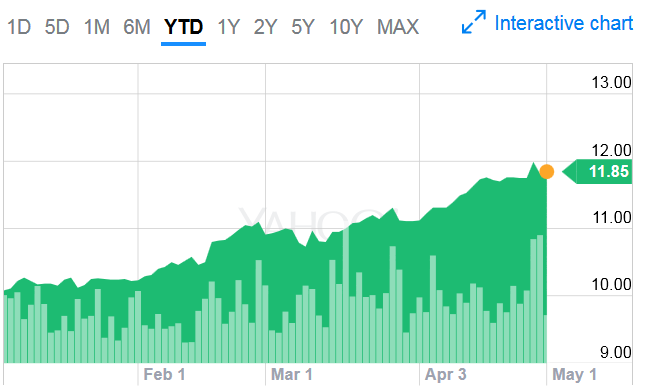
by Todd Shaver | May 1, 2017 | Earnings Preview 6 PM
Mazor Robotics (MZOR: $36)
Bull Market Report Target Price: $44
Bull Market Report Sell Price: $32
Earnings Date: Tuesday, (exact time unavailable)
Consensus: 1Q17
Revenues: $11.5 M
EPS: -$0.17
Year Ago Quarter Results
Revenues: $6.5 M
EPS: -$0.24
Key Things to Watch For in the Quarter
Mazor Robotics is expected to report healthy revenue and EPS growth for 1Q17. Analysts estimate that Mazor will report a 79% increase in revenue to $11.5 million and a 30% increase in EPS to -$0.17. The firm reported earnings that missed estimates in all four quarters of 2016, and the stock has provided investors with a 200% return. The CEO made an appearance on Mad Money last week, contributing to the 55% upwards move since March 22nd, just 10 days ago. Mazor had a market cap of approximately $550 million at the beginning of this year, relatively small by Wall Street’s standards, allowing it to fly slightly unnoticed by larger investors. But not by readers of The Bull Market Report!
Shopify (SHOP: $77)
Bull Market Report Target Price: $90
Bull Market Report Sell Price: $59
Earnings Date: Tuesday, before the market open (exact time unavailable)
Consensus: 1Q17
Revenues: $122 M
EPS: -$0.09
Year Ago Quarter Results
Revenues: $72 M
EPS: -$0.06
Key Things to Watch For in the Quarter
Analysts across Wall Street estimate that Shopify will report a revenues increase of 67% to $122 million and an earnings deficit of -$0.09 (-50%) for 1Q17. Shopify beat analyst estimates in all four quarters of 2016, which has been reflected in the stock’s 134% return over the past year. Shopify provides a cloud-based, multi-channel commerce platform designed for small and medium-sized businesses. They assist in web design, set up, and facilitation of sales for their customers. Shopify is an industry leader and has positioned itself to catch more of the growing online retail business in the years to come.
We hereby raise the Sell Price from $59 to $65.
Apple (AAPL: $147, new all-time high)
Bull Market Report Target Price: $155
Bull Market Report Sell Price: We would not sell Apple
Earnings Date: Tuesday, 5:00 PM ET
Consensus: 2Q17
Revenues: $53.0 B
EPS: $2.02
Year Ago Quarter Results
Revenues: $50.5 B
EPS: $1.90
Key Things to Watch For in the Quarter
Analysts expect Apple to report modest growth in both EPS and revenues of about 6% and 5% to $2.02 and $53 billion respectively for 2Q17. When Apple beat estimates in 2Q16 the stock rose 5%. Since this time last year, investors have seen returns of over 50%, including a 1.6% dividend yield. Apple’s R&D department has been very busy in recent months. Rumors say they are looking into driverless car technology and revamping Apple Maps to incorporate features similar to Google Maps’ Street View. Apple continues its climb towards our $155 target.
The Carlyle Group (CG: $17.75)
Bull Market Report Target Price: $20
Bull Market Report Sell Price: $13
Earnings Date: Wednesday, 8:30 am ET
Consensus: 1Q17
Revenues: $550 M
EPS: $0.38
Year Ago Quarter Results
Revenues: $451 M
EPS: $0.18
Key Things to Watch For in the Quarter
Analysts estimate that The Carlyle Group will report a 22% increase in revenues to $550 million and an astounding 110% increase in EPS to $0.18 for 1Q17. Carlyle beat estimates in the first two quarters of 2016, but fell short to analyst’s aggressive third and fourth quarter estimates. Although the stock took an 8% hit following the 1Q16 earnings release, it has still managed to climb 2% over the past year. Add Carlyle’s incredible 10% dividend yield and shareholders who purchased this stock just last year would have already seen a 12% return. The stock has been trading horizontally over the past year; however we see it breaking out in the coming months towards our $20 target.
Tesla (TSLA: $327, a new all-time high)
Bull Market Report Target Price: $325
Bull Market Report Sell Price: $280
Earnings Date: Wednesday, (exact time unavailable)
Consensus: 1Q17
Revenues: $2.6 B
EPS: -$0.76
Year Ago Quarter Results
Revenues: $1.2 B
EPS: -$1.45
Key Things to Watch For in the Quarter
Analysts estimate that Tesla will report a 48% decrease in the earnings deficit to -$0.76 and 115% increase in revenues to $2.6 billion for 1Q17. Tesla only beat analyst estimates in the third quarter last year, but the stock still managed to climb 25%. Elon Musk, Tesla’s famed CEO, has continuously grown the firm’s Research and Development operations. These expenditures have made huge contributions to the firm’s top line revenue, allowing it to provide affordable electric cars to the mass market. The firm has struggled to make a profit thus far, however we are confident in Musk’s vision and ability to change the landscape of the automotive market.
It just hit our Target today, so we hereby raise our Target to $350 from $325. Expect a stock split at any time too.
Facebook (FB: $152, a new all-time high)
Bull Market Report Target Price: $165
Bull Market Report Sell Price: $140
Earnings Date: Wednesday, 5:00 PM EST
Consensus: 1Q17
Revenues: $7.8 B
EPS: $1.12
Year Ago Quarter Results
Revenues: $5.4 B
EPS: $0.77
Key Things to Watch For in the Quarter
Analysts estimate that Facebook will report a 45% increase in both revenue and EPS to $7.8 billion and $1.12 respectively for 1Q17. Facebook reported earnings that beat analyst estimates in 2Q17 and the stock climbed around 3% in the weeks following the announcement. Facebook is trading up 30% from this time last year. The firm continues to dominate the global advertising market through its main website Facebook.com and its subsidiaries Instagram, WhatsApp, and Messenger. Analysts project that Facebook will realize a 12% market share of global digital advertising and a 30% market share of all display advertising in the U.S. by the end of 2018. CEO Mark Zuckerberg has a vision of globalization that continues to drive Facebook’s growth.
Square (SQ: $18.75)
Bull Market Report Target Price: $24
Bull Market Report Sell Price: $14
Earnings Date: Wednesday, 5:00 PM ET
Consensus: 1Q17
Revenues: $450 M
EPS: -$0.08
Year Ago Quarter Results
Revenues: $380 M
EPS: -$0.29
Key Things to Watch For in the Quarter
Analysts estimate that Square will report a revenue increase of 19% to $450 million and an improvement in the earnings deficit by nearly 80% to -$0.08 for 1Q17. Despite a rough start to the year in 2016, where shares fell nearly 30% following the 1Q16 earnings release, the stock has managed to provide investors with a 140% return from the stock’s 52-week low. Square announced last week that it would be acquiring a team from the struggling social app Yik Yak, a move that will bring a new perspective and high level talent to Square’s human resources.
Annaly Capital Management (NLY: $11.85)
Bull Market Report Target Price: $12
Bull Market Report Sell Price: $9, hereby raised to $11.
Earnings Date: Wednesday, after market close (exact time unavailable)
Consensus: 1Q17
Revenues: $575 M
EPS: $0.30
Year Ago Quarter Results
Revenues: $390 M
EPS: $0.30
Key Things to Watch For in the Quarter
Things are going well at Annaly. The company met earnings estimates in the first 3 quarters of 2016 and beat estimates in the fourth quarter. The stock is up 13% over the past year and pays an astonishing 10% dividend. Market sentiment on Annaly is quite bullish; only 2% of its outstanding shares have been shorted (bet against). Insiders have increased their holdings by 5% over the past year, showing a positive outlook by the firm’s executive team.
We love this chart here:
Omega Healthcare Investors (OHI: $33)
Bull Market Report Target Price: $45
Bull Market Report Sell Price: $28
Earnings Date: Thursday, 10:00 AM ET
Consensus: 1Q17
Revenues: $200 M
EPS: $0.51
Year Ago Quarter Results
Revenues: $177 M
EPS: $0.29
Key Things to Watch For in the Quarter
Things are going well at Omega Healthcare Investors, and is paying a beautiful 7% dividend. When Omega missed analyst estimates in the first quarter of 2016 the stock dipped 10% before recovering to a 52-week high of $38. The stock currently trades at a P/E ratio of 18 (Healthcare Industry P/E: 60), which is very cheap, especially considering its high dividend yield.
Welltower (HCN: $71)
Bull Market Report Target Price: $84
Bull Market Report Sell Price: $60
Earnings Date: Friday, before market opening (exact time unavailable)
Consensus: 1Q17
Revenues: $1 B
EPS: $0.42
Year Ago Quarter Results
Revenues: $1 B
EPS: $0.42
Key Things to Watch For in the Quarter
In the first quarter of 2016, Welltower missed estimates by 3 cents and the stock still climbed 4% in the days following the announcement. Welltower is a REIT that invests in senior living and retirement homes. The stock is up 2% over the past year and we expect that it will continue to grow as the demand for senior living increases.