June 19, 2017

by Todd Shaver | Jun 19, 2017 | Monthly Newsletter Daily 12pm if new
The Week Just Passed and the Week Ahead
Amazon set fire to the market on Friday as they announced a major deal to buy Whole Foods. Grocery stocks plunged as everybody wonders how much havoc Amazon will have in the new industry vertical. The M&A announcement re-energized the market that had been sagging due to FAAMG* stocks slowing down. But clearly there is a reason the FAAMG stocks are market leaders: they are the most innovative, the most savvy, and the most aggressive companies on the planet when it comes to raising the bar. The bull market in Technology that everybody was questioning just last week is alive and well!
* FAAMG – Facebook, Apple, Amazon, Microsoft and Google.
We are pleased to see the market come back strongly today, Monday, as we write this. The market is up 110 points on the Dow, with Apple, Facebook and Shopify making strong moves. And good old Amazon, which we profile below, just hit $1000 a share again. Go Bull Market.
There is always a bull market here at The Bull Market Report! This week we highlight the following stocks: Amazon, Apple, Facebook, Tesla, Annaly, and Google.
Highlights From The Past Week
Trump Says ‘Very Good’ GDP Numbers Are Coming. He May Be Right. President Donald Trump said Thursday that “some very good numbers” are coming out soon on U.S. economic growth. If he’s talking about the second quarter, he’s probably right, though the figures are about six weeks away from publication. While the White House didn’t immediately respond to a request to clarify Trump’s comments, there are wide expectations among researchers that the rate of expansion in the April-to- June period will rebound from a first-quarter slowdown. The pace of gross domestic product gains was dragged down earlier this year by temporary factors such as warm weather that resulted in lower utility bills. Seeing a pick-up in GDP growth is a major positive for the stock market.
The Sweetest Stretch of Bull Run Since 1995 is At Risk as Buy-The-Dip Strategy Fails. The sell-off in the Tech sector that started a week ago has erased $250 billion from the value of technology shares and is threatening to end the industry’s longest stretch of uptrend in more than two decades. Down around 4% since the decline started, this move has put the Tech sector on the edge of breaking its 50-day moving average. It’s stayed above the threshold for 131 consecutive days, the longest stretch since 1995. Are the good days ending? The last two times when the 50-day average was broken, Tech shares did poorly in the next few months. What do we make of this? Stocks can’t go up forever. We are seeing the Tech sector take a breather and would buy this weakness.
Don’t Be Tempted To Buy High-Flying Equities. Stick With Solid Stock Picks Recommended By The Bull Market Report. Bond investor Bill Gross warned on Tuesday that investors should reduce their risk appetite, given the U.S. growth rate is stunted by secular forces "which monetary and even future fiscal policies seem unable to reverse." In his June investment outlook letter, Gross of Janus Henderson said: "Strategies involving risk reduction should ultimately outperform 'faux' surefire winners generated by central bank printing of money.” He continued, "It’s the real economy that counts and global real economic growth is and should continue to be below par." Gross runs the $2.1 billion Janus Henderson Global Unconstrained Bond Fund.
BMR Companies & Commentary
Amazon (AMZN; $988, +1% for the week; up $23 on Friday)
Amazon is guided by four principles: customer obsession rather than competitor focus; passion for invention; commitment to operational excellence; and long-term thinking. Customer reviews, 1-Click shopping, personalized recommendations, Prime, Fulfillment by Amazon, Amazon Web Services - AWS, Kindle Direct Publishing, Kindle, Fire tablets, Fire TV, Amazon Echo, and Alexa are some of the products and services pioneered by Amazon.
Amazon and Whole Foods Market announced that they have entered into a definitive merger agreement under which Amazon will acquire Whole Foods Market for $42 per share in an all-cash transaction valued at $13.7 billion, including debt. This is Amazon’s biggest acquisition ever. Whole Foods will continue to operate stores under the Whole Foods Market brand and continue to buy from trusted vendors and partners around the world. John Mackey will remain as CEO of Whole Foods and the headquarters will stay in Austin. The deal is expected to close by the end of this year.
For Amazon, the deal marks an ambitious push into the mammoth grocery business, an industry that in the United States accounts for around $800 billion in annual sales. Amazon is also amplifying the competition with Walmart, which has been struggling to play catch-up to the online juggernaut. Amazon has designs on expanding beyond online retail into physical stores. The company is slowly building a fleet of outlets, and much attention has been focused on its supermarket dreams. It has already made an initial push through AmazonFresh, its grocery delivery service. Now, BANG, just like that, they will have 430 stores in place for delivery and warehousing. Is Bezos smart or is Bezos smart?
BMR Take: The current consensus EPS outlook calls for almost $7 this year going to $27 by 2020. That’s explosive growth and the innovation machine known as Amazon is far from done. Amazon remains one of our top favorites. And DO NOT be disconcerted by the price of the stock. If you want to buy $15,000 of Amazon, buy 15 shares. Don’t agonize over it. Just be invested in this great company.
Apple (AAPL; $142, down 4.5%)
After an action-packed world-wide developers conference (WWDC) with a plethora of new software and hardware announcements last week, the stock was under pressure all week. The sell-off in Apple represents yet another buying opportunity. With the expanding capabilities of Apple's network of hardware and software products, Apple is very well-positioned to capitalize on the trend toward more "things" becoming a computer. Last week, Apple filled key gaps in its portfolio with entry into the digital home assistant market with HomePod, combined with new AR and VR initiatives* to support these important trends. This further expands the breadth and depth of Planet Apple, making it more difficult for competitors to offer an experience at the same level of Apple.
* Augmented and Virtual Reality
BMR Take: Earnings are expected to be $9 this year and increasing toward $11 over the next 2 years. The business is steadily generating a massive amount of money – $800 million a week, totaling over $255 billion now. The naysayers will be proven wrong on Apple again – remember when it hit $91 exactly a year ago, after peaking at the $125 level in 2015? Well guess what – the new all-time high is $156 set just last month. That number is sitting there ready to be broken again
Facebook (FB; $151, up 1%)
Facebook is focused on building products that enable people (better yet – the world) to connect and share through mobile devices, personal computers and other surfaces. The company's products include Facebook, Instagram, Messenger, WhatsApp and Oculus.
Facebook has hired more than 150 counterterrorism experts and is increasingly using artificial intelligence that can understand language and analyze images to try to keep terrorists from using the social network for recruiting and propaganda. Facebook says, “We agree with those who say that social media should not be a place where terrorists have a voice.” The move comes as Facebook is being hounded by governments to do more to combat terrorism.
Mark Zuckerberg, Facebook’s co-founder and chief executive officer, has also been trying to position the company as a positive force for building communities both online and off. This new emphasis from Zuckerberg has followed discussion over Facebook’s role in the proliferation of false news accounts during the U.S. election campaign last year, as well as the spread of extreme content posted to Facebook.
Many of these new hires have backgrounds in law enforcement and they collectively speak almost 30 languages. In addition, Facebook has thousands of employees and contractors around the world that respond to reports of violations of its terms of service, whether that’s online bullying, posting inappropriate content or hate speech.
BMR Take: One of the major risks in front of Facebook is dealing with free speech rights versus meeting obligations to be a model corporate citizen. We are glad to see steps in the right direction. EPS is expected to go from almost $5 this year to $9.50 in 2020. This stock can go much higher if the company can avoid a few key risks.
Google (GOOG; $940, down 1%)
Google spans Internet products, such as Search, Ads, Commerce, Maps, YouTube, Google Cloud, Android, Chrome and Google Play, as well as its hardware initiatives. Google is engaged in advertising, sales of digital content, applications and cloud offerings, and sales of hardware products. This is a mouthful, so one other way of looking at Google is: Most of their revenue comes from search. Period.
This week Google launched a new cloud computing platform in Singapore that aims to reduce data transmission delays for its cloud customers here, as it seeks to gain ground against rivals Amazon and Microsoft globally. It has opened dedicated cloud platform servers - called a "Google Cloud Platform (GCP) region" - in Singapore and this is the group's first GCP region in South-east Asia.
The Singapore cloud platform is the company's third in Asia, after Taiwan and Tokyo, and it is looking to launch dedicated servers in Mumbai and Sydney as well, they added. The launch of the Singapore service has significantly reduced latency, which refers to delays in data transfer over a network connection, for Google's cloud platform customers and users in Singapore and South-east Asia. The platform offers products and services such as application hosting, security, language translation and analytics.
Businesses can save anywhere from 50-70% by using a cloud platform in general compared to other options such as hosting data storage themselves. The migration to the cloud is a mega-trend and Google is in the forefront of this new world.
We mention these new events to give you the scope of what this company is doing. While you and I worry about what’s happening here in our own little worlds, Google is out there setting the stage for controlling and profiting from places around the world this year, next and for decades to come.
BMR Take: EPS is on track for $34 this year going to $55 by 2020. We see a compelling opportunity in this large cap tech giant.
Upcoming Economic News
Current Account
Tuesday, June 20th, 8:30 AM
Period: Q1
Actual: N/A
Consensus: -$121B
Prior: -$112B
Notes: The international transactions accounts are a quarterly statistical summary of transactions between U.S. and foreign residents organized into three major categories: The current account, the capital account, and the financial account. The current account includes exports and imports of goods, services, income, and current transfers. The capital account includes capital transfers, such as debt forgiveness. The financial account includes transactions for official assets, for U.S. Government assets other than official reserve assets, for direct investment, for portfolio investment, and for other investment.
Existing Home Sales
Wednesday, June 21st 10:00 AM
Period: MAY
Actual: N/A
Consensus: 5,545,000
Prior: 5,570,000
Notes: Each month, the National Association of Realtors (NAR) collects data on existing single-family home sales from Boards or multiple listing services (MLS) nationwide. NAR estimates that it captures between 30-40% of all existing home sale transactions with its monthly survey. The data provide the total number of closed existing home sales in each area as well as total sales within price categories ranging from less than $30,000 at the bottom to more than $500,000 at the top.
Leading Indicators
Thursday, June 22nd,10:00 AM
Period: MAY
Actual: N/A
Consensus: 0.40%
Prior: 0.30%
Notes: Leading indicators are economic series that tend to change direction ahead of shifts in the business cycle. There are 10 components of the U.S. Leading Composite Indicator published by The Conference Board. The index is constructed by averaging the individual components in order to smooth out a good part of the volatility of the individual series. Historically, the cyclical turning points in the leading index have occurred before those in economic activity.
New Home Sales SAAR
Friday, June 23rd, 10:00 AM
Period: MAY
Actual: N/A
Consensus: 600,000
Prior: 569,000
Notes: The U.S. Census Bureau collects new home sales based upon the following definition: "A sale of the new house occurs with the signing of a sales contract or the acceptance of a deposit." The house can be in any stage of construction: not yet started, under construction, or already completed.
Tesla Week
Tesla (TSLA: $371, up 4%) had a great week, in spite of the Fed and the Tech sell-off and everything else. Up 4%. Huge. The stock was upgraded by Berenberg Bank from a "hold" rating to a "buy" rating. They now have a $464 price target on the stock, up previously from $193.
BMR Take: This is a car company and this is a Tech company, and it is run by a one of the smartest men on the planet.
Annaly Update
We love this stock. We have been following Annaly Capital Management (NLY: $12.36, up 2%) since 1997 when they first went public. They have survived thick and thin: bull markets and bear; high interest rates and low; recessions and boom. And they continue to give you a 10% dividend, year in and year out.
With that said however, it may be time to take some profits in the stock. We added the stock in early 2016 at $10 and it is now over $12, up 25%. The key is book value. It is currently at $11.23, thus trading at 10% over book. Annaly generally sells right at book, so it is getting ahead of itself. Our Target is $12, so one could certainly sell now and be happy campers. Or you could watch and wait. We are going to watch book like a hawk. If it keeps moving higher we are golden. But if it stalls, and the stock moves back towards $12, we will most likely be saying so long to a great company.
Letter to the Editor about Shopify (SHOP: $87, down 5%)
From: John Hoogerheide [mailto:johnhooger17@xxxx.net]
Sent: Thursday, June 15, 2017 11:23 AM
To: Todd at The Bull Market Report
Subject: SHOP
Todd - A while back you had suggested Shopify as a stock just to own and forget in your portfolio as it will have very large daily bounces. In your reports you indicated the stock COULD be a likely candidate for a buyout and that their fundamentals looked solid. Shopify had been on a tear but the Nasdaq fallout has killed the stock. I assume the Nasdaq fallout is only temporary and things will go back to normal. BUT has anything changed in your attitude towards Shopify? Thanks Todd
Hi John –
No. Just the price. And it is very frustrating. I’m trying to be patient and get through the Fed raise which is just about done. The bond market was WAY up yesterday (10-year Treasury down big to 2.13%. Up a tad today, but not much.) Then the question is – are we in a Tech AND overall stock selloff? If so, then we should move to high yield, like Apollo, Annaly, etc., and bide our time until things become normal in Washington. If not, then the bull market continues. Where ELSE can you put your money? And this is not an idle question. People have been say it for YEARS, with interest rates at historic lows. And they are STILL at historic lows, really. Thus, we have this amazing bull market since 2009.
Note that I don’t believe we ever said you could put it away and not look at it. But we certainly feel that it is a long term hold and the prospects look good.
Todd Shaver, Founder and Editor in Chief
And then on Friday we wrote to him:
Nice bounce-back yesterday and today, John, after hitting $81.50 at the low point yesterday.
This one is real.
The sell-off was not.
Let’s hope it holds.
Todd Shaver
[Note that the stock closed at $87 Friday. Our take? This is a volatile stock in a nervous Tech market right now. If it’s too hot for you get out of the kitchen. Again, we are trying to be patient here with this amazing company.]
More (Good) News on Shopify
Shopify sold 5.5 million shares at $91 on May 24th in a secondary, raising $500 million. Then just last week they completed the overallotment. Do you know what that is? It is an extra block of stock that can be sold as part of the original secondary if there is demand. Well, there was, and Shopify sold another 825,000 shares at the same price worth $75 million. Not bad. So now the company is sitting on a ton of cash (we believe the total to be close to $1 billion), they have no debt, and revenues are growing like a weed.
So here dear Bull Market Reader, are a few thoughts on Sell and Target prices:
When we add a stock to our portfolio we have a Target and a Sell Price. The Target is where we think it can go and the Sell Price is the price that if it hits, you have some thinking to do. The Sell Price is usually 10-15% below the price where we added the stock. Taking a 10-15% hit is a big deal, and some may even say that if a stock drops 5-7% you should get out. Everyone has their own rules to follow. However, there are companies that are young and unproven that we feel have the potential to be 2-baggers and 5-baggers and more. Cloudera, Twilio and Nutanix are three of these. What happens with these stocks is that the world as a whole doesn’t recognize their greatness yet, and aren’t willing to hold them through tough times. It’s called the Market. (There were times in Amazon’s young life when the market sold off the stock because of various reasons. The strong held on, the weak got out.)
The problem however, is that hindsight is 20-20 and we at The Bull Market Report a) might be wrong on a stock, or b) might be early. Both of these scenarios can cause a Cloudera to go from $23 on June 6th when we added it, to the level it is at today. Not pretty, but this is the life we lead when we invest.
Now, with that said, what do we mean with the Sell Price? The answer actually is not what do WE do, it is what YOU do. The Bull Market Report very rarely tells you to SELL a stock. We SUGGEST things to you based on FACTS. We leave it up to you to decide as intelligent human beings. In this case we believed in Cloudera at $23, and now at $17.40 we believe in it more. Why? The only thing that has changed is the PRICE. It is less expensive than it was. We still think it can go to $28, and $40 and beyond, and now it is cheaper. Yea! BUT – WHAT IF IT GOES LOWER FROM HERE? What if it goes to $14? What if it goes to $10? Then we have a big problem as you can see.
So the safest thing to do is to “Sell.”* We take a licking in our portfolio, and if you follow suit, you do too, and it prevents a disaster if it goes to $14 or $10. BUT, what if this recent Tech sell-off is over now. What if Apple and the rest of them start to shoot higher over the coming weeks, which we fully expect? And what if Cloudera heads back into the 20s like we believe it will do?
No guaranteed answers here as you can see. But plenty of food for thought. Speaking of thoughts, if you have a question about this or anything else, please write us at Info@BullMarket.com.
* No one at The Bull Market Report buys or owns the stocks in our portfolios. We don’t play that game.
The High Yield Corner
By Michael Foster
The biggest news of the week was the interest rate hike, but before we get to that, let’s talk a little bit about Digital Realty Trust (DLR: $117, up 4%, plus a 93 cent dividend paid on Tuesday.)
This data center REIT has been a Bull Market Report pick since March last year. Since then the stock has gone up 38% while paying 4% in dividends. A 42% return in a little over a year is breathtaking for any type of investment, but it’s relatively uncommon in the high yield world where you often sacrifice big short-term gains for cash flow. But Digital Realty is different.
The reason is simple: Digital Realty isn’t just a high yield stock; it’s also a Tech stock. Digital Realty has a very simple business model that positions it to benefit from the hypergrowth of tech companies: it rents out server space for firms that exist in the cloud. Any cloud computing startup depends on Digital Realty for the bare infrastructure that makes their product possible; and, unlike startups, Digital Realty’s revenue stream and profitability come first.
From that perspective, Digital Realty is a very attractive business; it’s part utility and part a hypergrowth tech stock. It’s rare to find a company that combines the two extremes of the finance world - dull safety with cutting-edge high-risk technological innovation - but Digital Realty has combined the best of both worlds for years. As a result, the company has attracted capital slowly over time, but the stock was limited until the middle of 2015 by one risk factor: competition from others in the space. At the end of 2015, Digital Realty initiated some expansion efforts that essentially gave the business a “moat” and protected it from competition. The firm very smartly placed facilities in ideal geographical positions to get the attention and demand from telecommunications giants and government agencies, putting the company at a distinct competitive advantage.
The stock market swiftly reacted, and the stock has doubled since the middle of 2015. Insiders have also taken notice, which is why DuPont Fabros Technology (DFT: $64) announced it would merge with Digital Realty in an all-stock transaction*. What exactly does this merger mean for Digital Realty shareholders? Well, the stock initially fell on the news but very swiftly recovered (it’s now up about 4% for the week following the initial decline). Apparently the market first thought the merger was a bad idea and then changed their minds. The market loved the news for DuPont, however; that stock is up 20% following the news.
* June 9, 2017 San Francisco's Digital Realty Trust has agreed to acquire Washington, D.C.-based data center developer Dupont Fabros Technology for $7.6 billion in stock, bolstering its reach in and around Silicon Valley. The companies operate as real estate investment trusts that rent out space to corporations to house their high-powered computer servers, used in cloud supercomputing, streaming video and data storage. Dupont Fabros has a dozen such complexes, including one in Santa Clara, two near Chicago and nine in Northern Virginia.
The merger is extremely good for Digital Realty shareholders for one simple reason: it adds a new dimension to the company’s incremental expansion efforts. Now with DuPont’s properties, Digital Realty will have 157 properties in 12 different countries added to its portfolio. The combined firm is going to have 26 data centers operating at 97% occupancy. Remember that Digital Realty had been mostly a U.S. focused REIT with most of its properties in Northern Virginia, Chicago, and Silicon Valley. The firm clearly saw an opportunity in providing for the government’s and tech startups’ growing digital footprint.
Note that the market cap of Digital Realty is $19 billion. After the merger it will be around the $25 billion mark.
But this also means buying and holding Digital Realty has become a very different game. When The Bull Market Report originally recommended the stock, it was yielding 4%; even with dividend hikes, the stock is now yielding a little more than 3%. The company will undoubtedly have enough funds from operations to keep growing payouts, but Digital Realty has become more of a tech growth stock than a high yielding stock. Holding it now is more a bet on capital gains appreciation than a way to capture a high stream of income.
The big news for the market last week was the Federal Reserve’s rate hike. Now for the first time in over a decade the Federal funds rate is over 1%. This sounds like big news, but the market shrugged. the S&P 500 was down slightly and the Dow and Nasdaq flat following the announcement, indicating the very risk-on and risk-averse equity investors agree that this isn’t important news.
What’s even more shocking is the bond market. With higher interest rates on the short end of the curve, you’d naturally expect higher interest rates on the long end of the curve. But interest rates barely budged following the announcement, and actually went down sharply shortly before the announcement. There are a lot of ways to interpret this, but each is a variation on a singular theme: the bond market is daring the Fed to raise rates further. Either the bond market isn’t expecting the Fed to keep raising rates (the next rate hike, Yellen pretty much said, is coming at the end of this year), or bond traders are waiting until the last possible moment to sell Treasuries, or there is too much demand for Treasuries and not enough supply. Each of these moves is either a bet on or a hope for the Federal Reserve to go more dovish in the future.
Personally, we disagree. We think the Fed will blink first and slow their rate hike plans. This is essential to avoiding an inverted yield curve, which generally portends a recession here in the United States. At the Fed’s currently stated rate of rate hikes, that inverted yield curve would likely come at the end of 2018 or the beginning of 2019, indicating a recession in the middle to end of 2019. A slower rate of increases would delay that eventuality to more like 2020 or 2021.
In either case, all indications suggest that we are nowhere near a market downturn or an economic contraction. While the interest rate hikes have been big financial news for years now, and many doomsayers have said this portends a sharp downturn soon, a more reasonable interpretation is that we still have at least two years before the first sign of trouble. So it isn’t time to sell yet, but vigilance will slowly become more and more important.
There is one more pressing issue, however, especially for the high yield world: Higher interest rates on the short end and lower interest rates on the long end cut the profitability of leverage. This makes it tougher for Mortgage REITs, although a few particularly well-managed and differently structured firms (such as Bull Market Report’s recent pick, Apollo Commercial Real Estate Finance (ARI: $18.92), and Annaly Capital Management (NLY: $12.36)) are exceptions to this rule. It’s also a concern for business development corporations, which have suffered “yield compression” for years and are now suffering higher borrowing costs on top of that.
The trend is also not good for junk bonds, although many junk bond funds have priced this in over the last two years, so it’s not a major issue. However, if the Federal Reserve continues on its promised rate hike path, high yield investors will need to get ready to rotate out of the most at-risk asset classes. We’re not quite at that point yet, but it is definitely visible on the horizon.
Good Investing,
Todd Shaver, CEO, Founder and Editor in Chief
The Bull Market Report
Since 1998
June 18, 2017
by Todd Shaver | Jun 18, 2017 | Weekly Newsletter 7pm Sunday
The Week Just Passed and the Week Ahead
Amazon set fire to the market on Friday as they announced a major deal to buy Whole Foods. Grocery stocks plunged as everybody wonders how much havoc Amazon will have in the new industry vertical. The M&A announcement re-energized the market that had been sagging due to FAAMG* stocks slowing down. But clearly there is a reason the FAAMG stocks are market leaders: they are the most innovative, the most savvy, and the most aggressive companies on the planet when it comes to raising the bar. The bull market in technology that everybody was questioning just last week is alive and well!
* FAAMG – Facebook, Apple, Amazon, Microsoft and Google.
There is always a bull market here at The Bull Market Report! This week we highlight the following stocks: Amazon, Apple, Square, Facebook, and Google.
Highlights From The Past Week
Trump Says ‘Very Good’ GDP Numbers Are Coming. He May Be Right. President Donald Trump said Thursday that “some very good numbers” are coming out soon on U.S. economic growth. If he’s talking about the second quarter, he’s probably right, though the figures are about six weeks away from publication. While the White House didn’t immediately respond to a request to clarify Trump’s comments, there are wide expectations among researchers that the rate of expansion in the April-to- June period will rebound from a first-quarter slowdown. The pace of gross domestic product gains was dragged down earlier this year by temporary factors such as warm weather that resulted in lower utility bills. Seeing a pick-up in GDP growth is a major positive for the stock market.
The Sweetest Stretch of Bull Run Since 1995 is At Risk as Buy-The-Dip Strategy Fails. The sell-off in the Tech sector that started a week ago has erased $250 billion from the value of technology shares and is threatening to end the industry’s longest stretch of uptrend in more than two decades. Down around 4% since the decline started, this move has put the Tech sector on the edge of breaking its 50-day moving average. It’s stayed above the threshold for 131 consecutive days, the longest stretch since 1995. Are the good days ending? The last two times when the 50-day average was broken, Tech shares did poorly in the next few months. What do we make of this? Stocks can’t go up forever. We are seeing the Tech sector take a breather and would buy this weakness.
Don’t Be Tempted To Buy High-Flying Equities. Stick With Solid Stock Picks Recommended By The Bull Market Report. Bond investor Bill Gross warned on Tuesday that investors should reduce their risk appetite, given the U.S. growth rate is stunted by secular forces "which monetary and even future fiscal policies seem unable to reverse." In his June investment outlook letter, Gross of Janus Henderson said: "Strategies involving risk reduction should ultimately outperform 'faux' surefire winners generated by central bank printing of money.” He continued, "It’s the real economy that counts and global real economic growth is and should continue to be below par." Gross runs the $2.1 billion Janus Henderson Global Unconstrained Bond Fund.
BMR Companies & Commentary
Amazon (AMZN; $988, +1% for the week; up $23 on Friday)
Amazon is guided by four principles: customer obsession rather than competitor focus; passion for invention; commitment to operational excellence; and long-term thinking. Customer reviews, 1-Click shopping, personalized recommendations, Prime, Fulfillment by Amazon, Amazon Web Services - AWS, Kindle Direct Publishing, Kindle, Fire tablets, Fire TV, Amazon Echo, and Alexa are some of the products and services pioneered by Amazon.
Amazon and Whole Foods Market announced that they have entered into a definitive merger agreement under which Amazon will acquire Whole Foods Market for $42 per share in an all-cash transaction valued at $13.7 billion, including debt. This is Amazon’s biggest acquisition ever. Whole Foods will continue to operate stores under the Whole Foods Market brand and continue to buy from trusted vendors and partners around the world. John Mackey will remain as CEO of Whole Foods and the headquarters will stay in Austin. The deal is expected to close by the end of this year.
For Amazon, the deal marks an ambitious push into the mammoth grocery business, an industry that in the United States accounts for around $800 billion in annual sales. Amazon is also amplifying the competition with Walmart, which has been struggling to play catch-up to the online juggernaut. Amazon has designs on expanding beyond online retail into physical stores. The company is slowly building a fleet of outlets, and much attention has been focused on its supermarket dreams. It has already made an initial push through AmazonFresh, its grocery delivery service. Now, BANG, just like that, they will have 430 stores in place for delivery and warehousing. Is Bezos smart or is Bezos smart?
BMR Take: The current consensus EPS outlook calls for almost $7 this year going to $27 by 2020. That’s explosive growth and the innovation machine known as Amazon is far from done. Amazon remains one of our top favorites. And DO NOT be disconcerted by the price of the stock. If you want to buy $15,000 of Amazon, buy 15 shares. Don’t agonize over it. Just be invested in this great company.
Apple (AAPL; $142, down 4.5%)
After an action-packed world-wide developers conference (WWDC) with a plethora of new software and hardware announcements last week, the stock was under pressure all week. The sell-off in Apple represents yet another buying opportunity. With the expanding capabilities of Apple's network of hardware and software products, Apple is very well-positioned to capitalize on the trend toward more "things" becoming a computer. Last week, Apple filled key gaps in its portfolio with entry into the digital home assistant market with HomePod, combined with new AR and VR initiatives* to support these important trends. This further expands the breadth and depth of Planet Apple, making it more difficult for competitors to offer an experience at the same level of Apple.
* Augmented and Virtual Reality
BMR Take: Earnings are expected to be $9 this year and increasing toward $11 over the next 2 years. The business is steadily generating a massive amount of money – $800 million a week, totaling over $255 billion now. The naysayers will be proven wrong on Apple again – remember when it hit $91 exactly a year ago, after peaking at the $125 level in 2015? Well guess what – the new all-time high is $156 set just last month. That number is sitting there ready to be broken again.
Square (SQ: $23.50, up 2%)
Square is a commerce ecosystem. The company enables its sellers to start, run and grow their businesses. It combines software with hardware to enable people to turn mobile devices and computing devices into payments and point-of-sale solutions.
Square may be able to "take on the big boys," as a substantial ramp in large merchant sign-ups in the near-future should lead to a positive inflection in gross payment volume (GPV) growth. While Square’s pricing for big merchants is competitive, the true driver of the business model is a great suite of value-added services that address the rapidly expanding $60 billion market opportunity in loyalty, payroll, and lending products. Square is just so much more innovative than incumbent financial players like American Express.
We expect to see GPV growth of greater than 30% compared to consensus expectations for just 25%. This should drive a revenue CAGR* of greater than 25% and earnings at the top end of guidance for 35-40%.
* Compound annual growth rate
BMR Take: This year Square will lose a bit of money (around 19 cents per share.) But stay the course. Earnings are expected to hit an inflection point of profitability in 2019 and from there the sky is the limit. Note that the market cap is just less than $9 billion, a nice size, but still small in the whole scheme of things. They remain an attractive buyout candidate for Amazon or Google or PayPal or any of the giants of eCommerce out there. Our Target is $24 which it hit a week ago Friday, the day the Tech stocks started tanking. The stock has held up well this week, in fact rising 2%. We hereby raise our Target to $29 and our Sell Price from $17 to $20.
Facebook (FB; $151, up 1%)
Facebook is focused on building products that enable people (better yet – the world) to connect and share through mobile devices, personal computers and other surfaces. The company's products include Facebook, Instagram, Messenger, WhatsApp and Oculus.
Facebook has hired more than 150 counterterrorism experts and is increasingly using artificial intelligence that can understand language and analyze images to try to keep terrorists from using the social network for recruiting and propaganda. Facebook says, “We agree with those who say that social media should not be a place where terrorists have a voice.” The move comes as Facebook is being hounded by governments to do more to combat terrorism.
Mark Zuckerberg, Facebook’s co-founder and chief executive officer, has also been trying to position the company as a positive force for building communities both online and off. This new emphasis from Zuckerberg has followed discussion over Facebook’s role in the proliferation of false news accounts during the U.S. election campaign last year, as well as the spread of extreme content posted to Facebook.
Many of these new hires have backgrounds in law enforcement and they collectively speak almost 30 languages. In addition, Facebook has thousands of employees and contractors around the world that respond to reports of violations of its terms of service, whether that’s online bullying, posting inappropriate content or hate speech.
BMR Take: One of the major risks in front of Facebook is dealing with free speech rights versus meeting obligations to be a model corporate citizen. We are glad to see steps in the right direction. EPS is expected to go from almost $5 this year to $9.50 in 2020. This stock can go much higher if the company can avoid a few key risks.
Google (GOOG; $940, down 1%)
Google spans Internet products, such as Search, Ads, Commerce, Maps, YouTube, Google Cloud, Android, Chrome and Google Play, as well as its hardware initiatives. Google is engaged in advertising, sales of digital content, applications and cloud offerings, and sales of hardware products. This is a mouthful, so one other way of looking at Google is: Most of their revenue comes from search. Period.
This week Google launched a new cloud computing platform in Singapore that aims to reduce data transmission delays for its cloud customers here, as it seeks to gain ground against rivals Amazon and Microsoft globally. It has opened dedicated cloud platform servers - called a "Google Cloud Platform (GCP) region" - in Singapore and this is the group's first GCP region in South-east Asia.
The Singapore cloud platform is the company's third in Asia, after Taiwan and Tokyo, and it is looking to launch dedicated servers in Mumbai and Sydney as well, they added. The launch of the Singapore service has significantly reduced latency, which refers to delays in data transfer over a network connection, for Google's cloud platform customers and users in Singapore and South-east Asia. The platform offers products and services such as application hosting, security, language translation and analytics.
Businesses can save anywhere from 50-70% by using a cloud platform in general compared to other options such as hosting data storage themselves. The migration to the cloud is a mega-trend and Google is in the forefront of this new world.
We mention these new events to give you the scope of what this company is doing. While you and I worry about what’s happening here in our own little worlds, Google is out there setting the stage for controlling and profiting from places around the world this year, next and for decades to come.
BMR Take: EPS is on track for $34 this year going to $55 by 2020. We see a compelling opportunity in this large cap tech giant.
Upcoming Economic News
Current Account
Tuesday, June 20th, 8:30 AM
Period: Q1
Actual: N/A
Consensus: -$121B
Prior: -$112B
Notes: The international transactions accounts are a quarterly statistical summary of transactions between U.S. and foreign residents organized into three major categories: The current account, the capital account, and the financial account. The current account includes exports and imports of goods, services, income, and current transfers. The capital account includes capital transfers, such as debt forgiveness. The financial account includes transactions for official assets, for U.S. Government assets other than official reserve assets, for direct investment, for portfolio investment, and for other investment.
Existing Home Sales
Wednesday, June 21st 10:00 AM
Period: MAY
Actual: N/A
Consensus: 5,545,000
Prior: 5,570,000
Notes: Each month, the National Association of Realtors (NAR) collects data on existing single-family home sales from Boards or multiple listing services (MLS) nationwide. NAR estimates that it captures between 30-40% of all existing home sale transactions with its monthly survey. The data provide the total number of closed existing home sales in each area as well as total sales within price categories ranging from less than $30,000 at the bottom to more than $500,000 at the top.
Leading Indicators
Thursday, June 22nd,10:00 AM
Period: MAY
Actual: N/A
Consensus: 0.40%
Prior: 0.30%
Notes: Leading indicators are economic series that tend to change direction ahead of shifts in the business cycle. There are 10 components of the U.S. Leading Composite Indicator published by The Conference Board. The index is constructed by averaging the individual components in order to smooth out a good part of the volatility of the individual series. Historically, the cyclical turning points in the leading index have occurred before those in economic activity.
New Home Sales SAAR
Friday, June 23rd, 10:00 AM
Period: MAY
Actual: N/A
Consensus: 600,000
Prior: 569,000
Notes: The U.S. Census Bureau collects new home sales based upon the following definition: "A sale of the new house occurs with the signing of a sales contract or the acceptance of a deposit." The house can be in any stage of construction: not yet started, under construction, or already completed.
A Word From Gary Jefferson
First Vice-President, Investments
UBS Financial Services
A week ago Friday saw the tech-focused Nasdaq's biggest fall versus the Dow Jones since 2008, with the drop in technology stocks spilling over into Asia and Europe on Monday. A lot of the sell-off came from "rumors". Still, this selling of the top tech stocks is causing some investor nerves. After all, the Nasdaq is up by more than 15% this year (around double the S&P 500's performance). Technology accounts for 10 of the S&P 500's 20 best performing stocks, and the Nasdaq's market cap has grown by $1.2 trillion year-to-date, roughly equivalent to the annual GDP of………(drum roll)……. Russia. The idea that tech stocks have gained as much as the entire GDP of Russia sounds fairly impressive.
There was a research report from Goldman Sachs that ultimately "captured the eye balls" and moved the market. The Goldman study caused a sell-off in big name tech because it expressed concern that the sector is overvalued. The Goldman note highlighted the valuations of the FAAMG are equal to 13% of the S&P 500, but had provided 40% of the gains so far this year. It also expressed concern over the lack of volatility within the group, stating that, "In the 'real world', many traders would not expect a trend like this to continue forever." Gee…….who could have ever thought that stocks only had one direction they could go in and that was straight up?
That said, there was some follow-through selling in several of the big tech names this week, and we could obviously see some more over the next few days.
All in all, we don't expect the S&P 500 Index to be renamed the S&P 495, simply because the top five or so FAAMG stocks have accounted for the bulk of the gains over the past few years. (Annualized gains of FAAMG have nearly tripled the other 495 stocks over the past three years. The main reason for outperformance is because these companies have been growing earnings and revenues at a pace much higher than the rest of the market. Be aware, however, that a couple of these stocks have come close to reaching the bubble status of the dot.com era, while others have not. It is always a market of stocks – not a stock market. Also, remember that pullbacks from extended valuations have always been a healthy thing for long-term investors.
Tesla Week
Tesla (TSLA: $371, up 4%) had a great week, in spite of the Fed and the Tech sell-off and everything else. Up 4%. Huge. The stock was upgraded by Berenberg Bank from a "hold" rating to a "buy" rating. They now have a $464 price target on the stock, up previously from $193.
BMR Take: This is a car company and this is a Tech company, and it is run by a one of the smartest men on the planet.
Annaly Update
We love this stock. We have been following Annaly Capital Management (NLY: $12.36, up 2%) since 1997 when they first went public. They have survived thick and thin: bull markets and bear; high interest rates and low; recessions and boom. And they continue to give you a 10% dividend, year in and year out.
With that said however, it may be time to take some profits in the stock. We added the stock in early 2016 at $10 and it is now over $12, up 25%. The key is book value. It is currently at $11.23, thus trading at 10% over book. Annaly generally sells right at book, so it is getting ahead of itself. Our Target is $12, so one could certainly sell now and be happy campers. Or you could watch and wait. We are going to watch book like a hawk. If it keeps moving higher we are golden. But if it stalls, and the stock moves back towards $12, we will most likely be saying so long to a great company.
Letter to the Editor about Shopify (SHOP: $87, down 5%)
From: John Hoogerheide [mailto:johnhooger17@xxxx.net]
Sent: Thursday, June 15, 2017 11:23 AM
To: Todd at The Bull Market Report
Subject: SHOP
Todd - A while back you had suggested Shopify as a stock just to own and forget in your portfolio as it will have very large daily bounces. In your reports you indicated the stock COULD be a likely candidate for a buyout and that their fundamentals looked solid. Shopify had been on a tear but the Nasdaq fallout has killed the stock. I assume the Nasdaq fallout is only temporary and things will go back to normal. BUT has anything changed in your attitude towards Shopify? Thanks Todd
Hi John –
No. Just the price. And it is very frustrating. I’m trying to be patient and get through the Fed raise which is just about done. The bond market was WAY up yesterday (10-year Treasury down big to 2.13%. Up a tad today, but not much.) Then the question is – are we in a Tech AND overall stock selloff? If so, then we should move to high yield, like Apollo, Annaly, etc., and bide our time until things become normal in Washington. If not, then the bull market continues. Where ELSE can you put your money? And this is not an idle question. People have been say it for YEARS, with interest rates at historic lows. And they are STILL at historic lows, really. Thus, we have this amazing bull market since 2009.
Note that I don’t believe we ever said you could put it away and not look at it. But we certainly feel that it is a long term hold and the prospects look good.
Todd Shaver, Founder and Editor in Chief
And then on Friday we wrote to him:
Nice bounce-back yesterday and today, John, after hitting $81.50 at the low point yesterday.
This one is real.
The sell-off was not.
Let’s hope it holds.
Todd Shaver
[Note that the stock closed at $87 Friday. Our take? This is a volatile stock in a nervous Tech market right now. If it’s too hot for you get out of the kitchen. Again, we are trying to be patient here with this amazing company.]
More (Good) News on Shopify
Shopify sold 5.5 million shares at $91 on May 24th in a secondary, raising $500 million. Then just last week they completed the overallotment. Do you know what that is? It is an extra block of stock that can be sold as part of the original secondary if there is demand. Well, there was, and Shopify sold another 825,000 shares at the same price worth $75 million. Not bad. So now the company is sitting on a ton of cash (we believe the total to be close to $1 billion), they have no debt, and revenues are growing like a weed.
Letter to the Editor about Cloudera (CLDR: $17.40, down 10%)
AND
Some BMR Philosophy on Target and Sell Prices
From: Ron Schack [mailto:RonSchack45@xxxxxx.com]
Sent: Friday, June 16, 2017 2:28 PM
To: info@bullmarket.com
Subject: Re: Cloudera
Cloudera closed below your Sell Price of $18. Are you out? I think you owe your readers some clarity on the SELL price listed for your portfolio stocks. Does SELL price mean any time you see a trade below that price?
Or after it closes below that price?
Or wait for a message from you?
Have a good weekend.
Ron
Our answer:
I hear you, Ron, but the answer is quite subjective based on each stock, the market as a whole, what that particular stock does, AND the individual investor – you.
Todd Shaver
So here dear Bull Market Reader, are a few thoughts on Sell and Target prices:
When we add a stock to our portfolio we have a Target and a Sell Price. The Target is where we think it can go and the Sell Price is the price that if it hits, you have some thinking to do. The Sell Price is usually 10-15% below the price where we added the stock. Taking a 10-15% hit is a big deal, and some may even say that if a stock drops 5-7% you should get out. Everyone has their own rules to follow. However, there are companies that are young and unproven that we feel have the potential to be 2-baggers and 5-baggers and more. Cloudera, Twilio and Nutanix are three of these. What happens with these stocks is that the world as a whole doesn’t recognize their greatness yet, and aren’t willing to hold them through tough times. It’s called the Market. (There were times in Amazon’s young life when the market sold off the stock because of various reasons. The strong held on, the weak got out.)
The problem however, is that hindsight is 20-20 and we at The Bull Market Report a) might be wrong on a stock, or b) might be early. Both of these scenarios can cause a Cloudera to go from $23 on June 6th when we added it, to the level it is at today. Not pretty, but this is the life we lead when we invest.
Now, with that said, what do we mean with the Sell Price? The answer actually is not what do WE do, it is what YOU do. The Bull Market Report very rarely tells you to SELL a stock. We SUGGEST things to you based on FACTS. We leave it up to you to decide as intelligent human beings. In this case we believed in Cloudera at $23, and now at $17.40 we believe in it more. Why? The only thing that has changed is the PRICE. It is less expensive than it was. We still think it can go to $28, and $40 and beyond, and now it is cheaper. Yea! BUT – WHAT IF IT GOES LOWER FROM HERE? What if it goes to $14? What if it goes to $10? Then we have a big problem as you can see.
So the safest thing to do is to “Sell.”* We take a licking in our portfolio, and if you follow suit, you do too, and it prevents a disaster if it goes to $14 or $10. BUT, what if this recent Tech sell-off is over now. What if Apple and the rest of them start to shoot higher over the coming weeks, which we fully expect? And what if Cloudera heads back into the 20s like we believe it will do?
No guaranteed answers here as you can see. But plenty of food for thought. Speaking of thoughts, if you have a question about this or anything else, please write us at Info@BullMarket.com.
* No one at The Bull Market Report buys or owns the stocks in our portfolios. We don’t play that game.
The High Yield Corner
By Michael Foster
The biggest news of the week was the interest rate hike, but before we get to that, let’s talk a little bit about Digital Realty Trust (DLR: $117, up 4%, plus a 93 cent dividend paid on Tuesday.)
This data center REIT has been a Bull Market Report pick since March last year. Since then the stock has gone up 38% while paying 4% in dividends. A 42% return in a little over a year is breathtaking for any type of investment, but it’s relatively uncommon in the high yield world where you often sacrifice big short-term gains for cash flow. But Digital Realty is different.
The reason is simple: Digital Realty isn’t just a high yield stock; it’s also a Tech stock. Digital Realty has a very simple business model that positions it to benefit from the hypergrowth of tech companies: it rents out server space for firms that exist in the cloud. Any cloud computing startup depends on Digital Realty for the bare infrastructure that makes their product possible; and, unlike startups, Digital Realty’s revenue stream and profitability come first.
From that perspective, Digital Realty is a very attractive business; it’s part utility and part a hypergrowth tech stock. It’s rare to find a company that combines the two extremes of the finance world - dull safety with cutting-edge high-risk technological innovation - but Digital Realty has combined the best of both worlds for years. As a result, the company has attracted capital slowly over time, but the stock was limited until the middle of 2015 by one risk factor: competition from others in the space. At the end of 2015, Digital Realty initiated some expansion efforts that essentially gave the business a “moat” and protected it from competition. The firm very smartly placed facilities in ideal geographical positions to get the attention and demand from telecommunications giants and government agencies, putting the company at a distinct competitive advantage.
The stock market swiftly reacted, and the stock has doubled since the middle of 2015. Insiders have also taken notice, which is why DuPont Fabros Technology (DFT: $64) announced it would merge with Digital Realty in an all-stock transaction*. What exactly does this merger mean for Digital Realty shareholders? Well, the stock initially fell on the news but very swiftly recovered (it’s now up about 4% for the week following the initial decline). Apparently the market first thought the merger was a bad idea and then changed their minds. The market loved the news for DuPont, however; that stock is up 20% following the news.
* June 9, 2017 San Francisco's Digital Realty Trust has agreed to acquire Washington, D.C.-based data center developer Dupont Fabros Technology for $7.6 billion in stock, bolstering its reach in and around Silicon Valley. The companies operate as real estate investment trusts that rent out space to corporations to house their high-powered computer servers, used in cloud supercomputing, streaming video and data storage. Dupont Fabros has a dozen such complexes, including one in Santa Clara, two near Chicago and nine in Northern Virginia.
The merger is extremely good for Digital Realty shareholders for one simple reason: it adds a new dimension to the company’s incremental expansion efforts. Now with DuPont’s properties, Digital Realty will have 157 properties in 12 different countries added to its portfolio. The combined firm is going to have 26 data centers operating at 97% occupancy. Remember that Digital Realty had been mostly a U.S. focused REIT with most of its properties in Northern Virginia, Chicago, and Silicon Valley. The firm clearly saw an opportunity in providing for the government’s and tech startups’ growing digital footprint.
Note that the market cap of Digital Realty is $19 billion. After the merger it will be around the $25 billion mark.
But this also means buying and holding Digital Realty has become a very different game. When The Bull Market Report originally recommended the stock, it was yielding 4%; even with dividend hikes, the stock is now yielding a little more than 3%. The company will undoubtedly have enough funds from operations to keep growing payouts, but Digital Realty has become more of a tech growth stock than a high yielding stock. Holding it now is more a bet on capital gains appreciation than a way to capture a high stream of income.
The big news for the market last week was the Federal Reserve’s rate hike. Now for the first time in over a decade the Federal funds rate is over 1%. This sounds like big news, but the market shrugged. the S&P 500 was down slightly and the Dow and Nasdaq flat following the announcement, indicating the very risk-on and risk-averse equity investors agree that this isn’t important news.
What’s even more shocking is the bond market. With higher interest rates on the short end of the curve, you’d naturally expect higher interest rates on the long end of the curve. But interest rates barely budged following the announcement, and actually went down sharply shortly before the announcement. There are a lot of ways to interpret this, but each is a variation on a singular theme: the bond market is daring the Fed to raise rates further. Either the bond market isn’t expecting the Fed to keep raising rates (the next rate hike, Yellen pretty much said, is coming at the end of this year), or bond traders are waiting until the last possible moment to sell Treasuries, or there is too much demand for Treasuries and not enough supply. Each of these moves is either a bet on or a hope for the Federal Reserve to go more dovish in the future.
Personally, we disagree. We think the Fed will blink first and slow their rate hike plans. This is essential to avoiding an inverted yield curve, which generally portends a recession here in the United States. At the Fed’s currently stated rate of rate hikes, that inverted yield curve would likely come at the end of 2018 or the beginning of 2019, indicating a recession in the middle to end of 2019. A slower rate of increases would delay that eventuality to more like 2020 or 2021.
In either case, all indications suggest that we are nowhere near a market downturn or an economic contraction. While the interest rate hikes have been big financial news for years now, and many doomsayers have said this portends a sharp downturn soon, a more reasonable interpretation is that we still have at least two years before the first sign of trouble. So it isn’t time to sell yet, but vigilance will slowly become more and more important.
There is one more pressing issue, however, especially for the high yield world: Higher interest rates on the short end and lower interest rates on the long end cut the profitability of leverage. This makes it tougher for Mortgage REITs, although a few particularly well-managed and differently structured firms (such as Bull Market Report’s recent pick, Apollo Commercial Real Estate Finance (ARI: $18.92), and Annaly Capital Management (NLY: $12.36)) are exceptions to this rule. It’s also a concern for business development corporations, which have suffered “yield compression” for years and are now suffering higher borrowing costs on top of that.
The trend is also not good for junk bonds, although many junk bond funds have priced this in over the last two years, so it’s not a major issue. However, if the Federal Reserve continues on its promised rate hike path, high yield investors will need to get ready to rotate out of the most at-risk asset classes. We’re not quite at that point yet, but it is definitely visible on the horizon.
Good Investing,
Todd Shaver, CEO, Founder and Editor in Chief
The Bull Market Report
Since 1998
June 13, 2017
by Todd Shaver | Jun 13, 2017 | 6pm News Flash
It’s been an anxious two and a half days for all investors. Starting mid-day Friday Tech stocks sold off big time, with most down 3-4%. Netflix was down 5% Friday. Monday was a continuation of the selling and the big question was whether it would continue today. The market was up in overnight trading early this morning and the market rallied and held its gains, right to the close, closing at the highs of the day.
Tesla set a new all-time high today right after the close, at $377. Huge. The market cap is now $62 billion and is worth more than BMW. Wow. This just in – Tesla’s Model X was awarded the highest safety rating of any SUV. Tesla short sellers lost another $500 million today. Too bad. Ron Baron who manages $23 billion said today on CNBC that Tesla can go to $1000 by 2020. Wow. And he expects the company to have $70 billion in revenue and to be earning $10 billion in operating profits. By 2020, the company expects to be selling 1 million cars per year. And he loves the Solar City acquisition. Of course he has $300 million invested in the stock, so he is a bit biased. But we’ll take it.
OK, back to Tech. Most of the FAAMG stocks performed well today. Amazon was up $17 or 1.8%, Facebook was up 1.6%, Microsoft was up 1.3%, Apple +0.9% and Google up 1.1%. To say the least, we were pleased with the market today. Now we just have to get through Janet Yellen’s big interest rate announcement tomorrow.
June 11, 2017

by Todd Shaver | Jun 11, 2017 | Weekly Newsletter 7pm Sunday
To end the week, the market experienced a notable rotation out of Tech (particularly the mega-cap FAAMG* stocks) and into Financials and Energy. Recall that Tech is the market-leading sector this year (+19% YTD) while Financials and Energy have been two notable laggards relative to the S&P 500 (+4% and -13% YTD, respectively). The FAANG complex has seen some significant strength this year, though concerns have been raised about valuation, positioning extremes, and complex risk narratives. We wouldn’t worry too much about the weakness to end the week related to the sector rotation just described. The bull market is alive and well.
* Facebook, Amazon, Apple, Microsoft and Google. This moniker keeps changing. From FANG – which left out Apple, to FAANG, which had Netflix, to FAAMG. We like this the best. The market cap of these five stocks is $2.4 trillion, led by Apple at $780 billion (it was over $800 billion on Thursday). Amazon is at $470 billion, Google is at $665 billion and Facebook is sitting at $450 billion. Combined, the FAAMG stocks have added $660 billion in market value this year.
Friday was a wild day. Listen to this: the Dow was up 89 points to close at 21, 272, a new all-time high. But, the S&P was flat and the Nasdaq was hammered, down 1.8%. It was the Tech stocks, that did it. It started at about 11 AM – the sellers stepped up and sold and never quit until the close. We’re going to watch the futures as they open tonight (Sunday) at 6 PM eastern. We are hopeful things will be calm, but watch out for some fireworks Monday.
The cost to have lunch with Warren Buffett fell this year. Is that a sign of an impending bear market? Of course not – how silly people can be. Lunch went for $2,680,000, down from $3,460,000 last year. The new winner is anonymous. It’s amazing how much money he has, this Mr. Anonymous! The winner gets to bring seven friends to dine with Buffett, 86, at New York’s Smith & Wollensky Steakhouse. Proceeds benefit Glide, a San Francisco charity.
There is always a bull market here at The Bull Market Report! This week we highlight the following stocks: Apple, PayPal, Cloudera, Facebook, and Visa.
Highlights From The Past Week
Credit Card Defaults Surge Most Since Financial Crisis. In late April, after some disturbing monthly charge-off reports from major credit card vendors, per the latest data from the S&P/Experian Bankcard Default Index, as of March the default rate on US credit cards jumped to 3.3%, an increase of 13% from a year ago, and the highest default rate since 2013. The troubling deterioration prompted Moody's to warn investors about the steep increase in credit card charge-off rates in 1Q17 and 4Q16 that were the largest since 2009. The size of the jump was particularly surprising considering the ongoing strength of the US employment market.
Oil Price Drought Lingers On. With crude (and gasoline) prices doing nothing but tumble since OPEC announced that it was extending the production cutbacks, erasing all the hope-fueled bounce off cycle lows, the question once again becomes, is $50 oil still realistic? Oil prices have plunged back to levels not seen since OPEC announced its original production cut deal last November. The underlying factors for the price drop are the same as before: U.S. shale production continues to rise; inventories remain elevated; and the markets are concerned that the OPEC cuts are not doing enough to drain the surplus. But, in fact, the outlook has grown a bit darker more recently, as downside risks to the market have grown. Note that for the 21st week in a row, US rig count is up.
Household Wealth Has Never Been Higher Relative To Income. For 45 years - until roughly 1994 - the average wealth-to-income of American households had held steady around 4.9x. Then the stock bubbles started, first under Greenspan, then Bernanke, and now Yellen, and as a result, as of 1Q17 for the first time in US history, household wealth reached a point where it is over 6.6x larger than household disposable income in America. The surge in wealth, driven almost entirely by new all-time highs in the S&P, has pushed this measure of rational exuberance (think of it as the country's price-to-earnings ratio), above the housing boom peak of the mid-2000s and well above the dot-com bubble-driven highs of the late 1990s.
BMR Companies & Commentary
Apple (AAPL: $149, -4%. Note that all prices in the newsletter are for the week)
Founded in 1976 by Steve Jobs and Steve Wozniak, Apple began as a personal computer vendor. Today, Apple enjoys a more diverse portfolio with the iPhone, iPad, Mac, Apple TV, Apple Watch and iPod, combined with a growing service and software offering that includes Apple Pay, iTunes, Apple Music, CarPlay, iCloud, iBooks, the App Store and more.
Apple's quarterly results will be less important this summer as investors are focused on the iPhone 8 this fall, along with the potential for increased dividend payments, P/E multiple expansion, and new innovations as showcased at Worldwide Developers Conference this week.
On Monday, Apple's innovation engine was in full force at WWDC with a plethora of software and hardware announcements that further expanded the depth and breadth of “Planet Apple”. This included the introduction of a new product category called HomePod, combined with important augmented and virtual reality announcements.
The star of WWDC was HomePod, which Apple believes will “reinvent home music” and will be a “go to” gift this holiday season. It is designed to fight it out with Amazon’s Echo – Alexa (which we have at home and love.) The HomePod will be available just in time for the holidays. As part of the iOS 11 announcement, Apple unveiled ARKit that allows developers to create apps that will enable users to place virtual content over real-world scenes. Apple believes it will create the “largest augmented reality platform in the world” given the hundreds of millions of iPads and iPhones in the market. Also, Apple announced that virtual reality support for content creation will be coming to the Mac for the first time.
BMR Take: We can’t say it enough about this company. Apple remains among the most underappreciated stocks in the world. The stock trades at 9x this year’s consensus EPS estimate of $9, and sits there with over $255 billion of cash.
PayPal (PYPL: $54, flat)
PayPal Holdings provides a leading technology platform company that enables digital and mobile payments on behalf of consumers and merchants worldwide. PayPal’s Payments Platform offers a wide range of products, including PayPal, PayPal Credit, Venmo, Braintree, Paydiant, and Xoom.
The stock has steadily appreciated since the 1Q17 earnings announcement in April. Why? Fears about take-rate* deceleration have diminished, among other things. Qualms over the Apple Cash announcement and impending Zelle** launch have faded. Instead investors have re-focused on fundamental usage trends. We expect consistent performance in operating metrics in the quarters ahead will bolster the cause.
* take-rate is the % collected per transaction.
** Bank of America is launching a person to person payments platform called Zelle.
Instead investors have re-focused on fundamental usage trends. We expect consistent performance in operating metrics in the quarters ahead will bolster the cause.
Payments is obviously not just about the transaction. There is a lot that goes into the user interface, risk decision, merchant- and consumer-side protection and services, and easy onboarding. All these factors build platform relevance, which in turn supports ongoing robust growth.
BMR Take: We continue to view PayPal as the way to invest in the digital commerce trend. The stock is compelling, trading at 25x next year’s consensus EPS of $2.12, versus long-term EPS growth prospects of 20%. Don’t forget about the $9 billion of cash with no debt.
Cloudera (CLDR: $19.40, -15%)
Cloudera is a developer of a data management and analytics platform designed to turn data into real business value. The company's Enterprise Data Hub is a secure and flexible big data software program that offers data engineering, real-time insights for modern data-driven businesses, all within this single, easy-to-use product, enabling businesses to access untapped opportunities currently hidden within their data which allows them to gain value from both data at rest and data in motion and to explore data in deeper context.
A subscriber wrote in to us and said that it wasn’t clear that we were adding Cloudera to the portfolio. We’ll he was right. We didn’t actually say that. But we should have. So yes, we are adding Cloudera to our Special Opportunities Portfolio.
Cloudera reported a solid first quarter. We will walk through what happened Friday as the stock was down hard. We are buyers on the weakness.
The company reported strong 1QF18 results this week – its first quarter as a public company. EPS came in at -27 cents, beating consensus of -36 cents on revenue of $80 million, beating the consensus of $76 million. Sales were fueled by impressive subscription revenue growth of 60%. Moreover, the net expansion rate* remained best-in-class at 140%, cash flow from operations was a pleasant surprise at $5 million, versus consensus of -$15 million, and the company guided well for future quarters this year.
* How much sales did you have ffrom a customer this year? How much last year? 140% means your old customers are growing their revenue nearly 2.5x over how much business they did with you a year ago.
Total revenue in the quarter was $80 million, an increase of 41% from the first quarter fiscal 2017. Subscription revenue was $65 million, an increase of 60% from the year-ago period. Subscription revenue represented 81% of total revenue, up from 72% in first quarter fiscal 2017.
"We had a strong first quarter as a public company, making progress against many of our key objectives," said Tom Reilly, CEO.
Loss from operations for the quarter was $30 million, compared to a loss from operations of $37 million in the year-ago period. Operating cash flow for the quarter was +$5.0 million compared to operating cash flow of negative $24 million in the first quarter of fiscal 2017.
After brushing against the all-time high on Thursday, the stock traded down 15% Friday due to billings that came in below consensus expectations. Management does not consider billings to be an accurate proxy for its business. We note that the company was satisfied with the performance of its sales team.
BMR Take: We think management has credibility on the outlook and just can’t view the stock’s sell-off as anything other than a major over-reaction. Stepping back from the quarter details, our thesis on Cloudera remains unchanged - we like its huge top-line growth (60%), enterprise focus, subscription-based model, large addressable market opportunity, solid gross margins, and opportunities for operating leverage. The stock looks compelling now trading at 4x the 2020 consensus revenue forecast of $540 million (which is nearly double this year’s revenue target).
Facebook (FB: $149, down 3%)
Facebook is focused on building products that enable people to connect and share, through mobile devices, personal computers and other surfaces. The company's products include Facebook, Instagram, Messenger, WhatsApp and Oculus. Facebook enables people to connect, share, discover and communicate with each other on mobile devices and personal computers.
The door is open for Facebook to knock the cover off the ball in the second half of this year. We expect ad revenue growth outperformance. Let’s re-visit why.
Facebook will be able to drive long term revenue growth without a material lift in ad load volume as the rollout of Instagram, Premium Video, and Dynamic Ads* will increase the amount Facebook can charge to advertise.
* From the Facebook website: Facebook dynamic ads automatically promote products to people who have expressed interest on your website, in your app or elsewhere on the internet. Simply upload your product catalog and set up your campaign one time, and it will continue working for you — finding the right people for each product - for as long as you want, and always using up-to-date pricing and availability. [Wow. One more reason for us to love this company. And stock.]
Street models are too conservative and underestimate the long-term monetization potential of upcoming new products. So we see optionality and upward bias to estimates, which do not contemplate contributions from multiple other products including Messenger and WhatsApp.
There was a change in ad impressions and pricing growth which came in this most recent quarter at +32% on impressions and +14% on pricing (versus prior quarters' range of +50% on impressions and 6% on pricing. The company took steps to prioritize longer form video content higher up in the newsfeed. Hence, this opens the door for pricing growth to accelerate further in 2H17 when Facebook takes more deliberate steps to moderate ad load – and presumably ad impression growth.
BMR Take: We believe Facebook can continue to dominate advertising. The stock's valuation has room to the upside as it is trading at 28x the consensus EPS outlook for this year of $5.42 despite the massive long term growth prospects. EPS is expected to double by 2020. Stick around!
Visa (V: $95, -2%)
Visa is a global payments technology company that connects consumers, businesses, financial institutions, and governments in more than 200 countries and territories to fast, secure and reliable electronic payments. Visa operates one of the world’s most advanced processing networks — VisaNet — that is capable of handling more than 65,000 transaction messages a second, while offering fraud protection for consumers and assured payment for merchants.
What’s new at this blue chip? Visa recently added 13 new token service providers to broaden global access to Visa Token Service. What? Let us tell you why this is so cool and important.
Visa announced it has signed 13 new partners to participate in its token service provider (TSP) program, as the payments industry shifts from plastic to digital and broader access to new standards, such as tokenization*, are needed. With demand expected to increase for payments to be embedded into a growing number of devices, services and experiences, Visa has built out a global network of partners to offer secure, digital payment token services and ensure that regardless of form factor, an Internet-of-Things (IoT) device, appliance, wearable or beyond, can become a more secure place for commerce.
* Tokenization, when applied to data security, is the process of substituting a sensitive data element with a non-sensitive equivalent, referred to as a token, that has no extrinsic or exploitable meaning or value. In other words, when you swipe your Visa card at the Starbucks counter, your debit/credit card information gets tokenized. So if it gets stolen later on, it is just a random number and not your actual bank info.
IoT is a monster trend. Billions of devices in the next several decades are going to end up being connected to the internet. Your refrigerator. Cars. Tractors. And anything you can think of. Why not? Hence the name—Internet of Things.
By Visa getting in now with tokenization, the company will be able to process payments on all these devices. Money, money, money! The growth we see at Visa is going to continue.
Don’t just take it from just us. Jim McCarthy, executive vice president, innovation and strategic partnerships at Visa said: “A potential tidal wave of new payment accounts is approaching — conservative estimates expect 21 billion Internet-connected devices in just three more years, so having both the partner network and the right technology in place are fundamental to driving payments on those devices.”
BMR Take: Visa defines the word blue chip. Do you remember how much Visa is worth now? $220 billion. Unreal big. And getting bigger. The stock trades at 24x next year’s consensus EPS estimate of $3.94 with EPS growth running at 15-20%. And it will stay that way for a long time with the IoT mega-trend coming online in the next few years. Plenty of growth ahead for this cash machine. Speaking of cash, they have $8 billion, with $16 billion of debt. A good ratio.
Upcoming Economic News
Producer Price Index ex-Food & Energy Y/Y
Tuesday, 8:30 AM
Period: MAY
Actual: N/A
Consensus: 2.0%
Prior: 1.9%
The Producer Price Index (PPI) is for all items less food and energy, often referred to as Core PPI.
Consumer Price Index ex-Food & Energy Y/Y
Wednesday, 8:30 AM
Period: MAY
Actual: N/A
Consensus: 1.9%
Prior: 1.9%
The Consumer Price Index for all items less food and energy, often referred to as Core CPI, excludes the two most volatile components of the overall CPI.
Industrial Production M/M
Thursday, 9:15 AM
Period: MAY
Actual: N/A
Consensus: 0.20%
Prior: 0.98%
This includes data measuring output in the industrial sector, which the Federal Reserve defines as manufacturing, mining, and electric and gas utilities.
Housing Starts
Friday, 8:30 AM
Period: MAY
Actual: N/A
Consensus: 1,225,000
Prior: 1,172,000
The number of housing units started in the United States. The U.S. Census Bureau's New Residential Construction release provides statistics on the construction of new privately-owned residential structures in the United States.
Some Thoughts on Splunk (SPLK: $58, down 7%)
Growing Pains Emerge in Q1, but the Opportunity Remains. Splunk billings grew 30% YoY, beating consensus expectations by a solid 6% in FY1Q18. The Americas region showed strong execution despite a recent sales reorganization, but European execution faltered, necessitating a change in sales leadership in the region. We see Q1 more as evidence of near-term growing pains as the company puts into place a distribution channel capable of efficiently taking revenues to the $2 billion FY20 target.
Total billings of $240 million grew 30% YoY, a deceleration from 35% in Q4, but still 6% ahead of consensus. Total revenues at $242 million also sustained 30% YoY growth, despite a growing contribution from subscription based Cloud business pushing license growth down to +16% YoY in the quarter versus
35% in Q4. Splunk added 500 new customers in the quarter, in-line with the 500 added in each Q1-Q3 FY17.
FY18 Outlook Moves Modestly Higher. Despite European execution issues, management expressed confidence in the fundamental demand environment (and Splunk's ability to accrue that demand) via an increase to full year top line targets. The revenue guidance moves up modestly from $1.18 billion to $1.19 billion. Further, the company remains committed to expanded sales capacity in line with last year's increase, as the company remains capacity constrained versus opportunity constrained.
Large Deal Growth Slows. Splunk signed 360 deals over $100K in value, up 13% YoY, however this represents a deceleration vs. the 34% growth in large deals seen thru FY17 and 33% growth in Q4. The company saw 80% of business derived from existing customers in the quarter. We don’t really think getting 80% of its revenue from existing clients is a bad thing. In fact, that means 20% came from new business. We’ll buy that logic.
Q2 Guidance Brackets Consensus, FY18 Top Line Guidance Moves Higher. Management is looking for 2Q18 revenue of $268 million and operating margins of 4%.
BMR Take: We like this company; we like the numbers they are doing; we are long term investors at this price level.
SNAP (SNAP: $18.08, down 14%)
Snap, owner of Snapchat, had a rough week. We don’t like this one here at The Bull Market Report and we want to make you aware of why. We just think they are losing too much money and their user numbers are slowing. They are the most shorted Tech IPO out there, with a 28% short interest. Now some, including us, say that a large short position is bullish. Well, yes and no. It is bullish because those shares have to be bought back at some point. But it is bearish because many of the smartest minds on Wall St. think it is going lower. We’re in the latter camp this time.
Some negatives –
User growth is slowing.
Citigroup downgraded the stock.
CEO Evan Spiegel got a $750 million bonus for taking Snap public.
They lost $200 million in the 1st quarter of 2017. That’s a lot of dough.
BMR Take: Some say this is the next Facebook, so that’s the positive angle and this cannot be discounted – there is a lot of money riding on this company succeeding. We just don’t want to be playing this game at this time. A year or two from now? Maybe. We’re happy to watch and wait patiently on the sidelines.
Apple Corner
There was a rumor that the new Apple 8 can’t handle the new, faster data speeds that are coming down the pike. Well, let us say this. First of all, Apple doesn’t comment on new products that haven’t been announced, so there is no way we can know if this is true. Secondly, the new data speeds of the internet are years away. And guess what? Apple will have new software to handle the bigger speeds, AND they will have the Apple 9 out by then. So we say: Bunk.
Apple (AAPL: $149) had a bad day Friday, down $6 from $155, and after flirting with its all-time high of $156.65, set May 15th. We’re really not too concerned about this one-day, 3% drop. Nothing has changed really – just the perception that the Tech stocks can go down from time to time. But we already knew that. Stocks are inherently risky, but we’d rather take the risk of owning an Apple, as we are up 54% from the date we added it 16 months ago. And all the while the 10-year Treasury note is paying a little over 2% a year. Take your pick.
Tesla (TSLA: $357) Update
Pacific Crest, a Wall Street research firm, put a new price target on Tesla of $439. Wahoo! The stock hit an all-time high Friday of $377 and then got hammered down to $357, finishing the week up $17 or 5%. Our Target was $350 which we raised just a week or two ago. We actually think the stock can go a lot higher, as the future of the company is ahead of it, especially as they get closer to delivering cars in massive quantities later this year and next. But what if what happened Friday is indeed the beginning of the end for Tech stocks, including Tesla?
BMR Take: Let’s do this. If the stock gets hammered Monday and Tuesday and falls below $350, let’s get out, take a breather and watch what happens. After all, having added the stock at $199 17 months ago, we have had quite a run, now up 80%. We wouldn’t want to give up these gains.
The High Yield Corner
By Michael Foster
Before we start talking about high yield, we want to talk about oil.
Oil futures have not been doing well. If you’re a futures trader, you’re probably laughing at the absurd understatement of that sentence. Crude oil futures slumped 4% this week after the steep drop on Wednesday, bringing it closer to its 52-week low of $44, which it reached in early May during another moment of energy volatility. Oil is now down about 20% year-to-date, leading to the somewhat rational question of whether 2017 proves to be the worst year for the commodity since the blood bath of 2014.
With oil prices tumbling, everyone is affected. Of course, the effect is quite different depending on where you are in the market and who your customer base is. The classic argument is that low oil is good for consumer discretionary stocks. If Americans are spending less at the pump, so the theory goes, they’ll have more money to spend buying all kinds of stuff they normally wouldn’t buy.
Simple theory. It sounds logical enough to be compelling, although it’s very wrong. The problem with the theory is that it doesn’t take into account things like income growth, ex-energy CPI trends, and labor participation rates. The macroeconomics are quite different now, so consumer discretionary may not be as unaffected by cheaper oil than in 2014, but the Consumer Discretionary SPDR (XLY: $91) is already up 12% for 2017, so it may be too late to play oil’s weakness this way—especially since other macroeconomic factors make the correlation not so 1-to-1.
Likewise, other sectors and entire asset classes get impacted by changes in oil. High yield is one of them. Back in 2014, high yield assets were hit pretty hard with the fall in oil; when oil prices got even worse in 2015, high yield assets were hit yet again. To make matters worse, the Federal Reserve was hinting at raising interest rates, which itself tends to be bad for high yield. All of this meant high yield funds like the SPDR High Yield Bond Fund (JNK: $37) had an awful run, and high yield was being rejected as an asset class by the broader market.
Now that oil is repeating its 2014-2015 decline and consumer discretionary is repeating its 2014 run-up, you would expect high yield to also repeat its historical weakness and be at best on the decline and at worst in a full-on bearish downtrend. But the SPDR fund and most high yield bond funds are up healthily for 2017. The SPDR fund is up 2% so far excluding its near 6% yield, and The Bull Market Report pick Pimco Dynamic Income Fund (PDI: $30) is up 8% for the year excluding its near 9% dividend (which doesn’t exclude special dividends, which last year brought the yield up to a whopping 14%). From the start of 2016, the Pimco fund is up over 9% excluding the $5.19 in dividend payouts since then (giving the fund a 19% total return over the period, well above the S&P’s 15% return over the same period).
That leads to the question of whether it’s time to sell, since you’d expect cheap oil and rising interest rates to be significant problems for bonds. Remember the Fed is widely expected to raise rates this week. Cheaper oil will cause poor performing energy companies to be insolvent and default on loans; higher interest rates will make it harder for existing firms to pay back their loans while also lowering the price in the market for corporate bonds. All of this is really, really bad for junk bond funds.
Again: So the simple theory goes. In reality many of these problems have been priced into junk bonds for a long time. The low and depressed prices of junk bonds in 2014-2015 helped create the bull market from 2016 to today. But it goes back even further than that. If you look at the SPDR High Yield fund’s price return from 2013 to 2015, you’ll see that every year saw the fund’s net asset value go down due to lower and lower demand for risky corporate bonds. Junk was really acting like junk.
Go back even further, and you’ll see that junk bonds stayed pretty much at the same price range from the end of 2009 to early 2015, which is actually 8% lower than today’s current price for high yield corporate bonds.
High yield debt isn’t supposed to act this way. These debts are supposed to go up in price during times of economic growth and go down very sharply in times of economic weakness and/or recession. But the U.S. since 2012 has been in a state of admittedly slow but steady improvement. Corporate bonds should be attracting more capital, not less.
Finally, starting last year, this began to happen in a noticeable way. But the bonds are still not priced where they should be relative to the business cycle. This means high yield bonds still have room to go up in value.
This isn’t just true of corporate bonds. In fact, something very similar has been happening to municipal bonds and REITs, which is why we have been aggressively recommending them for a long time. Sadly, there isn’t enough room this week to go into the details of why these asset classes are also well-positioned in this odd business cycle. But next week we’ll take a closer look at why both of these, like junk bonds, are deeply underappreciated in today’s market.
Good Investing,
Todd Shaver
Editor, Founder and CEO
The Bull Market Report
Since 1998
Disclosure: The Bull Market Report is a compilation of original writings, news from publicly available sources, and third-party research. The subscriber agreement acknowledges that The Bull Market Report is an information source to give you the background to invest in the stock market.
May 21, 2017
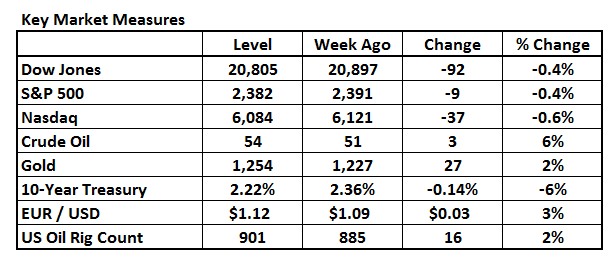
by Todd Shaver | May 21, 2017 | Weekly Newsletter 7pm Sunday
Let's Get Started
The President took Air Force One for an international tour to promote peace, justice, and stability. His first stop is in Saudi Arabia to meet with over 50 Muslim leaders to discuss a shared fight against radical beliefs and terrorism. He will make his way next to Jerusalem and Bethlehem to re-build relationships that deteriorated under the last administration. Thereafter, he will spend time with the Pope at the Vatican strategizing on how Christian beliefs can bring about more peace in the world. We learned Saturday morning that Trump was greeted on his first stop in Saudi Arabia with $110 billion of deals for US companies in the region, in particular for General Electric and Halliburton. This one of the reasons why America voted for the man? But we’ll see if anything comes of it.
There is always a bull market here at The Bull Market Report! This week we highlight the following stocks: Athenahealth, Home Depot, Amazon, Facebook VMware, and Kinder Morgan.
Highlights From The Past Week
Why have stocks bounced? We see no one specific factor behind a stock market bounce that followed the biggest selloff since last September on Wednesday. Some are focused on the pervasive buy-the-dip mentality since the financial crisis bottom in 2009. The initial flurry of Trump impeachment talk following the Comey memo leak seems overdone. Trump heading overseas may shift some of the focus away from recent controversies toward foreign policy (and dampen his more combative tone). A stabilizing influence is Robert Mueller’s appointment as special counsel in the Russia investigation which brings credibility amid the chaos. Despite all the talk about the threat to Republicans’ legislative agenda, policy expectations have already been meaningfully dialed back. There is little change in a fairly upbeat fundamental narrative that has revolved around expectations for an upswing in global growth. In addition, central banks are still in an easy money stance.
Bullard says Fed’s path may be “overly aggressive”. At an address at Washington University, St Louis Fed President James Bullard noted that in the wake of the Fed’s March rate hike, financial markets saw declining long-term yields and weakening inflation expectations. He observed that this may suggest that the FOMC’s contemplated policy rate path is overly aggressive relative to actual incoming data on US macroeconomic performance. Bullard noted that labor market improvements have slowed over the last two years, and that inflation and inflation expectations have surprised to the downsize in recent months. Note that Bullard has been quite dovish in the past relative to rates, saying in January that there was no reason to move rates dramatically and standing by his forecast for a single rate hike in 2017. In statements following his presentation, Bullard reiterated his call that the Fed should shrink its balance sheet to gain policy space, and said the central bank should retain the option for future quantitative easing should it be necessary.
Oil supported by deal extension headlines. Oil posted a nice gain this week on growing expectations exporters will extend output cuts to curb a persistent glut in inventories at next week’s OPEC meeting. This follows headlines earlier this week that Saudi Arabia and non-OPEC Russia agreed to a 9-month extension. Reuters, citing OPEC sources, said the cartel’s panel reviewing scenarios for the 25-May meeting is looking at the option of deepening and extending the deal to reduce oil output. No agreement has been made on final scenarios. Some say a deeper cut in output is an option depending on estimated growth in supply from non-OPEC producers and US shale oil.
BMR Companies & Commentary
Athenahealth (ATHN: $130, +19% - all price changes are for the week)
Top-notch hedge fund Elliott Associates disclosed a 9.2% stake in Athenahealth this week sending the stock soaring.
Elliot believes the company operates in a highly strategic area at the intersection of technology and healthcare with a disruptive value proposition, a leading competitive position, and a compelling product set, the value of which is not reflected in the company's current market value. Interpretation: The stock is cheap. Elliot believes that there are numerous operational and strategic opportunities to maximize shareholder value. Elliot will engage in a dialogue with the company's board regarding these matters.
Elliot may consider and develop plans and make proposals with respect to operations and management, and all types of other changes that will add value to the stock.
Looking at the software landscape, IBM and Inuit have expressed a desire to break into Healthcare. Reports have also speculated that Aetna and UnitedHealth may also be interested.
BMR Take: Elliot Associates is the real deal as highlighted by Athena’s 19% move higher last week. We hit our Target of $125, having added the stock at $101 in November, so we are up 30% in six months. Not bad. We definitely would stick around to see what happens here. We could see another big move higher should the company be sold. We hereby Raise the Target Price to $140, and the Sell Price which was originally at $90, is now at $105, to $125. We don’t want to lose any of these massive gains.
Home Depot: (HD: $156, down 2%, but up from $144 a month ago)
Home Depot just blew earnings out of the water while the rest of Retail keeps falling apart. With mall retailers such as Sears and J.C. Penney seemingly on their deathbed, Home Depot once again proves why it pays to sell lumber and nails.
Last week, the home improvement retailer delivered first quarter results. EPS of $1.67 beat consensus of $1.61 on revenue of $23.9 billion versus consensus of $23.7 billion. Management reaffirmed full year sales growth guidance of +5% and lifted expectations for EPS growth 11% to $7.15. In February they announced an increase to $15 billion in the stock buyback program.
All merchandise departments delivered sales increases. Sales from contractors were stronger than those from typical consumers. Online sales surged 23%. "The housing market is very strong", Home Depot CFO Carol Tome said, adding that sales in May have been "very good."
So far, the U.S. housing market has withstood the rising interest rate environment (which we see as very insignificant). In turn, home improvement retailers such as Home Depot have continued to thrive as existing homeowners renovate their homes -- which are rising in value -- and builders try quickly to bring on badly needed supply.
Home improvement spending still remains healthier than most areas in retail. Trends remain strong as building materials, hardware and garden supply sales have grown 6.4% year over year.
BMR Take: Stick with this blue chip. Many analysts see the EPS outlook as conservative. Despite its impressive $95 billion sales base, Home Depot has ample opportunity to grow, especially in eCommerce. The company will continue to benefit from healthy home improvement spending, market share gains, and strong execution. The home improvement sector remains well-positioned to benefit from continued modest GDP growth, home price appreciation, and solid household formation. Our Target is $160 – getting close. We can’t wait to raise the Target soon.
Amazon (AMZN: $960, flat)
Amazon cut the price of the Echo to the lowest level in 2017. For a limited time users can purchase two Amazon Echos with the promo code ECHO2PACK effectively dropping the price to $140 each. The normal price is $180.
Why do we care?
Echo is Amazon’s ticket into a massive Home Services Market. It lets Amazon gather data for what is happening in the house as it records everything. It also provides a door for instant on-demand ordering. We have one and we love it!
Amazon, which launched its Home Services unit in 2015, now offers 1,200 services in more than 50 U.S. cities. Customers can select assembly or installation services, which will compete against those offered by retailers like Home Depot or Best Buy, in addition to other services like house cleaning, home repair and yard work, which will compete with Angie’s List. Throughout its 20-year history, Amazon has continued to explore areas of commerce that it believes it could disrupt and this is one ripe for disruption. In March, Amazon estimated that the on-demand Home Services market was valued between $500 and $700 billion.
BMR Take: Amazon is a serial monopolist company that picks markets to enter, disrupts them entirely, and runs away with market share. Home Services looks like the next target. Amazon is really expensive at 145x this year’s earnings, but Amazon doesn’t trade like a normal company. Bezos has said profits will come in due time. Lately they have been knocking out much bigger profits and the Street is content to wait and wait as the stock goes up and up. There remains a ton of upside to Amazon long term as the company is investing massively for growth and future earnings power more than supports the current valuation.
Facebook (FB: $148, -1.5%)
Facebook and Major League Baseball struck a deal to live stream games. The move is the latest initiative by Facebook to expand into the world of live programming. Facebook said that it would stream one game a week beginning immediately and the broadcasts would be available to everyone on Facebook in the U.S.
What does this mean? More engagement. More engagement means more advertising opportunities and more revenue. It’s great news.
MLB Commissioner Rob Manfred said at a news conference in New York, "Probably the most important single announcement is we've done an agreement with Facebook. It's really important for us in terms of experimenting with a new partner in this area. We are really excited about this."
"It's pretty cool," Ian Desmond of the Rockies said. "It's an opportunity to provide the game to everybody. That's what we're trying to do -- expand the game and make it more diverse. It's a step in the right direction. They're doing a good job with that."
BMR Take: The stock is having a great year so far, and we see so much more potential still. Consensus estimates call for EPS near $10 by 2020. At the current PE multiple or 27 where the stock is today, this implies shares can double.
VMware (VMW: $93, -1%)
VMware, a global leader in cloud infrastructure and business mobility, announced it will deliver VMware Horizon Cloud on Microsoft Azure. The integration helps customers accelerate the move to Windows 10 and brings VMware virtual desktops and applications to the increasing global presence of Azure in the enterprise -- available in 38 regions globally.
This is a great news item! Microsoft Azure is connected to so many of the world’s enterprises (large, medium and small) it is mind boggling. By becoming integrated with Microsoft Azure, VMware is now able to tap into all of these customer relationships. What a revenue opportunity.
BMR Take: The addition of a major cloud platform such as Microsoft Azure to VMware’s customer database has the potential to accelerate the growth of the company. VMware is expected to generate $5-6 of EPS consistently for the foreseeable future. Putting it all together, the outlook suggests the stock should continue to do well. We have a Target of $95 on the stock. We can’t wait to raise this Target when hit.
Kinder Morgan (KMI: $20, -2%)
Kinder Morgan had a rough week on some news about more obstacles surfacing. The Alberta Securities Commission is reviewing an environmental group’s request to halt a $1.28 billion share sale that Kinder Morgan needs to help finance the expansion of its Trans Mountain pipeline.
Earlier this month, Greenpeace Canada sent a letter to the Alberta commission, saying Kinder Morgan may have used outdated oil projections in its IPO prospectus. The Alberta commission acknowledged receiving the challenge and will give it "consideration.”
Kinder Morgan had been running a dual-track process, exploring both an IPO and a joint venture to finance the Trans Mountain expansion. In a regulatory filing earlier this month, the company said it was no longer looking into a joint venture.
BMR Take: Kinder Morgan needs to get this together and do so fast. With EPS in recovery mode from $0.66 this year back to $1.00 by 2020, this coincides with more normalized earnings levels prior to the recent drop in oil prices. We don’t need any hiccups to the business plans that push out earnings, especially as oil prices remain volatile.
You know what? The more we think about this company the more we think it is time to move on. $1.00 of earnings (previous paragraph) by 2020? That’s a long time to wait. We’ve got a LOT BETTER places to put our money than this one. Just take a look at any one of our High Yield portfolio stocks, or the REIT portfolio. We are just tired of waiting and waiting – it’s been over a year. We added the company in early 2016 at $18 and exit here at $20.
Upcoming Economic News
Tuesday, May 23, 2017 10:00 AM
New Home Sales
Period: APR
Consensus: 610,000
Prior: 620,000
Wednesday, May 24, 2017 10:00 AM
Existing Home Sales
Period: APR
Consensus: 5,650,000
Prior: 5,710,000
Thursday, May 25, 2017 08:30 AM
Initial Jobless Claims
Period: 5/20
Actual: N/A
Previous: 232,000
Consensus: 237,000
Friday, May 26, 2017 08:30 AM
GDP
Period: Q1
Actual: N/A
Consensus: 1.9%
Prior: 1.9%
A Word from Gary Jefferson
Jefferson Financial Group
First Vice-President, Investments
UBS Financial Services, Inc.
Friday the 12th marked the 13th straight day in which the S&P 500 failed to move more than 0.5% in either direction on a closing basis, the longest such streak since 1995.
Q1 results from 95% of S&P 500 members show earnings are up +14% from the same period last year on +8% higher revenues, with 72% beating EPS estimates and 66% beating revenue estimates. The proportion of companies beating both EPS and revenue estimates is 52%.
Importantly, the growth performance is broad-based and not narrowly concentrated. We had the leadership from the Finance space earlier in the reporting cycle, but the baton has since shifted to Tech and other areas, including Industrials, Basic Materials, and Energy. The big disappointment – you guessed it: brick and mortar retail stores. While brick and mortar stores may be ailing, however, online sales are doing great.
Here is the important takeaway: When looking at the last three quarters, the overall strong Q1 showing represents a notable acceleration in the growth momentum. We have never seen a bad market during a period when it was in the midst of an accelerating growth trend. It could happen of course as wild cards such as oil or geopolitical risks are always present, but if there was ever a silver bullet for the market, it is an accelerating earnings momentum. We do not expect to have a slew of 2nd quarter earnings revisions to the downside begin cropping up over the next few weeks. Rather, with any kind of good news from D.C. such as healthcare reform, tax reform or infrastructure programs, we expect the growth momentum to continue to accelerate on a year-over-year comparison.
Bottom line: Earnings are strong, rates should rise in conjunction with a tightening labor market and we believe stocks still offer greater upside than bonds or cash. Here are the numbers that we feel support this opinion:
The Q1 earnings season was better than expected, and it’s resulted in 2018 S&P 500 earnings estimates bumping up $1 from $134 to $137. (Source UBS) At the higher end of that range, the S&P 500 is trading at 17X next year’s earnings. That’s high historically to be sure, but it’s not "crazy" as some of the doom and gloomers are arguing, especially given low Treasury yield levels and expected macro-economic fundamentals. On the downside, if the S&P 500 were to drop to 2300, then the market would be trading at 16.7X 2018 earnings. In this environment (low yields, stable macro environment), the market could easily be considered fairly valued and a buying opportunity.
Right now, it’s more likely earnings expectations get revised higher in the future, not lower, and that will make the market cheaper.
Sectors which have strong momentum currently include Financials, Healthcare, Technology (including cyber security, which is in the forefront as "ransomware" attacks go worldwide) and Energy.
Square Announces a Debit Product
Square Cash, the mobile peer-to-peer (P2P) payment offering from Square, will launch a physical prepaid debit product. The card is funded by customers’ Square Cash balance, and can be used anywhere that accepts Visa.
Square (SQ: $20, flat) wants to get a bigger piece of the P2P space. Mobile P2P payments are growing fast. That’s increasing competition in an industry where no one player holds a true market majority. Square Cash is an important player, but it's not as well-positioned as market leader Venmo, owned by PayPal (a Bull Market Report favorite) or Zelle, which will have access to up to 85 million customers and is backed by Bank of America, U.S. Bank, and Wells Fargo and 17 other banks. Zelle Network Banks Processed 170 million P2P Payments, Totaling $55 billion in 2016. The market is BIG!
Cash and checks have historically dominated the P2P world. But as smartphones become a primary computing device, top digital platforms, like Venmo and Google Wallet, have enabled customers to turn away from cash and make those payments digitally with ease. A shift to mobile payments across the board and increased spending power from the digital-savvy younger generation will cause the mobile P2P industry to skyrocket.
Consumers want mobile P2P services, and they’re turning to them. As smartphones are increasingly used as computing devices, these consumers look to such services for fast and easy ways to pay.
Monetizing P2P is more important than ever. As volume grows and user bases scale fast, finding ways to monetize quickly should be a priority for firms looking to stay ahead. We believe Square has a good shot of winning a good piece of this market.
In-store card payments are still substantially more popular than any form of P2P transfer. A physical card could help Square stand out. Gaining access to a traditional card could help users form habits and encourage customers to run a Square Cash balance, thus engaging them more with the product and increasing volume.
Our Target is $24. We can see this getting hit and our having to raise the Target to $34 and beyond. Square could be a big one.
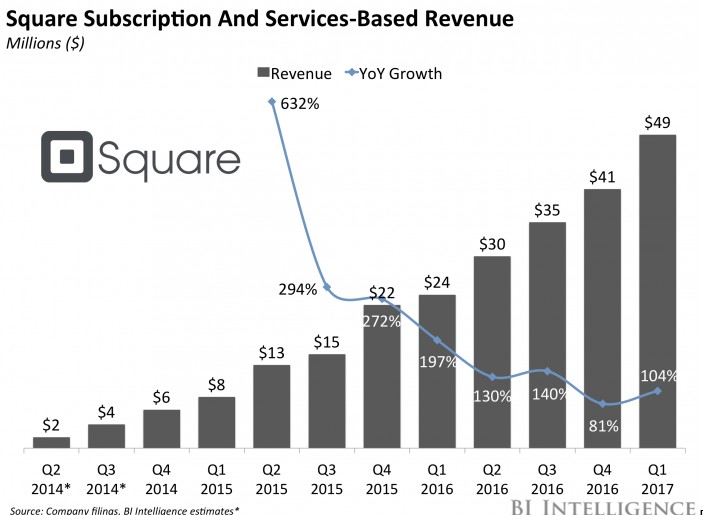
And this just in:
Washington, D.C., is enlisting Square’s help as its taxi commission tries to help the city’s cabbies compete with Uber drivers. By the end of August, all of the taxis in Washington have to tear out their traditional meters and start using smartphones or tablets. The Department announced that Square will process the payments going through those mobile devices.
Wow – that’s good news. Our takeaway is that this is a great PR move that will get more and more people to use Square. We use it. We love it. You will too. And the more customers the better. AND a higher stock price.
Annaly Keeps Chugging Along
Annaly Capital Management (NLY, $11.50) was up 2% this week and showed us a nice bounce back from recent lows after trading in the high 11s in early May. We have said this many times – the stock has its ups and downs and they are not anything to be worried about. The “interest-raising-talk” will accelerate in the press in the next few weeks, as the Fed prepares to raise in June or July, so buckle up your seat belts and sit back and watch Annaly handle all the bumps in the air. We are not worried. We’re quite content to sit back and collect the fabulous 10.4% yield.
Mazor Keeps Chugging Along
Mazor (MZOR: $43) had a stellar week, closing up 7%. Pretty volatile little stock, isn’t it? It hit $45 on Thursday and closed at $43. Crazy. We think it better to watch this stock on a weekly basis instead of daily!
Amazon Keeps Chugging Along
Amazon (AMZN: $960) was flat for the week, even after dropping $22 on nasty Wednesday. It bounced right back on Thursday. Love this company. Are you still hung up on the stock PRICE? Well, don’t be. Get some shares on Monday. On May 22, 2018 you will be ONE HAPPY CAMPER!
The High Yield Corner
By Michael Foster
The financial press was particularly amusing this week. On Wednesday we had a market correction that was called a disaster, a sign of turmoil, and a harbinger for a market crash. What caused the crash? Depends on who you read. We’ve seen explanations range from algorithmic trading going haywire, bank unwinding, bad earnings (really?), and, of course, geopolitical turmoil because of the Russia scandals. None of these really make any sense, and some are just plain wrong (earnings growth has accelerated, making S&P 500s forward P/E ratio relatively low), but the media keeps clutching for a narrative.
What are the facts? [No FAKE NEWS here at The Bull Market Report!] The Fed announced industrial production rose 1% in April, the largest gain since 2014 and near its all-time high. Unemployment claims fell to 232,000, maintaining levels lower than what we saw in the 1990s and early 2000s. Mortgage rates also fell to less than 4% (mortgage rates have been falling for a few weeks), and some analysts expect this to go lower. [We do.]
This is all good news and better than expected. Macroeconomically, there’s little to worry about in the U.S. And that may explain why the VIX dipped into single-digit territory, which created its own kind of paradoxical panic as many fretted that people aren’t scared enough. But the slew of good news indicates there is little to be afraid of.
That brings us to the most important but most controversial data point: household debt and credit. The Federal Reserve’s Household Debt and Credit Report announced that total household debt reached its highest point since 2008 ($12.7 trillion). While this may ring alarm bells to debt conscious individuals, from a macroeconomic perspective this is a good thing.
Here’s why. American consumers, for the most part, will take on credit only when they feel reasonably confident in their ability to earn money in the future. That’s not to say people are innately responsible with credit, but rather that they will to a certain extent take credit only when they feel confident about their own personal economies. The massive decline in debt following the 2008 crisis is an indication of this, especially when you look into the details. It wasn’t just mortgage debt that fell during the housing crash - it was credit card debt, auto loan debt, and personal loan debt. People just stopped borrowing money during the crisis. This was partly because banks stopped lending, of course, but not entirely. For a large part of America, it was time to tighten belts and weather the storm.
What did this mean for companies? Declining sales. Weaker profits. The need to cut costs, which often meant layoffs which in turn meant more belt tightening and thus even lower sales and weaker profits. This is the "deflationary spiral” economists warn about, and it is the reason why government stimulus is used during a recession.
The opposite of this deflationary spiral is a winding up of credit across the board. Americans are confident of their ability to pay back loans, so they borrow more, and then use that money to spend more. That results in higher sales and bigger profits for U.S. firms. That, in turn, results in firms hiring more people, thus creating a cycle of spending begetting spending and helping GDP rise across the board.
This has several implications for all kinds of investors. For stocks broadly, the news is good: it means higher sales and higher earnings (the S&P 500 has already reported both for the start of 2017). For other sectors, the news is also good but for different reasons.
For business development corporations (BDCs), it’s good because it means small and medium-sized businesses will have much higher demand for credit as they expand operations. This is partly why BDCs have been on a tear for the last couple of years - the market anticipated this expansionary climate. So the UBS BDC ETF (BDCS: $22) is up 10% from a year ago.
There’s just one problem: BDCs aren’t actually better investments.
The distributions that this ETF pays out have fallen in the past year as a result of yields on loans falling for individual BDCs. We’ve seen both NAVs and distributions fall for many BDCs, both big and small, over the last few months. As a result, the BDC ETF is down year to date and the BDC sector is by no means as attractive as it seemed a year ago. But if the macroeconomic climate is better for BDCs, why is this happening?
As we’ve said repeatedly at The Bull Market Report, BDCs are getting squeezed because of the better environment. This is attracting more competition from banks and leveraged lending firms. We’re also seeing smaller BDCs set up shop and compete with big guys like Main Street Capital Corporation (MAIN: $38), making its 70%-ish premium to NAV untenable. That’s why we cut Main Street from the Bull Market Report High Yield portfolio a few months ago, and that decision is finally getting vindicated: Main Street is now 7% off its all-time high reached just a few weeks ago at $41 and is down for the week. We are keeping a close look on the BDC sector and are looking for a company that has a reasonable market price and a strong income-producing portfolio. Until that shows up, we recommend caution.
Better options exist in municipal bonds for income. This sector has lost market favor for a very long time due to its more risk-hungry approach, and that’s caused yields on many muni funds to rise. Bull Market Report favorites Invesco Municipal Trust (VKQ: $12.64, flat) and the Nuveen AMT-Free Fund (NVG: $14.81, up 1%) are now yielding near 6%, tax free. These funds have risen slightly (about 3%) in 2017 but remain down from a year ago. There is still time to jump into these funds, although it appears that the window to get munis at a discount is shrinking.
Over the coming weeks we are going to get more macroeconomic data to determine exactly where we are in the economic cycle. During that time, holding high yield investments and doubling down on munis makes a lot of sense for income-hungry investors. There is a strong chance that the Federal Reserve will raise interest rates next month, and we may see second quarter GDP numbers that are strong. Neither of these are bad for high yield investments, because both signal a market in which people are spending and companies and municipalities can repay their loans. While the market is obsessed over a one-day drop on Wednesday, we will keep our eyes focused on the data to tease out what is really going on beyond popular distractions.
Good Investing,
Todd Shaver, Founder, CEO and Editor
The Bull Market Report
Since 1998
