March 20, 2017
by Todd Shaver | Mar 20, 2017 | Monthly Newsletter Daily 6am if new
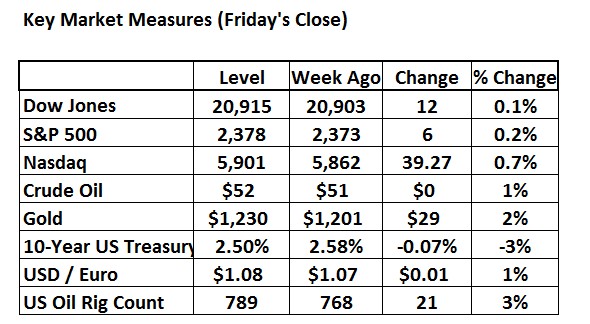
What a week. Another interest rate hike has come. The entire market and all the Fed officials, except one dissenting opinion, wanted the March rate hike. Who dissented? Minneapolis Fed President Neel Kashkari. Why? Kashkari said the announcement of the Fed’s balance sheet plan could trigger somewhat tighter monetary conditions resulting in the equivalent of a rate hike of unknown size. After it has been published and the market response is understood, then he says the Fed can return to using the federal funds rate as a primary policy tool, with the balance sheet normalization under way in the background. Understanding Kashkari’s lone wolf dissenting opinion is something to take note of. We need to keep an eye on the rising interest rate cycle and how it impacts the bull market going forward. For the time being, the bull market continues to break new highs.
No matter what, there is always a bull market here! Week in and week out, you can find it right here at The Bull Market Report. We currently see a bull market across many parts of the stock market. This week we highlight the following securities: Tesla, Visa, Apple, Google, and PayPal.
)
Highlights From The Past Week
Another Week of Huge Cash Inflows! According to industry data, overall cash continued to flood into equities for a total of $14.5 billion, the 11th consecutive week of inflows. Most of this was due to allocations to ETFs, which saw $19.7 billion in inflows, the highest weekly amount YTD, offset by $5.1 billion in outflows from actively managed funds. Looking at what its private clients are doing, an investment bank notes that the top 3 ETF inflows in the past 4 weeks were Financials, Bank Loans, and MLPs.
Has OPEC Underestimated US Oil Production Once Again? The U.S. crude cowboys are back on their horses and leading a strong recovery in the oil patch that is not expected to falter. With lessons learned from the oil price crash, companies have streamlined their budgets and are focused on the most prolific shale plays. U.S. drillers are giving OPEC a hard time by raising output and hedging future production. This is all good things for US energy independence and stability.
Refreshed Fed Forecast Leaves Long-Run Rate Outlook Unchanged. For those curious what the Fed's latest Fed Funds rate forecast reveals, here is the summary: (i) median target for end-2017 is 1.375%, unchanged; (ii) median target for end-2018 is 2.125%, unchanged; (iii) median target for end-2019 is 3% vs. 2.875% in December; and (iv) long-run target is 3%, unchanged. Given that the long-run expectations of 3% is unchanged, some say we could see a more gradual rising interest rate cycle than some had thought. Good thing for equities!
Homebuilders: Not Been This Confident Since The Peak Of The Last Housing Bubble. Builder confidence in the market for newly-built single-family homes jumped six points to a level of 71 on the National Association of Home Builders/Wells Fargo Housing Market Index (HMI). This is the highest reading since 2005 - the ultimate peak of the last housing bubble. This record confidence level is welcomed for the current bull market.
BMR Companies and Commentary
Tesla (TSLA: $262, +7% - all prices are for the previous week)
Tesla’s $170 million battery play is just the beginning. Tesla is ready to power some grids. And not just in California or Australia. Last week, Elon Musk wagered he could address South Australia’s energy crisis with 100 megawatts (MW) of batteries installed in 100 days or less – “or it’s free.” The exchange blew up on Twitter and led to phone calls between Musk and leading Australian politicians, including Prime Minister Malcolm Turnbull. (Ukraine Prime Minister Hroisman later chimed in that he’s interested, too.)
An analysis finds that such a deal wouldn’t only alleviate South Australia’s blackouts, but would also be profitable - at an anticipated cost of roughly $170 million. Battery prices are tumbling fast - by almost half since 2014 - and such mega projects are increasingly popping up around the world.
Megawatts measure the amount of power a battery can provide at any given time. Tesla’s battery projects typically supply a four-hour duration for each megawatt, so it’s reasonable to assume that South Australia’s 100 MW project would entail a 400- megawatt-hour battery installation. That would make it Australia’s biggest battery-capacity project, and one of the biggest on Earth.
BMR Take: Tesla led by Elon Musk has time and time again been at the front of the pack doing innovating things in the world. This battery event is just yet another example of the value of Tesla and Elon Musk to the world and why we favor the stock of Tesla.
Consensus Ratings for Tesla
Ratings Breakdown: 1 Sell Rating, 2 Hold Ratings, 1 Buy Rating
Consensus Price Target: $280
3/17/2017 Goldman Sachs Group Target: $187
3/9/2017 Sanford C. Bernstein Target: $250
2/23/2017 Dougherty & Co Target: $375
2/23/2017 Royal Bank of Canada Target: $314
Visa (V: $90, +1%)
Visa took the microphone at a major investment banking conference this week. What did management have to say? Here are a few tidbits of color on the business and market environment from Visa management:
“We certainly have seen a tick-up in what I would call the drivers of the business, which is what we like because that is, in the end, what counts.”
“We saw, a step-up in payment volumes almost everywhere except a couple of places like Brazil; we saw a nice step-up in Europe. Certainly, in the U.S., we were helped by gas, and also, we were helped by the portfolio wins we've had like Costco and USAA.”
“What really helped was cross-border volume growth getting to double-digits. It's been a long time since we've had double-digit cross-border volume growth. I think you have to go back three or four years. In fact, I think the U.S. cross-border volume growth was double-digit for the first time since early 2014.”
BMR Take: Visa is a powerhouse in payments. Fundamental trends are strong. A new all-time high this week. Stay the course!
Apple (AAPL: $140, +1%)
Taking a look back at another week of news from Apple, this week’s developments include: the high price of the IPhone 8, the sneaky MacBook Pro price cut, details on the new iPad, the AirPods health-focused future, price fixing in Russia, the challenge from the Galaxy S8, and running Windows XP on your iPhone.
The key to watch is how expensive will the new iPhone 8 be, in our view. One of the major big picture trends in the smartphone market is the proliferation of competition and how, if at all, will it impact Apple. Will Apple be able to sell expensive phones for a long time to come? We are keenly focused on this question.
One way to keep up the price of the iPhone for Apple is constant innovation and great features. Leaks about iPhone 8 say that Apple’s decision to switch the redesigned iPhone from LCD (Liquid Crystal Display) to OLED (Organic Light Emitting Diode) improves screen visualization. We hope to hear more about new improvements. Apply customers are as loyal as they come and are likely to dig deep into their wallets for the latest and greatest.
BMR Take: Expectations for iPhone sales are a key driver of the business. We continue to monitor developments closely. All is checking out okay so far this year. And Apple sets a new all-time high this week. The market cap is now $735 billion, on the way to $750 billion and then $800 billion.
Google (GOOG: $852, +1%)
Google had to apologize to the UK government over some YouTube ads. Google apologized to senior officials representing the government and pledged a review of their advertising systems.
Google advertising revenues were $60 billion in 2014, $67 billion in 2015, and $79 billion in 2016. The acquisition cost of this revenue is just 20% leaving 80% going to gross profit. What a hugely profitable business this is! We see continued growth ahead. Google AdWords remains a world class place for performance-based advertising. Admittedly, like the UK situation, there are sometimes kinks in the armor though they are minor in the overall picture.
BMR Take: Google is fighting to hold onto a top spot in the advertising world. This UK news is just one of many examples of some of the challenges the company is facing. The good news is that as Google’s YouTube irons out its business model, we think YouTube could be one of the top assets in all of media in 10 years.
PayPal (PYPL: $43, flat)
Big news out this week was that Google’s gmail can now send payments. There is a lot of debate about what this means for PayPal. Some believe it’s a competitive threat, but for right now it just looks like more fear than reality. Why?
Being an independent platform like Paypal is so important in payments. All PayPal does is sit at the center of commerce as an exchange for trading goods and services. In contrast, Google and so many other playing in the mobile payments space have alternative interests. Obviously, Google is big in advertising.
Merchants have been very clear they want an independent platform as a partner not a potential competitor. This is why Home Depot works with PayPal and not Apple for mobile/online payments.
BMR Take: If you own PayPal, don’t be frightened by the Google gmail news out this week. You already own the best asset in the space. Don’t doubt it.
Upcoming Economic News
WEDNESDAY, MARCH 22
Existing Home Sales – February
Time: 10:00 am
Forecast: 5.58 million
February existing home sales are expected to slip from January’s decade-long high, but still contribute to steady long-term growth. Sales rose 6.4% year-over-year in January, an admirable pace given the limited inventory. Home prices rose at the yearly rate of 5.6% in the December 20-city Case-Shiller index, part of a consistent path of gains that can draw more sellers to the market.
THURSDAY, MARCH 23
New Home Sales - February
Time: 10:00 am
Forecast: 560,000
February new home sales are projected to rise marginally from January’s level. Sales of new homes have cooled a bit, rising 6% year-over-year in the three months ending January after soaring by 20% in Q3. Yet if last year’s highs proved unsustainable, the rising number of new household units amid the continued economic expansion will keep new home sales and construction on an uptrend.
FRIDAY, MARCH 24
Durable Goods Orders – February
Time: 8:30 am
Forecast: 1.0% overall, 0.5% ex transportation
Core durable goods orders figure to rise in February after falling for the first time in seven months in January. Even with the January dip, orders rose 10% annualized in the past three months, the best such result in three years. That upturn in demand reflects rising domestic confidence and improved economic prospects across the globe.
The Glamour of Dividend Stocks Has Lessened [THEY SAY]
[Who’s “They”?]
So says RBC Capital, as the premium investors earn from glamour dividend stocks over the benchmark Treasury rate has narrowed.
Really we say?
They say: "The average dividend spread in our coverage is 1.9% currently, compared to 2.1% in the past 5 and 10 years." Narrower spreads were caused by fluctuations in the 10-year Treasury rate and changes in dividend policies, RBC said. "Although average dividend yields did not change much, the spreads vs. 10Y T-bond are narrower today vs. the 10-year average.”
OK – Go on…. We’re not buying this argument yet. [Nor ever for that matter.]
“Meanwhile, some peculiar changes have come about in the consumer staples sector. First, while the dividend yield for the consumer staples index remains constant at 2.6%, the spread over the Treasury rate has changed from negative to positive.”
“Secondly, tobacco stocks no longer earn the highest dividend yield among consumer staples.”
OK – Who would want to own tobacco stocks anyway?
In fact, they noted, "At present, Coca Cola has a higher dividend than Altria Group. This compares to MO carrying a dividend yield that has historically been 200 bps-plus higher than KO. This could be due to investor concerns over Coca Cola's core business, combined with investor excitement over consolidation in the tobacco industry.”
BMR Take: All in all, a very boring report. It’s typical of the big research firms always talking about the “high dividend paying stocks” like Coca-Cola and Altria. Coke pays 3.5%. And Altria pays 3.25%. Big deal we say. Why? See our High Yield Portfolio discussed below and on the website where the average stock pays 6-8%, with Annaly (NLY) still paying 11%!
The Bull Market High Yield Report
By Michael Foster
Special to The Bull Market Report
Of course, we need to start with the rate hike.
Last week we said that Janet Yellen would almost certainly raise interest rates. Now it has happened. The rate hike itself was exactly as markets expected: 25 basis points, with forward guidance of two more rate hikes this year. So we’re in a tightening part of the credit cycle.
Yet everything went up. A lot. This caused a great deal of consternation in the financial press. We saw three common responses:
1. The rate hike is the beginning of more, and the bond and stock markets should go down but they didn’t.
2. The rate hike was too small and should be bigger - 50 bp rate hikes might be coming soon, and the stock and bond markets should go down to factor this into account.
3. The rate hike was a bad idea and will cause financial/economic mayhem, so the stock and bond markets should go down but they didn’t.
This is very gloomy, negative, cautious sentiment about the rate hike all around, with even more negativity about the market’s strong response following the move.
If you have been reading this column with any regularity, you know that we have little respect for much of the financial press. They just get things wrong too often, and their incentives for more page views, clicks, ratings and so on, actively encourages hysteria and overly positive or negative responses to markets that are on the whole quite rational. This week’s move is case in point; the S&P 500 ended the week up a whopping 0.24%. Big deal. While PE ratios are high at nearly 27, there are many reasons to dismiss this metric, such as: the combination of an unusual monetary policy regime, years of virtually no inflation, repressed corporate earnings, the structural shift towards technology stocks where PE ratios tend to be higher, and the drag from the still mostly unprofitable Energy sector.
More crucially, we saw the markets make a modestly constructive response to a modestly constructive monetary policy. Yellen is slowly and rather gracefully raising interest rates at a time when the economy and the stock market can handle it.
This is why the financial press narratives are wrong.
Stocks and bonds went up following the rate hike for pretty much the same reason: Yellen’s rate hike is actually quite dovish. Let’s listen to the Fed itself speak:
"The stance of monetary policy remains accommodative, thereby supporting some further strengthening in labor market conditions and a sustained return to 2 percent inflation.”
This is the crux of the FOMC’s recent statement, and it’s a pretty simple premise: while the rate hikes sound hawkish on the surface, they are in fact rather dovish. The reality is that, relative to labor, inflation and other financial indicators, the Fed’s 25 basis point hike and plans for another two hikes in 2017 are very dovish. They don’t superficially represent QE* in 2013 or ZIRP* in 2014-2015, but they are pretty much the same thing.
*Qualitative Easing; Zero interest-rate policy
Yet throughout 2013-2015 there were many periods where the market sold off stocks and bonds in anticipation of scheduled rate hikes. But each period turned into a “buy the dip” opportunity. Those who are bearish about higher interest rates and their impact on equities and bonds have pretty much given up. Yet the bulls haven’t fully taken over. The result is a rather measured, moderate response to the Fed’s monetary policy, which is itself quite measured and moderate.
Of course, that doesn’t make for sexy headlines. “The Fed is Competent and the Market is Responding Rationally” doesn’t make for salacious reading. Yet the dynamics at play here, especially in the backdrop of years of QE in the US and ongoing QE in Europe and Japan (as well as the looser monetary policy in China and many, many other dynamics we simply don’t have time to discuss here), indicate that a bearish viewpoint would be a hysterical and irrational one.
However, if you want to find a pocket of irrational exuberance, you can find a bit of it in the high yield world. This bothers us as high yield analysts; We’d like for this pocket to be a bit more fearful than the market as a whole, providing buying opportunities. Alas, animal spirits are heating up more here than elsewhere, which is urging caution and consolidation.
As a result, we are sadly and reluctantly off all BDCs despite our affection for the sector. The UBS BDC ETF (BDCS: $23, up 2%) went up way too much this week, compounding an over 3% year-to-date gain and now 21% year-over-year gain. This is absurd, especially as most BDCs have reported and NAVs have declined in many cases and barely risen in others. We need to see a major correction before this sector gets attractive.
The same could be said, although less stridently, about junk bonds. The SPDR Barclays High Yield Bond ETF (JNK: $37, up 1%) had a strong week and remains up 7% over the past year. Those aren’t stratospheric numbers like BDCs, but it does show a curious disconnect. Often, investors obsess over default rates. And it’s true that middle market defaults at 1.5%, are far less than the 5.8% default rate in junk bonds*. Of course, there’s more to this story than meets the eye. Middle market default rates are going up and junk bond rates are going down - some estimates believe high yield debts could see a 4% default rate by the end of this year. And looking at the price trends over the last two years, these default risks are priced in.
*Remember, BDCs specialize in middle market loans
So we remain bullish on junk bonds to a limited extent, and prefer them over BDCs. But one needs to be selective to avoid those defaults. The PIMCO Dynamic Income Fund (PDI: $29, up 2%) remains a top pick although it is approaching a sell point. We at the Bull Market Report may need to find another junk bond fund to replace this one. This is a great fund, but it’s trading at a hefty 7% premium to net asset value. In such a situation the upside this fund provides may sadly be already priced in.
If you’re looking for deals and high yield, now is still the time to buy municipal bonds. We suspect there will be a lot of time to buy munis - the market continues to discount them based on several irrational fears, and the risk-averse retiree-investor base of these assets means fears tend to be priced into munis longer than other asset classes. Additionally, many municipal bonds are bought in open-end funds where money managers are often forced to sell if they face fund redemptions. With so many people looking to buy other assets and fearing rate hikes, it’s not surprising that they’re pulling cash out of the muni market. But this pressure isn’t due to fundamental weakness in munis, meaning they will come back. But it may take time.
That’s great. That means investors can greedily snap up munis. The iShares S&P National AMT-Free Municipal Bond Fund (MUB: $108, flat) is one option, but you’ll get assets at a discount, a better quality portfolio, and access to cheap leverage with Invesco Municipal Trust (VKQ: $12.23, up 1%) and the Nuveen AMT-Free Fund (NVG: $14.28, up 1%). Note both had a stronger week than the muni index ETF from iShares, and that is likely to be the story for a while to come if the market comes to its senses about munis.
As you can see, the big theme here is that the market is being “mostly” rational: But slightly irrationally bullish in one asset class (BDCs) and irrationally bearish in another (municipal bonds). For investors, this means rotating into the best funds exposed to the sector that’s getting unfairly punished and avoiding the irrational bullishness in the other sector. Sadly, this is not as easy as making money in 2016, when you could just buy junk bonds and REITs at the start of the year and rebalance once or twice later in the year.
It will be harder to make good money in the high yield market in 2017, but it won’t be impossible. We identified REITs as one pocket of potential after the big selloff in the middle of 2016. And now that payoff is really coming to fruition.
The SPDR Dow Jones REIT ETF (RWR: $92, up 2%) had an extremely strong week thanks to the Fed’s dovish position. However, the REIT ETF remains down over 6% over the last six months. So we’re in a good position to add to REIT positions without being back at the top.
But what REITs? Care Capital Properties (CCP: $25, up 3%) is great to hold but the recent run-up exceeds other high-quality REITs such as Digital Realty Trust (DLR: $103, down 1%) and Omega Healthcare Investors (OHI: $32, up 1%). It may make more sense to buy a bit of Digital Realty and Omega Healthcare if you’re looking for REIT exposure right now.
And at the moment, buying a bit of REITs and a bit of municipals makes a lot of sense. We’d like to see more caution in other pockets of the high yield market before betting too big in it, but we aren’t at the point of calling a top either. Now is the time to stick with high yield, reallocate to the underappreciated asset classes, and wait to see if the sentiment changes. And it will. It always does.
Good Investing,
Todd Shaver
Founder, CEO and Editor
The Bull Market Report
Since 1998
March 19, 2017
by Todd Shaver | Mar 19, 2017 | Weekly Newsletter 7pm Sunday
What a week. Another interest rate hike has come. The entire market and all the Fed officials, except one dissenting opinion, wanted the March rate hike. Who dissented? Minneapolis Fed President Neel Kashkari. Why? Kashkari said the announcement of the Fed’s balance sheet plan could trigger somewhat tighter monetary conditions resulting in the equivalent of a rate hike of unknown size. After it has been published and the market response is understood, then he says the Fed can return to using the federal funds rate as a primary policy tool, with the balance sheet normalization under way in the background. Understanding Kashkari’s lone wolf dissenting opinion is something to take note of. We need to keep an eye on the rising interest rate cycle and how it impacts the bull market going forward. For the time being, the bull market continues to break new highs.
No matter what, there is always a bull market here! Week in and week out, you can find it right here at The Bull Market Report. We currently see a bull market across many parts of the stock market. This week we highlight the following securities: Mazor Robotics, Opko Health, Tesla, Visa, Apple, Google, and PayPal.
)
Highlights From The Past Week
Another Week of Huge Cash Inflows! According to industry data, overall cash continued to flood into equities for a total of $14.5 billion, the 11th consecutive week of inflows. Most of this was due to allocations to ETFs, which saw $19.7 billion in inflows, the highest weekly amount YTD, offset by $5.1 billion in outflows from actively managed funds. Looking at what its private clients are doing, an investment bank notes that the top 3 ETF inflows in the past 4 weeks were Financials, Bank Loans, and MLPs.
Has OPEC Underestimated US Oil Production Once Again? The U.S. crude cowboys are back on their horses and leading a strong recovery in the oil patch that is not expected to falter. With lessons learned from the oil price crash, companies have streamlined their budgets and are focused on the most prolific shale plays. U.S. drillers are giving OPEC a hard time by raising output and hedging future production. This is all good things for US energy independence and stability.
Refreshed Fed Forecast Leaves Long-Run Rate Outlook Unchanged. For those curious what the Fed's latest Fed Funds rate forecast reveals, here is the summary: (i) median target for end-2017 is 1.375%, unchanged; (ii) median target for end-2018 is 2.125%, unchanged; (iii) median target for end-2019 is 3% vs. 2.875% in December; and (iv) long-run target is 3%, unchanged. Given that the long-run expectations of 3% is unchanged, some say we could see a more gradual rising interest rate cycle than some had thought. Good thing for equities!
Homebuilders: Not Been This Confident Since The Peak Of The Last Housing Bubble. Builder confidence in the market for newly-built single-family homes jumped six points to a level of 71 on the National Association of Home Builders/Wells Fargo Housing Market Index (HMI). This is the highest reading since 2005 - the ultimate peak of the last housing bubble. This record confidence level is welcomed for the current bull market.
BMR Companies and Commentary
Mazor Robotics (MZOR: $24, +5% - all price changes in this report are for the week)
As you know, Israel-based Mazor Robotics has teamed up with Dublin, Ireland-based Medtronic to co-market and promote the Mazor X. Mazor X expands on the company's robotic guidance technology to include analytical tools, multiple-source data, precision guidance, optical tracking, intra-op verification and connectivity technologies. That is a lot of jargon, but we tell you this so that you know that Mazor X is a key technology for spine surgery.
Mazor is at a key inflection point, in our view, having generated record sales in the most recent quarter. Specifically, the 21 systems ordered during the most recent quarter illustrated strong ongoing demand – strong news on the fundamentals.
What is more exciting is that there is a clear and significant shift toward direct orders for the Mazor X system. Importantly, of the 21 systems currently in backlog, 18 are for Mazor X and only six of those are from Medtronic. This indicates significant bottom-up demand from surgeons. The Medtronic partnership is a good starting point, but the business is picking up momentum on its own.
BMR Take: What is harder to do than spine surgery? Mazor is a top player in the space that is delivering on growth. We see compelling value in the stock.
Opko Health (OPK: $8.12, +2%, but the high for the week was $8.54)
After a recent decline after its latest earnings report, Opko seems to be picking up support in the analyst community. Recently, one analyst chimed in reiterating a $12 price target and another came out with a more optimistic $14 target. Then just this week, the most bullish call came in from Guggenheim expecting a whopping $25 price target. The analyst notes belief that Rayaldee sales could hit $700 million by 2021 and the company has several underappreciated assets in its pipeline. Recall that Rayaldee is a new treatment for kidney disease. The FDA's approval of Rayaldee represents an important milestone. It is the first product to receive FDA approval for kidney disease and is one of Opko’s many pharmaceutical products being developed for significant medical problems which will benefit from new treatment options.
BMR Take: Opko remains one of the most exciting stories we see in Biotech. With a $4.5 billion market cap, there is so much room for upside, yet that also carries a bit more volatility with it. For investors looking for big gain potential here, this fits the bill as we continue to like what we see at Opko.
Consensus Ratings for Opko Health
3 Hold Ratings, 6 Buy Ratings
Consensus Price Target: $16
3/14/2017 Guggenheim Price Target: $25
3/5/2017 Standpoint Research Target: $14
1/3/2017 Laidlaw Target: $19
1/3/2017 Ladenburg Thalmann Financial Target: $19.50
Tesla (TSLA: $262, +7%)
Tesla’s $170 million battery play is just the beginning. Tesla is ready to power some grids. And not just in California or Australia. Last week, Elon Musk wagered he could address South Australia’s energy crisis with 100 megawatts (MW) of batteries installed in 100 days or less – “or it’s free.” The exchange blew up on Twitter and led to phone calls between Musk and leading Australian politicians, including Prime Minister Malcolm Turnbull. (Ukraine Prime Minister Hroisman later chimed in that he’s interested, too.)
An analysis finds that such a deal wouldn’t only alleviate South Australia’s blackouts, but would also be profitable - at an anticipated cost of roughly $170 million. Battery prices are tumbling fast - by almost half since 2014 - and such mega projects are increasingly popping up around the world.
Megawatts measure the amount of power a battery can provide at any given time. Tesla’s battery projects typically supply a four-hour duration for each megawatt, so it’s reasonable to assume that South Australia’s 100 MW project would entail a 400- megawatt-hour battery installation. That would make it Australia’s biggest battery-capacity project, and one of the biggest on Earth.
BMR Take: Tesla led by Elon Musk has time and time again been at the front of the pack doing innovating things in the world. This battery event is just yet another example of the value of Tesla and Elon Musk to the world and why we favor the stock of Tesla.
Consensus Ratings for Tesla
Ratings Breakdown: 1 Sell Rating, 2 Hold Ratings, 1 Buy Rating
Consensus Price Target: $280
3/17/2017 Goldman Sachs Group Target: $187
3/9/2017 Sanford C. Bernstein Target: $250
2/23/2017 Dougherty & Co Target: $375
2/23/2017 Royal Bank of Canada Target: $314
Visa (V: $90, +1%)
Visa took the microphone at a major investment banking conference this week. What did management have to say? Here are a few tidbits of color on the business and market environment from Visa management:
“We certainly have seen a tick-up in what I would call the drivers of the business, which is what we like because that is, in the end, what counts.”
“We saw, a step-up in payment volumes almost everywhere except a couple of places like Brazil; we saw a nice step-up in Europe. Certainly, in the U.S., we were helped by gas, and also, we were helped by the portfolio wins we've had like Costco and USAA.”
“What really helped was cross-border volume growth getting to double-digits. It's been a long time since we've had double-digit cross-border volume growth. I think you have to go back three or four years. In fact, I think the U.S. cross-border volume growth was double-digit for the first time since early 2014.”
BMR Take: Visa is a powerhouse in payments. Fundamental trends are strong. A new all-time high this week. Stay the course!
Apple (AAPL: $140, +1%)
Taking a look back at another week of news from Apple, this week’s developments include: the high price of the IPhone 8, the sneaky MacBook Pro price cut, details on the new iPad, the AirPods health-focused future, price fixing in Russia, the challenge from the Galaxy S8, and running Windows XP on your iPhone.
The key to watch is how expensive will the new iPhone 8 be, in our view. One of the major big picture trends in the smartphone market is the proliferation of competition and how, if at all, will it impact Apple. Will Apple be able to sell expensive phones for a long time to come? We are keenly focused on this question.
One way to keep up the price of the iPhone for Apple is constant innovation and great features. Leaks about iPhone 8 say that Apple’s decision to switch the redesigned iPhone from LCD (Liquid Crystal Display) to OLED (Organic Light Emitting Diode) improves screen visualization. We hope to hear more about new improvements. Apply customers are as loyal as they come and are likely to dig deep into their wallets for the latest and greatest.
BMR Take: Expectations for iPhone sales are a key driver of the business. We continue to monitor developments closely. All is checking out okay so far this year. And Apple sets a new all-time high this week. The market cap is now $735 billion, on the way to $750 billion and then $800 billion.
Google (GOOG: $852, +1%)
Google had to apologize to the UK government over some YouTube ads. Google apologized to senior officials representing the government and pledged a review of their advertising systems.
Google advertising revenues were $60 billion in 2014, $67 billion in 2015, and $79 billion in 2016. The acquisition cost of this revenue is just 20% leaving 80% going to gross profit. What a hugely profitable business this is! We see continued growth ahead. Google AdWords remains a world class place for performance-based advertising. Admittedly, like the UK situation, there are sometimes kinks in the armor though they are minor in the overall picture.
BMR Take: Google is fighting to hold onto a top spot in the advertising world. This UK news is just one of many examples of some of the challenges the company is facing. The good news is that as Google’s YouTube irons out its business model, we think YouTube could be one of the top assets in all of media in 10 years.
PayPal (PYPL: $43, flat)
Big news out this week was that Google’s gmail can now send payments. There is a lot of debate about what this means for PayPal. Some believe it’s a competitive threat, but for right now it just looks like more fear than reality. Why?
Being an independent platform like Paypal is so important in payments. All PayPal does is sit at the center of commerce as an exchange for trading goods and services. In contrast, Google and so many other playing in the mobile payments space have alternative interests. Obviously, Google is big in advertising.
Merchants have been very clear they want an independent platform as a partner not a potential competitor. This is why Home Depot works with PayPal and not Apple for mobile/online payments.
BMR Take: If you own PayPal, don’t be frightened by the Google gmail news out this week. You already own the best asset in the space. Don’t doubt it.
Upcoming Economic News
WEDNESDAY, MARCH 22
Existing Home Sales – February
Time: 10:00 am
Forecast: 5.58 million
February existing home sales are expected to slip from January’s decade-long high, but still contribute to steady long-term growth. Sales rose 6.4% year-over-year in January, an admirable pace given the limited inventory. Home prices rose at the yearly rate of 5.6% in the December 20-city Case-Shiller index, part of a consistent path of gains that can draw more sellers to the market.
THURSDAY, MARCH 23
New Home Sales - February
Time: 10:00 am
Forecast: 560,000
February new home sales are projected to rise marginally from January’s level. Sales of new homes have cooled a bit, rising 6% year-over-year in the three months ending January after soaring by 20% in Q3. Yet if last year’s highs proved unsustainable, the rising number of new household units amid the continued economic expansion will keep new home sales and construction on an uptrend.
FRIDAY, MARCH 24
Durable Goods Orders – February
Time: 8:30 am
Forecast: 1.0% overall, 0.5% ex transportation
Core durable goods orders figure to rise in February after falling for the first time in seven months in January. Even with the January dip, orders rose 10% annualized in the past three months, the best such result in three years. That upturn in demand reflects rising domestic confidence and improved economic prospects across the globe.
The Bull Market Report Adds a New Company to Our High Technology Portfolio
A Top Innovator In Payments
Square: (SQ: $17.30)

March 20, 2017
Company Description
Square provides mobile payment solutions. The company develops point-of-sale software that helps in digital receipts, inventory, and sales reports, as well as offering analytics and feedback. Square also provides financial and marketing services.
If your neighborhood bakery now accepts credit cards as well as cash, you might have Square to thank for the convenience. Square provides hardware (a square-shaped card reader) and software to merchants and other service providers that enable them to accept credit card payments. The card readers attach to smartphones and tablets, providing a business with a low-cost point of sale system. Square's software handles the backend of the transaction, making sure accounts square up between the merchant, the card company, the bank, and the consumer. Square charges a per-transaction fee (its standard rate is 2.75%). An early provider of mobile payment equipment and software, Square faces competition from established financial and technology companies.
Investment Thesis
We believe Square - by virtue of its strong brand and cohesive payment and business software platform that addresses the major challenges small merchants face to start, run, and manage their businesses - is well-positioned to capture a significant piece of a large market opportunity. We see potential for strong multi-year growth and improved EBITDA profitability as the business scales.
The large, underserved market opportunity presents a long growth runway. We believe Square offers the most complete and cohesive payments and business software platform for small and mid-market merchants, which addresses many challenges facing small businesses including hardware, software, and payment services from different vendors and pricing that is often complex and opaque. We believe the market is large and underserved with an addressable market opportunity of 30 million merchants in the U.S., representing a “greenfield” opportunity, as 20 million of these merchants currently do not accept electronic payments.
Square’s products offer a cohesive payments platform for merchants. We believe Square has evolved from a payments company to one that offers a full range of products and services to sellers to help them start, run, and grow their businesses. In addition to processing payments on its sellers’ behalf, Square provides analytics, capital, invoicing capabilities, customer engagement services, and payroll services, among other offerings. As sellers grow, Square's business with those customers grows in parallel, both through increased processing volume, complementary services, and the incremental payment volume that those services can generate.
Consensus expectations are modeling 30% and 28% growth in revenue over 2017 and 2018. While the story will evolve, we see Square driving strong revenue growth of 20-25% long-term while balancing improved profitability. Not many people have caught on to just how strong the long term growth tailwinds could be, we believe. We anticipate Square will continue to invest in its platform, but we do not believe it is a “grow at all costs” story. We believe Square is committed to improving profitability
IPO
Square raised $240 million in its initial public offering late in 2015. The company's offering price was $9 a share, which was less than investors had expected. The stock closed out 2015 at around $14.
Operations
Square extends its platform by offering products and services such as Square Cash, a peer-to-peer payment service using debit cards for businesses and consumers; Square Payroll, which helps merchants track employees' hours and wages; and Square Capital, which extends credit to Square customers. Square also has services that help its customers engage with their customers.
Square generates 85% of its revenue from transactions fees charged to its general customers. Transaction fees for Starbucks accounted for as much as 10%. Some 5% of revenue comes from software and data products and hardware.
Geographic Reach
Square began generating revenue outside the US in 2014 and international sales, in Canada and Japan, accounted for 10%% of revenue in 2016.
Sales and Marketing
Square has pitched itself as the company that enables small businesses to accept almost any kind of payment and that seems to work. Small businesses account for most of its sales. Its customers with less than $125,000 in annual revenue account for 62% of sales. Those with revenue between $125,000 and $500,000 generate 27% while those with more than $500,000 account for 11%. The mix has changed over Square's history with the less than $125,000 segment declining from 88% of Square's revenue in 2011; a good thing.
The company advertises through channels that include online, mobile, email, direct mail, and direct response TV. Square's sales and marketing expenses include the costs of making and distributing the Square Reader for magnetic stripe cards. The company offers the reader free on its website. Customers who buy card readers can get a full rebate on the price.
Strategy
From the foundation of its mobile payments customers (which Square calls “sellers”), Square is building an ecosystem of financial and management systems directed mostly at small businesses, the ones who have neither the time, money, nor inclination to install and learn big software systems. The company has added products that help analyze sales, manage a business, track payroll, make appointments, and engage with customers. Square's products work with payment options such as Apple Pay and Android Pay as with near-field communications and card chip systems. It also encourages the creation of apps for its platform by third-party developers.
Since it was founded in 2009 Square has attracted millions of small businesses to its platform, which underscores the value of its brand.
While the company has grown quickly, it has drawn several competitors as the market for mobile payments has grown. Some of them such as Visa, MasterCard, Google (with Google Wallet), Intuit and PayPal are more established companies with deeper resources. Amazon, which launched a Square competitor in 2014, pulled the plug on the service in 2015.
Starbucks transactions accounted for 14% of Square's revenue in 2014. But Square's agreement to provide point-of-sale services for Starbucks came to an end in late 2015, taking a chunk out of Square's revenue. On the other hand, the Starbucks deal was a money loser for Square. Overall, Starbucks was a good deal for Square by boosting brand awareness.
Another widely cited issue for Square is that its CEO, Jack Dorsey also is the CEO of Twitter. He was a co-founder of Twitter and had previously served as its CEO. He founded Square and has been its only CEO. It remains to be seen how the arrangement will affect each company. We don’t think it matters too much at this point.
BMR Take: We see a major bull market in mobile payments and identify Square to be front and center in shaping the future of the industry. The company has a track record of outstanding innovation and a brand that is challenging the likes of big names like Visa, MasterCard, and American Express (what great company to be in!). You know we like PayPal which now has a market cap of over $50 billion. Square at bit of $6 billion has the potential to grow to PayPal size. Now wouldn’t that be nice! We are placing a Price Target of $24 on the stock, an upside of 40%, and a Sell Price of $14.
Consensus Ratings for Square
Ratings Breakdown: 9 Hold Ratings, 20 Buy Ratings
3/06/2017 Instinet Price Target: $21
2/24/2017 Susquehanna Bancshares Target: $20
2/23/2017 Royal Bank of Canada Target: $18
2/23/2017 Wedbush Target: $19
2/23/2017 Goldman Sachs Group Target: $17
2/23/2017 Mizuho Target: $19
A Word from Gary Jefferson
Jefferson Financial Group
First Vice-President, Investments
UBS Financial Services, Inc.
Since World War II the Fed has embarked on 13 tightening cycles. Ten of those cycles led to recessions. If this is going to be one of the three that didn't, we had best begin seeing action and policy sooner than later.
Lower taxes and the repeal of the Dodd-Frank Act were big promises and equally big positives to Wall Street. Almost every financial stock took off, sending the Financial ETF (XLF) up 13% in November.
The promise of over $1 trillion in infrastructure spending also brought buyers into the industrial and material stocks. The Industrial ETF (XLI) was up 9% for the month, while materials ETF (XLB) was up 6%. Some steel stocks have already started backing up, however, as "action and policy" seems to be stuck in the smelter.
As President Trump sets his agenda for his first 100 days in office, one item at the top of his to-do list will be undertaking regulatory reform. Both on the campaign trail and during his transition period, Mr. Trump has reiterated his commitment to relieving the regulatory burden on certain industries in order to create jobs and revitalize the US economy. Many companies stand to benefit from the potential lifting or relaxation of regulatory constraints.
So, with the establishment Congress beginning to ramp up its resistance to the Trump growth agenda we are now in a period we will call "investor fatigue". Top it off with the rate hike, and you have a combination of deterioration in the momentum we enjoyed for the past 12 weeks and a real economic strain as pressure on margins goes up along with the higher interest rates. The remedy is well known, but if it is put off until next year or watered down to the extent that it reportedly may be, then investors could get the opportunity to "buy the dip" sooner than expected.
Consensus Ratings for Kimco Realty (KIM: $23, up 5%)
Ratings Breakdown: 1 Sell Rating, 7 Hold Ratings, 8 Buy Ratings
2/3/2017 Canaccord Genuity Target: $34
1/23/2017 Barclays Target: $27
1/9/2017 Raymond James Financial Target: $28
The Glamour of Dividend Stocks Has Lessened [THEY SAY]
[Who’s “They”?]
So says RBC Capital, as the premium investors earn from glamour dividend stocks over the benchmark Treasury rate has narrowed.
Really we say?
They say: "The average dividend spread in our coverage is 1.9% currently, compared to 2.1% in the past 5 and 10 years." Narrower spreads were caused by fluctuations in the 10-year Treasury rate and changes in dividend policies, RBC said. "Although average dividend yields did not change much, the spreads vs. 10Y T-bond are narrower today vs. the 10-year average.”
OK – Go on…. We’re not buying this argument yet. [Nor ever for that matter.]
“Meanwhile, some peculiar changes have come about in the consumer staples sector. First, while the dividend yield for the consumer staples index remains constant at 2.6%, the spread over the Treasury rate has changed from negative to positive.”
“Secondly, tobacco stocks no longer earn the highest dividend yield among consumer staples.”
OK – Who would want to own tobacco stocks anyway?
In fact, they noted, "At present, Coca Cola has a higher dividend than Altria Group. This compares to MO carrying a dividend yield that has historically been 200 bps-plus higher than KO. This could be due to investor concerns over Coca Cola's core business, combined with investor excitement over consolidation in the tobacco industry.”
BMR Take: All in all, a very boring report. It’s typical of the big research firms always talking about the “high dividend paying stocks” like Coca-Cola and Altria. Coke pays 3.5%. And Altria pays 3.25%. Big deal we say. Why? See our High Yield Portfolio discussed below and on the website where the average stock pays 6-8%, with Annaly (NLY) still paying 11%!
The Bull Market High Yield Report
By Michael Foster
Special to The Bull Market Report
Of course, we need to start with the rate hike.
Last week we said that Janet Yellen would almost certainly raise interest rates. Now it has happened. The rate hike itself was exactly as markets expected: 25 basis points, with forward guidance of two more rate hikes this year. So we’re in a tightening part of the credit cycle.
Yet everything went up. A lot. This caused a great deal of consternation in the financial press. We saw three common responses:
1. The rate hike is the beginning of more, and the bond and stock markets should go down but they didn’t.
2. The rate hike was too small and should be bigger - 50 bp rate hikes might be coming soon, and the stock and bond markets should go down to factor this into account.
3. The rate hike was a bad idea and will cause financial/economic mayhem, so the stock and bond markets should go down but they didn’t.
This is very gloomy, negative, cautious sentiment about the rate hike all around, with even more negativity about the market’s strong response following the move.
If you have been reading this column with any regularity, you know that we have little respect for much of the financial press. They just get things wrong too often, and their incentives for more page views, clicks, ratings and so on, actively encourages hysteria and overly positive or negative responses to markets that are on the whole quite rational. This week’s move is case in point; the S&P 500 ended the week up a whopping 0.24%. Big deal. While PE ratios are high at nearly 27, there are many reasons to dismiss this metric, such as: the combination of an unusual monetary policy regime, years of virtually no inflation, repressed corporate earnings, the structural shift towards technology stocks where PE ratios tend to be higher, and the drag from the still mostly unprofitable Energy sector.
More crucially, we saw the markets make a modestly constructive response to a modestly constructive monetary policy. Yellen is slowly and rather gracefully raising interest rates at a time when the economy and the stock market can handle it.
This is why the financial press narratives are wrong.
Stocks and bonds went up following the rate hike for pretty much the same reason: Yellen’s rate hike is actually quite dovish. Let’s listen to the Fed itself speak:
"The stance of monetary policy remains accommodative, thereby supporting some further strengthening in labor market conditions and a sustained return to 2 percent inflation.”
This is the crux of the FOMC’s recent statement, and it’s a pretty simple premise: while the rate hikes sound hawkish on the surface, they are in fact rather dovish. The reality is that, relative to labor, inflation and other financial indicators, the Fed’s 25 basis point hike and plans for another two hikes in 2017 are very dovish. They don’t superficially represent QE* in 2013 or ZIRP* in 2014-2015, but they are pretty much the same thing.
*Qualitative Easing; Zero interest-rate policy
Yet throughout 2013-2015 there were many periods where the market sold off stocks and bonds in anticipation of scheduled rate hikes. But each period turned into a “buy the dip” opportunity. Those who are bearish about higher interest rates and their impact on equities and bonds have pretty much given up. Yet the bulls haven’t fully taken over. The result is a rather measured, moderate response to the Fed’s monetary policy, which is itself quite measured and moderate.
Of course, that doesn’t make for sexy headlines. “The Fed is Competent and the Market is Responding Rationally” doesn’t make for salacious reading. Yet the dynamics at play here, especially in the backdrop of years of QE in the US and ongoing QE in Europe and Japan (as well as the looser monetary policy in China and many, many other dynamics we simply don’t have time to discuss here), indicate that a bearish viewpoint would be a hysterical and irrational one.
However, if you want to find a pocket of irrational exuberance, you can find a bit of it in the high yield world. This bothers us as high yield analysts; We’d like for this pocket to be a bit more fearful than the market as a whole, providing buying opportunities. Alas, animal spirits are heating up more here than elsewhere, which is urging caution and consolidation.
As a result, we are sadly and reluctantly off all BDCs despite our affection for the sector. The UBS BDC ETF (BDCS: $23, up 2%) went up way too much this week, compounding an over 3% year-to-date gain and now 21% year-over-year gain. This is absurd, especially as most BDCs have reported and NAVs have declined in many cases and barely risen in others. We need to see a major correction before this sector gets attractive.
The same could be said, although less stridently, about junk bonds. The SPDR Barclays High Yield Bond ETF (JNK: $37, up 1%) had a strong week and remains up 7% over the past year. Those aren’t stratospheric numbers like BDCs, but it does show a curious disconnect. Often, investors obsess over default rates. And it’s true that middle market defaults at 1.5%, are far less than the 5.8% default rate in junk bonds*. Of course, there’s more to this story than meets the eye. Middle market default rates are going up and junk bond rates are going down - some estimates believe high yield debts could see a 4% default rate by the end of this year. And looking at the price trends over the last two years, these default risks are priced in.
*Remember, BDCs specialize in middle market loans
So we remain bullish on junk bonds to a limited extent, and prefer them over BDCs. But one needs to be selective to avoid those defaults. The PIMCO Dynamic Income Fund (PDI: $29, up 2%) remains a top pick although it is approaching a sell point. We at the Bull Market Report may need to find another junk bond fund to replace this one. This is a great fund, but it’s trading at a hefty 7% premium to net asset value. In such a situation the upside this fund provides may sadly be already priced in.
If you’re looking for deals and high yield, now is still the time to buy municipal bonds. We suspect there will be a lot of time to buy munis - the market continues to discount them based on several irrational fears, and the risk-averse retiree-investor base of these assets means fears tend to be priced into munis longer than other asset classes. Additionally, many municipal bonds are bought in open-end funds where money managers are often forced to sell if they face fund redemptions. With so many people looking to buy other assets and fearing rate hikes, it’s not surprising that they’re pulling cash out of the muni market. But this pressure isn’t due to fundamental weakness in munis, meaning they will come back. But it may take time.
That’s great. That means investors can greedily snap up munis. The iShares S&P National AMT-Free Municipal Bond Fund (MUB: $108, flat) is one option, but you’ll get assets at a discount, a better quality portfolio, and access to cheap leverage with Invesco Municipal Trust (VKQ: $12.23, up 1%) and the Nuveen AMT-Free Fund (NVG: $14.28, up 1%). Note both had a stronger week than the muni index ETF from iShares, and that is likely to be the story for a while to come if the market comes to its senses about munis.
As you can see, the big theme here is that the market is being “mostly” rational: But slightly irrationally bullish in one asset class (BDCs) and irrationally bearish in another (municipal bonds). For investors, this means rotating into the best funds exposed to the sector that’s getting unfairly punished and avoiding the irrational bullishness in the other sector. Sadly, this is not as easy as making money in 2016, when you could just buy junk bonds and REITs at the start of the year and rebalance once or twice later in the year.
It will be harder to make good money in the high yield market in 2017, but it won’t be impossible. We identified REITs as one pocket of potential after the big selloff in the middle of 2016. And now that payoff is really coming to fruition.
The SPDR Dow Jones REIT ETF (RWR: $92, up 2%) had an extremely strong week thanks to the Fed’s dovish position. However, the REIT ETF remains down over 6% over the last six months. So we’re in a good position to add to REIT positions without being back at the top.
But what REITs? Care Capital Properties (CCP: $25, up 3%) is great to hold but the recent run-up exceeds other high-quality REITs such as Digital Realty Trust (DLR: $103, down 1%) and Omega Healthcare Investors (OHI: $32, up 1%). It may make more sense to buy a bit of Digital Realty and Omega Healthcare if you’re looking for REIT exposure right now.
And at the moment, buying a bit of REITs and a bit of municipals makes a lot of sense. We’d like to see more caution in other pockets of the high yield market before betting too big in it, but we aren’t at the point of calling a top either. Now is the time to stick with high yield, reallocate to the underappreciated asset classes, and wait to see if the sentiment changes. And it will. It always does.
Good Investing,
Todd Shaver
Founder, CEO and Editor
The Bull Market Report
Since 1998
by Todd Shaver | Mar 19, 2017 | High Technology
A Top Innovator In Payments
Square: (SQ: $17.30)
March 20, 2017
Company Description
Square provides mobile payment solutions. The company develops point-of-sale software that helps in digital receipts, inventory, and sales reports, as well as offering analytics and feedback. Square also provides financial and marketing services.
If your neighborhood bakery now accepts credit cards as well as cash, you might have Square to thank for the convenience. Square provides hardware (a square-shaped card reader) and software to merchants and other service providers that enable them to accept credit card payments. The card readers attach to smartphones and tablets, providing a business with a low-cost point of sale system. Square's software handles the backend of the transaction, making sure accounts square up between the merchant, the card company, the bank, and the consumer. Square charges a per-transaction fee (its standard rate is 2.75%). An early provider of mobile payment equipment and software, Square faces competition from established financial and technology companies.
Investment Thesis
We believe Square - by virtue of its strong brand and cohesive payment and business software platform that addresses the major challenges small merchants face to start, run, and manage their businesses - is well-positioned to capture a significant piece of a large market opportunity. We see potential for strong multi-year growth and improved EBITDA profitability as the business scales.
The large, underserved market opportunity presents a long growth runway. We believe Square offers the most complete and cohesive payments and business software platform for small and mid-market merchants, which addresses many challenges facing small businesses including hardware, software, and payment services from different vendors and pricing that is often complex and opaque. We believe the market is large and underserved with an addressable market opportunity of 30 million merchants in the U.S., representing a “greenfield” opportunity, as 20 million of these merchants currently do not accept electronic payments.
Square’s products offer a cohesive payments platform for merchants. We believe Square has evolved from a payments company to one that offers a full range of products and services to sellers to help them start, run, and grow their businesses. In addition to processing payments on its sellers’ behalf, Square provides analytics, capital, invoicing capabilities, customer engagement services, and payroll services, among other offerings. As sellers grow, Square's business with those customers grows in parallel, both through increased processing volume, complementary services, and the incremental payment volume that those services can generate.
Consensus expectations are modeling 30% and 28% growth in revenue over 2017 and 2018. While the story will evolve, we see Square driving strong revenue growth of 20-25% long-term while balancing improved profitability. Not many people have caught on to just how strong the long term growth tailwinds could be, we believe. We anticipate Square will continue to invest in its platform, but we do not believe it is a “grow at all costs” story. We believe Square is committed to improving profitability
IPO
Square raised $240 million in its initial public offering late in 2015. The company's offering price was $9 a share, which was less than investors had expected. The stock closed out 2015 at around $14.
Operations
Square extends its platform by offering products and services such as Square Cash, a peer-to-peer payment service using debit cards for businesses and consumers; Square Payroll, which helps merchants track employees' hours and wages; and Square Capital, which extends credit to Square customers. Square also has services that help its customers engage with their customers.
Square generates 85% of its revenue from transactions fees charged to its general customers. Transaction fees for Starbucks accounted for as much as 10%. Some 5% of revenue comes from software and data products and hardware.
Geographic Reach
Square began generating revenue outside the US in 2014 and international sales, in Canada and Japan, accounted for 10%% of revenue in 2016.
Sales and Marketing
Square has pitched itself as the company that enables small businesses to accept almost any kind of payment and that seems to work. Small businesses account for most of its sales. Its customers with less than $125,000 in annual revenue account for 62% of sales. Those with revenue between $125,000 and $500,000 generate 27% while those with more than $500,000 account for 11%. The mix has changed over Square's history with the less than $125,000 segment declining from 88% of Square's revenue in 2011; a good thing.
The company advertises through channels that include online, mobile, email, direct mail, and direct response TV. Square's sales and marketing expenses include the costs of making and distributing the Square Reader for magnetic stripe cards. The company offers the reader free on its website. Customers who buy card readers can get a full rebate on the price.
Strategy
From the foundation of its mobile payments customers (which Square calls “sellers”), Square is building an ecosystem of financial and management systems directed mostly at small businesses, the ones who have neither the time, money, nor inclination to install and learn big software systems. The company has added products that help analyze sales, manage a business, track payroll, make appointments, and engage with customers. Square's products work with payment options such as Apple Pay and Android Pay as with near-field communications and card chip systems. It also encourages the creation of apps for its platform by third-party developers.
Since it was founded in 2009 Square has attracted millions of small businesses to its platform, which underscores the value of its brand.
While the company has grown quickly, it has drawn several competitors as the market for mobile payments has grown. Some of them such as Visa, MasterCard, Google (with Google Wallet), Intuit and PayPal are more established companies with deeper resources. Amazon, which launched a Square competitor in 2014, pulled the plug on the service in 2015.
Starbucks transactions accounted for 14% of Square's revenue in 2014. But Square's agreement to provide point-of-sale services for Starbucks came to an end in late 2015, taking a chunk out of Square's revenue. On the other hand, the Starbucks deal was a money loser for Square. Overall, Starbucks was a good deal for Square by boosting brand awareness.
Another widely cited issue for Square is that its CEO, Jack Dorsey also is the CEO of Twitter. He was a co-founder of Twitter and had previously served as its CEO. He founded Square and has been its only CEO. It remains to be seen how the arrangement will affect each company. We don’t think it matters too much at this point.
BMR Take: We see a major bull market in mobile payments and identify Square to be front and center in shaping the future of the industry. The company has a track record of outstanding innovation and a brand that is challenging the likes of big names like Visa, MasterCard, and American Express (what great company to be in!). You know we like PayPal which now has a market cap of over $50 billion. Square at bit of $6 billion has the potential to grow to PayPal size. Now wouldn’t that be nice! We are placing a Price Target of $24 on the stock, an upside of 40%, and a Sell Price of $14.
Consensus Ratings for Square
Ratings Breakdown: 9 Hold Ratings, 20 Buy Ratings
3/06/2017 Instinet Price Target: $21
2/24/2017 Susquehanna Bancshares Target: $20
2/23/2017 Royal Bank of Canada Target: $18
2/23/2017 Wedbush Target: $19
2/23/2017 Goldman Sachs Group Target: $17
2/23/2017 Mizuho Target: $19
March 5, 2017
by Todd Shaver | Mar 5, 2017 | Weekly Newsletter 7pm Sunday
The Week Ahead
“Smart Investors Turn To ETFs” was the front page Wall Street Journal headline over the weekend. It is sort of laughable. Wall Street seems to always proclaim it has found the holy grail. They sell product after product with the same pitch. This time we are seeing it happen in ETFs. Don’t be fooled. Look, we like ETFs. We have the Energy ETF in our portfolio. Beyond Sector ETFs, we think there are good investment opportunities in broad-reaching global ETFs. Yet, there remains good investment opportunities in individual common stocks. If anything, the time to by buying your favorite stocks is when everyone else is blindly buying ETFs.
No matter what, there is always a bull market here. Week in and week out, you can find it right here at The Bull Market Report. We currently see a bull market in the REIT universe. This week we highlight the following securities: Simon Property Group, Anally Capital Management, Care Capital Properties, Government Properties, and Welltower. Check out our new REIT portfolio on the website. If you have forgotten your User ID or Password, write us here: Info@BullMarket.com.
Highlights From The Past Week
IPO window wide open as Snap goes public. Having priced at $17, Snap (SNAP) opened for trading at $24, valuing the company over $34 billion - almost three times the size of Twitter, bigger than both HP and CBS, and almost as big as eBay. With losses running greater than revenue, investor demand for the Snap IPO reveals nothing less than a vibrant IPO market. And some craziness! And then the next day it jumped another 10%.
Goldman raises March rate hike odds move to 95% after Yellen speech. Following Yellen's speech which did not throw any curve balls to this week's sharply revised, hawkish narrative by her FOMC peers, a March rate hike - according to Goldman Sachs Research - appears to be in the books. Fed Chair Yellen said that a rate increase at the March FOMC meeting “would likely be appropriate”, as long as incoming data continue to confirm officials’ outlook. Goldman sees this as a “strong signal for action at the upcoming meeting, and we have raised our subjective odds of a hike to 95%." We’re not too worried. Rates hikes are good and bad. They are bad because no one wants to pay higher rates for loans. But they are good because it shows the economy is doing well.
The Fed Is preparing $1 trillion in Qualitative Easing (QE) for the next recession. Should the US encounter a recession in the next several years, the most likely reaction by the Fed would be another $1 trillion in QE, according to Deutsche Bank, delaying indefinitely any expectations for a return to a "normal" balance sheet. This provides downside protection in the event the current bull market loses any momentum.
BMR Companies and Commentary
Simon Property Group (SPG: $179, down 3%)
Houston we have a problem? Nope. Houston-area malls owned by Simon Property Group have not been harmed by market-specific energy-related challenges or broader retail-industry struggles.
Simon’s two Houston properties total 3.7 million square feet worth about 2% of the portfolio. Trends have been stable. Its top Houston mall, The Galleria, is in the midst of a redevelopment to add high-end shops and restaurants into a former Saks. The Galleria is anchored by Neiman Marcus, Nordstrom, Macy’s, and previously Saks. The other of the two malls, Katy Mills, is anchored by Neiman Marcus and Saks 5th Off.
It is not just Simon’s properties holding up. We see the same stability from General Growth Properties (GGP), which owns five Houston properties that total 5.5 million square feet, which is much larger than Simon’s.
BMR Take: The oil bust of late has placed some sour sentiment on any security with exposure to the commodity. The same thing is happening with regard to brick and mortar retail sales. We have not yet seen the two concerns hurt Simon. We are keeping a close eye out for any signs of stress. There is some concern in certain quarters that online shopping will ultimately impact the mall owners of the world like Simon. We don’t believe so, as people like the concept of shopping at 150 stores at a time in real stores, rather than sitting hunched over a computer. But, with that said, if Simon heads lower from here we are going to take a quick, minor loss and look for other places to put our money.
In the interim, we believe stocks like Simon are trading at compelling values.
Annaly Capital Management (NLY: $10.96, down 1%)
Annaly is an internally-managed Mortgage REIT based in New York City with total assets of $83 billion. Incorporated in 1996 and public since 1997, Annaly is by far the largest of the six public Mortgage REITs, which invest in Agency residential mortgage-backed securities.
The company currently invests solely in mortgage securities that are guaranteed by government-sponsored entities, Freddie Mac and Fannie Mae, or by an agency of the federal government, Ginnie Mae. All of these securities have an actual or implied AAA credit rating.
Annaly's principal business objective is to generate income for distribution to investors from the spread between its agency RMBS portfolio and the cost of borrowings. The key point to understand is that Annaly’s business model is very sensitive to interest rates, more so than even other REITs.
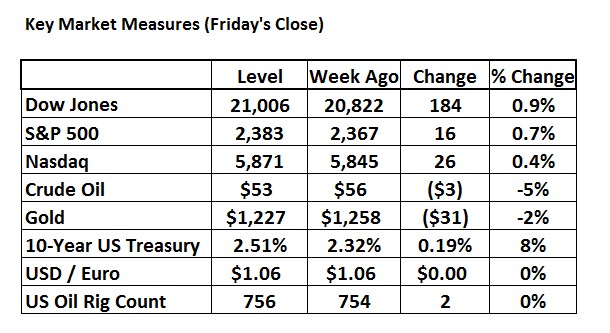
BMR Take: With the 10-year Treasury stepping up 19 basis points to 2.51% this week, Annaly shares remained relatively stable. This was a $10.22 stock a month ago, so we remain quite pleased with this investment.
Care Capital Properties (CCP: $26, up 1%)
Care Capital is a self-administered, self-managed Real Estate Investment Trust ("REIT") engaged in the ownership, acquisition and leasing of skilled nursing facilities and other healthcare assets operated by private regional and local care providers.
Care Capital primarily generate revenues by leasing properties to third-party operators under triple-net leases, pursuant to which the tenants are obligated to pay all property-related expenses, including maintenance, utilities, repairs, taxes, insurance and capital expenditures.
As of December 31, 2016, Care Capital had a diverse portfolio of 345 properties and 40 private regional and local care provider relationships. The portfolio is spread across 36 states and contains a total of roughly 38,000 beds/units.
Management is in the process of “re-positioning” the portfolio to improve portfolio metrics. The company was spun out of Ventas in August 2015 and since then has been selling assets and reinvesting in new development and redevelopment.
BMR Take: While near-term portfolio “re-positioning” is weighing on rental revenues and divestitures are resulting in lower earnings assets, ultimately we think the transition is working to produce a high quality better run portfolio that will receive more favor from the market.
Government Properties (GOV: $20, down 2%)
Government Properties is an externally advised real estate investment trust that owns, acquires, and manages office properties leased primarily to government tenants. The company’s niche focus afforded it the opportunity to go public in the midst of the financial crisis in 2009 where it raised $230 million.
Admittedly, core results have been mixed. Despite solid leasing volume, the real estate optimization strategy among government tenants remains a headwind. Average term of just 3.3 years marks the lowest term in recent memory. Tenants contributing 2.6% of rents are scheduled to vacate soon, as the Department of Justice, which currently represents 3% of rents, has moved from the “at risk” bucket to “vacating”. Fortunately, there is some offset by the National Institutes of Health, which has decided to stay. We don’t want to alarm you about recently mixed core results. It is the natural ebb and flow of the business. It could all easily swing the other way.
Providing some comfort, management had alluded to an expanding deal pipeline, given frothy pricing and demand for government-tenanted properties. We are seeing it happen. The company recently announced three acquisitions totaling roughly $130 million, with the largest asset being a 98% leased office park in Virginia; this property represents the largest investment since 2014.
BMR Take: Government Properties serves a unique niche in the REIT space and we see compelling value in the shares.
Welltower (HCN: $70, down 1%)
Welltower is at the forefront of investing in innovative healthcare infrastructure to create the physical and social environments necessary to promote wellness and quality of life for the aging population. Welltower’s operating platform supports post-acute care, independent living, assisted living and memory care facilities for more than 200,000 elderly residents and state-of-the-art outpatient medical facilities handling more than 16 million patient visits annually.
Recently, Welltower began collaborating with Johns Hopkins in a major new partnership. Johns Hopkins Medicine is one of the world’s pre-eminent patient care, research, and teaching institutions. Initially, Welltower and Johns Hopkins Medicine will explore joint initiatives in areas including: measuring quality outcomes in assisted living and memory care; educational programs for patients and care givers; and sharing of health and wellness and business expertise, information, best practices and research. The collaboration will also assess healthcare market opportunities and investments in modern, efficient infrastructure to deliver better care at a lower cost.
Americans ages 65 to 85 is the fastest growing segment of our population and the largest consumers of healthcare. Welltower is a leader in the space on all fronts from infrastructure to science.
BMR Take: The consensus forecast is for a dividend of $3.50 this year, $3.57 next year, and $3.82 in 2019. This 5% dividend yield looks compelling for a leading Healthcare REIT.
Upcoming Economic News
MONDAY, MARCH 6
Factory Orders – January
Time: 10:00 am
Forecast: 0.9%
Sizable growth in transportation sector orders is likely to lead overall factory orders higher in January. Core durable orders are showing positive trends for business investment in the near-term. Such orders rose 10.1% annualized in the three months ending January—the best such gain in nearly three years.
TUESDAY, MARCH 7
Trade Balance – January
Time: 8:30 am
Forecast: -$45.7 billion
The US trade deficit is likely to widen in January as the advance report on trade in goods showed significant gains in imports. Despite the growing trade gap, exports are once again adding to US output as opposed to representing a major drag on growth. Exports rose at the two-year high rate of 1.8% year-over-year in the fourth quarter while December’s 2.7% monthly advance was the best result in four years.
WEDNESDAY, MARCH 8
Productivity & Unit Labor Costs – Fourth Quarter
Time: 8:30 am
Forecast: 1.5% productivity, 1.5% unit labor costs
Long moribund productivity trends showed some uplift in the second half of last year, rising 2% annualized. Yet that recent bump needs to be sustained for quite some time to greatly undo the sickly 0.5% annualized gain for productivity over the past three years. Of concern to the Federal Reserve is the stronger pace of gains exhibited by unit labors costs, which rose 2.4% annualized over the same three-year period.
Import Price Index – February
Time: 8:30 am
Forecast: 0.1%
Moderation in the pace of raw materials price gains is expected to limit the February Import Price Index to its smallest gain of the past three months. Higher oil prices are facing resistance as current values entice a broader array of producers to drill. But the rising cost of imported goods is already weighing on consumer purchases, as the Import Index rose at the five-year high annual rate of 3.7% in January.
FRIDAY, MARCH 10
Employment Report - February
Time: 8:30 am
Forecast: 174,000 nonfarm payrolls, 4.7% unemployment rate
Job growth is showing no signs of stalling out after workers on nonfarm payrolls increased at the four-month high count of 227,000 in January. Employers are very hesitant to lay off staff, resulting in new claims for unemployment insurance hovering near lows not seen in over 40 years. That signal of labor market tightness can carry over to faster wage growth, helping to push up worker earnings above levels that remain historically weak for an extended economic expansion.
Apple Increases Research and Development Spend
Apple (AAPL: $140, up 2%) is pouring money into R&D in an attempt to improve products that don't currently generate revenue, but might in the future, according to remarks made by Apple CFO Luca Maestri at the Goldman Sachs investor conference Tuesday.
The company spent a huge $2.8 billion on R&D in 4Q16, bringing the total to nearly $10.5 billion in total for the year. Apple's annual spend is up by roughly $4 billion since 2014, marking a very noteworthy increase.
Why? Apple's hardware product range is growing. The iPhone is driving the company’s growth and it is adding new products to the lineup to further growth. The price of the phone is pricing out many customers, so we expect to see lower priced phones in the future, allowing them to sell a phone to everyone in the world.
Plus Apple's Services business, which comprises revenue from internet services, Apple Care, Apple Pay, licensing, and the App Store, is expected to grow to the size of a Fortune 100 company this year, according to Apple CEO Tim Cook. That's about $28 billion in revenue for the year, or a year-over-year growth of 15%.
BMR Take: Apple is sitting at an all-time high. We’ve been beating the drums, through endless negativity, especially when the stock fell into the 90s last summer. We were right and we are here to tell you that $150 is not out of sight. And we CAN’T WAIT until the President comes up with his repatriation plan for the $250 billion in cash the Apple has tucked away overseas.
Opko Health Discussion
Opko Health (OPK) had a rough week, losing 12% to $7.45. Earnings were reported last week. Revenue for the quarter was $275 million, flat from the year before. For the year: $1.22 billion, up from $490 million last year. Earnings for the quarter – a loss of $14 million. For the year: a loss of $25 million, compared to a small profit last year. The numbers were skewed by the purchase of BioReference Labs in 2015 for $1.5 billion, which added over $1 billion to revenues last year.
Opko says the potential market for Rayaldee, the kidney disease drug, could be as high as $10 billion but the drug didn't launch until November so there was no breakout of revenues that many were waiting for. We’ll just have to wait until next quarter to see any type of results from this drug.
The 4KScore test, launched several years ago, measures four prostate-specific substances in the blood to identify men who have a high likelihood of developing an aggressive form of prostate cancer. Opko that in Q4 about 18,000 4Kscore prostate cancer tests were ordered, representing growth of more than 12% compared to Q316. Some said they were looking for much bigger numbers here. The company has $170 million in cash and long-term debt of $110 million.
Consensus in the analytical community show that of the six analysts that follow the stock, four rate Opko a Buy, while two rate the stock a Hold. The stock’s consensus target price stands at $13.30.
BMR Take: We’ve said two things before: that if the stock hit $8 we would sell. But recently we said if the stock hit $8 we would buy more. We are going to reiterate this position now. We would buy more here. The caveat is that you have time to wait. Good things comes from patience. But patience in the financial world can be upsetting and cause you to lose sleep. So if this is the case with you, there are lots of other places to put your money. This company has great potential but we don’t control the marketplace that they live in and we don’t control management. We believe in management, but they might disappoint us. (See Under Armour.) Wall Street certainly thinks highly of the company. We give you the Consensus so that you can evaluate the whole picture. Some say that Wall Street analysts are mostly wrong. We don’t believe that. (See Apple, where EVERY ANALYST thinks the stock is going higher, and of course, the stock is sitting at an all-time high.) In any case, this company has amazing potential. Revenues are strong; cash and debt are certainly in line; it should be just a matter of time before we see positive results.
A Letter to the Editor about Simon Property Group (SPG: $179, down 3%)
Hello Bull Market,
Simon Property Group has been doing well but my concern is about the trend toward online retail which has and should continue to have a chilling effect on mall traffic. Doesn't it worry you that several large retailers that are anchor tenants at malls like Macy's and Sears have plans to close stores all over the country? To the extent that online purchases increase won't that hurt brick and mortar retail and foot traffic through malls? Thanks.
Richard Reed
Hi Richard -
We've discussed this with some folks on the Street as well as my own analyst team and it's no doubt that this is the biggest risk factor. If we start to see the risk having a bigger impact on the business, that would be a reason for us to exit. Not that we like to play with fire or pick up coins on the railroad track, but the reality is all businesses are not flawless and have their risks, so it not a reason to not invest. The good news here is that everyone knows this risk so we would argue that it is already baked into the stock's current price. And we must say that shopping online and shopping at 150 stores in a mall are two completely different experiences. It's pretty tough to buy a suit online. And furthermore, people love the social aspect of shopping in stories. That will never change.
BMR Take: Bottom line – if the overall stock market falters, and/or if Simon moves lower, we will take a small loss and move on. But we are believers in the company long term and we are watching closely.
A Word from Gary Jefferson
Jefferson Financial Group
First Vice-President, Investments
UBS Financial Services, Inc.
There are plenty of fundamental evidence in favor of US equities. The ISM Manufacturing Index, NFIB small business confidence gauge, and Consumer Confidence measures are all higher than 12 months ago and, historically, S&P 500 earnings growth has averaged nearly 15% in the year after such a simultaneous rise. UBS Financial is looking for 11% growth in 2017. UBS research also shows that since 1960, investors who have bought in when the market has been at an all-time high have performed similarly to those who have bought at other times. And investors who have bought in when the market has been trading in the current 18-20x PE valuation range have seen annualized returns of 10% and 7%, over one and 10- year time frames, respectively.
With all that being said, we are still in a rhetoric phase rather than a reality phase. In order to buck the odds of major stock market correction, we believe the following promised catalysts will have to show up this year:
Corporate Tax Break: The campaign pledge of a 15% rate is a powerful idea that would generate abundant earnings, GDP and equity growth. This is the "Holy Grail" for investors.
Individual Tax Break: This is also good for the economy, but the direct correlation to stock price gains is not expected to be as strong as the corporate tax break.
Infrastructure Spending: This should provide another big economic benefit.
We still believe an overweight in US equities and underweight in traditional bonds remains a valid tactical allocation in a rising interest rate cycle and expanding economy.
Analysts' Ratings for Under Armour (UA, $18.64, down 6%)
6 Sell Ratings, 21 Hold Ratings, 9 Buy Ratings
2/27/2017 Nomura $16
2/27/2017 Instinet $16
2/14/2017 Morgan Stanley $20
Things just keep getting worse at Under Armour. A tragedy.
Analysts' Ratings for Tesla Motors (TSLA: $251, down 2%)
7 Sell Ratings, 10 Hold Ratings, 12 Buy Ratings
Consensus Price Target: $256
2/27/2017 Morgan Stanley Outperform $305
2/27/2017 Guggenheim Buy $300
2/27/2017 Goldman Sachs Group Sell $185
2/24/2017 Deutsche Bank AG Hold $215
2/23/2017 RBC Capital Markets Target $314
2/23/2017 Royal Bank of Canada Target $314
2/23/2017 Robert W. Baird Outperform $368
Tesla was downgraded by analysts at Goldman Sachs from a “neutral” rating to a “sell” rating in a research note issued to investors on Monday, They presently have a $185 price target on the stock. Dougherty & Co lowered their price target from $500 to $375 and set a “buy” rating on the stock. Royal Bank of Canada increased their price target from $245 to $314 and gave the company a “sector perform” rating.
Analyst Ratings for Kimco Realty (KIM: $24, down 4%)
1 Sell Rating, 7 Hold Ratings, 8 Buy Ratings
Consensus Price Target: $30
2/3/2017 Canaccord Genuity Buy $34
1/23/2017 Barclays Overweight $27
1/9/2017 Raymond James Financial Outperform $28
THE HIGH YIELD CORNER
BY MICHAEL FOSTER
In high yield, this week was eventful on two fronts. Those who invest in closed-end funds likely received shareholder notices during the week, but the more exciting activity was in the BDC sector. A few BDCs reported this week and more are coming. Among the companies reporting was Goldman Sachs BDC (GSBD: $24.20), which reported a NAV decline exceeding 1% during the quarter and a near 3% decline in net investment income (NII). That wasn’t as bad as TCP Capital Corporation’s (TCPC: $17.20) 7% NII decline over the same period.
Neither stock was negatively impacted by the news, which wasn’t far from expectations anyhow, although Goldman’s BDC fell for the week and TCP Capital surprisingly rose. Goldman’s decline was modest and may ironically be a result of the company’s conservative approach. As one analyst wrote shortly after the earnings release, NAV’s decline is largely “a result of restructurings of non-accruals” and the firm’s more conservative approach to credit issuance. To wit, Goldman has not been expanding its loan portfolio significantly in a market that the fund’s managers have complained is not conducive to BDCs because of tight credit spreads, too much capital chasing too few deals, and overall risks in the marketplace. That has kept Goldman out of the market.
But surely Goldman can originate loans easily. Isn’t Goldman’s management in a position to throw billions of dollars’ worth of loans to their BDC? Well, yes; Goldman knows just about every wealthy person and multi-million dollar company on Earth.
The problem is a lack of incentives; Goldman has little reason to throw business the way of the totally separate and autonomous Goldman Sachs BDC, which is itself an entirely separate corporate structure. Combine this with the challenge of finding deals in a highly competitive marketplace, and you see why Goldman’s BDC is choosing to grow slowly rather than quickly.
The big takeaway from this is that now is not a good time to be in the BDC business. This is even truer for investors that rely on BDCs for passive income. There is so much competition between BDCs, that getting yields on loans is getting harder. And then there is so much competition between investors in BDCs, that premiums to stock values are getting higher, which in turn lowers dividend yields. Goldman Sachs’s BDC is trading at nearly a 30% premium to its NAV and is near its highest premium in history.
This is why we reluctantly sold Main Street Capital Corp (MAIN: $37) and continue to fret over the now absurd the 68% premium to NAV that the stock is currently trading at. Main Street is in our view the best BDC in the world but it’s just too expensive to own with a clear conscience. A diversified BDC fund like the UBS BDC ETF (BDCS: $23) is even worse, providing exposure to overpriced BDCs AND BDCs with bad portfolios or shady management. The sector provides value when it’s out of the market’s favor, but it’s in favor now so we continue to urge caution.
So where can an investor go for high yield? Other sectors are faring much better, and the 2016 muni bond rout seems to be fully behind us. The iShares S&P National AMT-Free Municipal Bond Fund (MUB: $108) had a flat week, but BMR pick Invesco Municipal Trust (VKQ: $12.53, up 1%) fared slightly better. Nuveen AMT-Free Fund (NVG: $14.41) fell a bit though, dropping just a shade over 1.5%.
These funds are paying around 5% in dividends, but remember that this is tax-free money. Depending on your tax status, that could mean an 8% taxable equivalent yield. With such a return, there is little rationale in staying away from municipals and taking on higher risk BDCs where defaults are much more likely, management fees are much higher, leverage is much more severe, and dividend payouts are much less sustainable.
On the issue of returns, let’s consider a moment the concept of the risk premium. Basic financial theory states that at-risk investments will always earn a return that is higher than the risk-free rate of return (ROR). There’s no such thing as 100% risk free, but U.S. Treasuries are about as close to risk free as you can get as long as you hold them to maturity. The Fed Funds rate is set to rise to 0.75% or even higher if Janet Yellen raises interest rates this month, which she says she will, and could go as high as 1.5% or above within a year or so. At-risk assets, then, need to offer a ROR above 0.75% for short-term assets. The calculation that is made is always between Treasuries and whatever risky investment you’re analyzing: Treasuries and oil junk bonds for instance.
However, there is another risk premium calculation that investors should make even though they generally don’t: The difference between the ROR on the investment you are considering and the taxable equivalent yield on municipal bonds. Why? Because retail investors can easily buy municipal bonds and get the income from those instead of choosing the riskier asset. This alternative means there is always a limit to just how low yields can go on at-risk assets before retail investors turn away from them.
Just how low is that yield? That’s a complicated calculation that would take a lot of data and a lot of analysis to figure out, but we can do a rough spot calculation by looking at the popular municipal bond ETFs, calculate their taxable equivalent yields, and compare that to the yields on taxable high yield assets. Doing so tells us that 4% is pretty much the limit. Corporate bonds now are apparently at or around their fair value from this metric.
Does that mean it’s time to buy these assets? Not really, but it’s not time to sell either. That means the SPDR Barclays High Yield Bond ETF (JNK: $37, flat) is not set for any great collapse but it isn’t exactly where you want to be either. It also means the near-term seems OK for BMR picks. The PIMCO Dynamic Income Fund (PDI: $29, up 1%) has reached a somewhat distressing premium to NAV of 8% but the fund’s sharp performance makes this bearable. The AGIC Equity and Convertible Income Fund (NIE: $19.73, up 1%) is seeing its discount to NAV remain around 11%, rather high from a long-term perspective and an attractive reason to hold.
Now, to REITs. The best news for BMR subscribers came from this sector this week, as the SPDR Dow Jones REIT ETF (RWR: $94.45, down 1%) saw a modest decline that was overshadowed by BMR’s REIT picks. Digital Realty Trust (DLR: $107, flat), Omega Healthcare Investors (OHI: $33, flat), and Care Capital Properties (CCP: $26, up 3%) were significantly better performers with flat to slightly up growth for the week. Government Properties Trust (GOV: $20, down 1%) tracked the market quite closely, showing that risky REITs are not selling off greater than the broader market, which is usually the signal of a broader and more worrisome panic. However, the most risk averse investors who look for more stable and less risky REITs are clearly selling off, as Kimco Realty (KIM: $24, down -4%) had a truly awful week. This appears indicative of a broader market trend towards risk aversion that is only beginning in the REIT sector but may continue in the weeks to come. Now is a good time to remain vigilant with the REIT sector and look to rebalance as mispricings continue. For now BMR’s recommendations remain unchanged, but more declines in Kimco could cause us to suggest a bit of rebalancing in the short term.
A final word on AstraZeneca (AZN: $30, up 2%). BMR has been following this drugmaker for a while and have held through months of weakness as the biotech industry was destroyed by political risk-related fears. Trump is now president and despite his tweets about drug prices, drugmakers don’t seem to be in any immediate danger. The market has recognized this and is slowly tiptoeing back into the sector. Astra-Zeneca is up 10% year-to-date for this reason alone. The pipeline hasn’t changed, but everyone is getting more enthusiastic about the company’s prospects. This remains a good time to remain long this stock.
Good Investing,
Todd Shaver, Founder, CEO and Editor
The Bull Market Report
Since 1998
March 1, 2017
by Todd Shaver | Mar 1, 2017 | 7am News Flash
Warren Buffett, chairman and chief executive of Berkshire Hathaway (BRK.A, $257,100) has purchased 120 million shares of Apple (AAPL: $137) in 2017 and said that U.S. stocks were not in "bubble territory." This is new information, as previously he said that they owned 61 million shares.
"Apple strikes me as having quite a sticky product," Buffett said. He said Berkshire's Apple stake, at 133 million shares, was worth about $17 billion and amounted to Berkshire's second-biggest holding behind Burlington Northern.
Buffett, who supported Hillary Clinton, said he would judge U.S. President Donald Trump based on how safe the country is in four years. He said he would also judge him according to how the U.S. economy performs overall. Buffett said the U.S. economy would be better off in four years under any president. And he said that U.S. Secretary of State Rex Tillerson made "a lot of sense."
BMR Take: Well, Buffett has finally come around. For a man who has never bought any Tech stocks, he has stepped up to the plate and hit it out of the park. We believe this to be the influence of the two former hedge-fund managers that he has hired in the past decade.
Apple is hovering at all-time highs, with over $250 billion in cash and a market cap of $720 billion. We would buy shares today – not 133 million shares – but as many as we could afford. We look for the company to reach our Target of $150 sometime this year.
